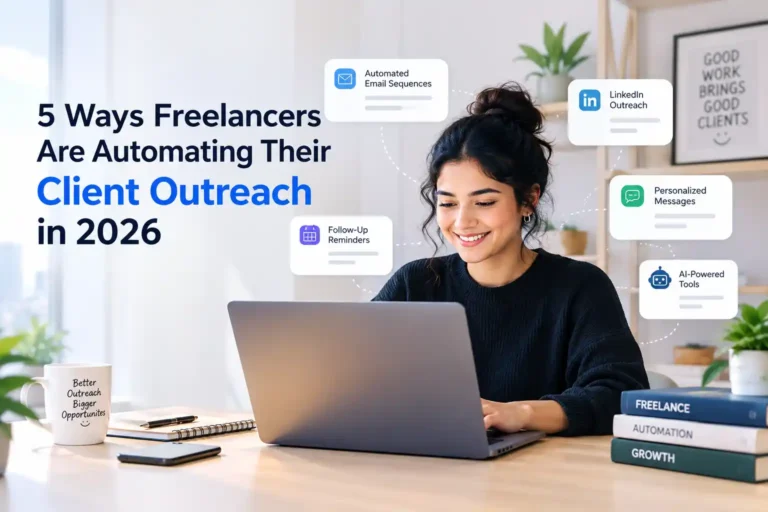

Finding new clients is one of the biggest ongoing tasks for freelancers. Researching prospects, sending messages, following up, replying to leads, and keeping track of conversations can take hours that could otherwise be spent on client work.
That is why more freelancers are using automation to handle repetitive parts of their outreach. A LinkedIn automation tool can help with prospect research, personalized communication, follow-ups, lead organization, and performance tracking. But automation should not replace the human side of selling. The goal is to reduce repetitive work while keeping important conversations personal.
Here are five practical ways freelancers can automate client outreach without turning it into a generic mass-messaging process.
1. Automate Prospect Research and Lead Targeting
Good outreach starts with finding the right people. Sending hundreds of messages to people who have no need for your service is unlikely to produce useful conversations.
Freelancers can automate parts of the research process by defining an ideal client profile before starting an outreach campaign.
For example, an SEO freelancer may want to work with B2B SaaS companies that have an established marketing team but need additional SEO support. Useful targeting criteria could include:
- Industry
- Company size
- Job title
- Location
- Type of business
- Professional experience
- Relevant business activity

The goal is not to build the biggest possible list. It is to build a relevant one.
Automation can then help organize prospects and collect useful information such as their name, company, role, contact details, and outreach status. Many freelancers rely on a LinkedIn automation tool at this stage, since so much of B2B prospecting starts with LinkedIn profiles and company pages in the first place. This gives freelancers a cleaner starting point and reduces the amount of manual research required for every prospect.
A simple prospecting system can move people through stages such as:
Target prospect → Researched → Ready to contact → Contacted
This approach makes outreach more focused and gives freelancers a better idea of who they are actually trying to reach.
2. Personalize Outreach Without Writing Every Message From Scratch
Personalization is one of the biggest differences between useful outreach and generic outreach.
A message that simply says, “Hi, I offer SEO services. Are you interested?” gives the prospect very little reason to respond.
Freelancers can create a few basic message frameworks and automate the repetitive parts while keeping the important details specific to each prospect.
For example, a freelance web designer might mention a company’s recent website update. A content writer could refer to a recent article or a gap in the company’s content.
Automation can help insert basic information such as:
- Prospect name
- Company name
- Job role
- Industry
- Relevant business information
AI can also assist with creating opening lines based on information available about the prospect. However, the freelancer should review important messages before sending them, particularly when approaching high-value prospects.
The purpose of personalization is simple: show why you are contacting that particular person.
That makes automation useful without making the outreach feel automated.

3. Automate Follow-Ups and Build Simple Outreach Sequences
Many potential clients do not respond to the first message. That does not necessarily mean they are uninterested. They may be busy, miss the message, or need more information before responding.
This is where automated follow-ups can save freelancers significant time.
Instead of remembering when to contact every prospect manually, freelancers can create a simple sequence. For example:
Day 1: Initial message
Day 3: Short follow-up
Day 6: Share a useful idea, resource, or relevant observation
Day 10: Final follow-up
The exact timing can vary depending on the audience and type of service.
The important part is that every follow-up should have a reason. Repeatedly sending “Just checking in” adds little value.
Automation should also recognize when the sequence needs to stop. If someone replies, shows interest, asks not to be contacted, or moves into a sales conversation, automated messages should no longer continue.
This gives freelancers a more consistent follow-up process without forcing them to manually track every conversation.
4. Combine LinkedIn, Email, and Other Outreach Channels
Client outreach does not have to happen through only one channel.
LinkedIn and email are common options for professional outreach, but freelancers can also use other channels when they make sense for the prospect and service.A multichannel approach may include:
- LinkedIn: Managing connection requests, direct outreach, and follow-
- Email: Initial outreach and follow-up emails
- Voice notes: Short personalized messages for selected prospects
- Personalized videos: Brief introductions or service explanations for high-value prospects
- Social media: Conversations on platforms where the target audience is active
- Website or contact forms: Following up with people who have already shown interest
- Referral outreach: Staying in touch with previous clients, contacts, and referral sources
These channels should not all be used at the same time for every prospect.
For example, a freelancer could connect with someone on LinkedIn first and later send an email with additional information. A high-value prospect might receive a short personalized video instead of another generic follow-up.
Referral outreach is also worth including in an automated system. Freelancers can create reminders to check in with previous clients or professional contacts who may know someone looking for their services.
The principle is simple: use automation to coordinate the channels, but choose the communication method based on the relationship and context.
5. Automate Lead Management, Reply Handling, Reporting, and Conversion Tracking
Getting replies is only part of the outreach process. Freelancers also need to know what happens after someone responds.
Without a proper system, leads can get buried in email threads, LinkedIn messages, spreadsheets, or notes.
Automation can help organize leads into a simple pipeline such as:
New Prospect → Contacted → Follow-Up → Replied → Qualified → Meeting → Proposal → Client
A centralized system can also make it easier to manage replies, identify interested prospects, and schedule discovery calls.
For example, when a prospect responds positively, the freelancer can move them from “Contacted” to “Qualified” and send a scheduling link. Once the call is booked, the lead can automatically move to the next stage.
For more advanced workflows, AI can help categorize incoming replies and identify whether a prospect appears interested, needs more information, or is not currently interested. The freelancer should still handle important sales conversations personally.
Track the Numbers That Actually Matter
Automation becomes much more useful when freelancers can measure the results.
A reporting dashboard can track metrics such as:
| Metric | What it tells you |
| Connection rate | Whether your initial targeting and approach are relevant |
| Response rate | Whether prospects are interested enough to reply |
| Positive response rate | How many replies represent genuine opportunities |
| Call booking rate | Whether prospects are willing to take the next step |
| Proposal conversion rate | How often qualified conversations become proposals or deals |
| Client conversion rate | How effectively outreach turns prospects into clients |
These numbers help identify where the problem is.
If many people accept your connection request but few respond, your messaging may need improvement. If people respond but rarely book calls, your offer or call to action may need adjustment. If calls happen but few prospects become clients, the issue may be qualification, pricing, proposals, or the sales conversation.
The full journey becomes easier to understand:
Prospect → Response → Qualified Lead → Meeting → Proposal → Client
Instead of simply asking, “How many messages did I send?”, freelancers can ask a much more useful question: Which parts of my outreach are actually producing clients?
Keep Automation Human
The best outreach automation does not try to automate every interaction.
Repetitive tasks such as prospect organization, reminders, follow-ups, scheduling, and reporting can be automated. Conversations involving questions, objections, pricing, proposals, and relationship building should usually remain human-led.
A useful rule is :
Automate the repetition. Keep the relationship personal.
This balance allows freelancers to spend less time managing outreach and more time having conversations with people who are genuinely interested.
Common Mistakes Freelancers Make With Outreach Automation
Automation can save time, but poor implementation can make outreach less effective.
Common mistakes include:
- Contacting too many irrelevant prospects
- Sending the same message to everyone
- Using too many follow-ups
- Continuing automated messages after someone replies
- Using every outreach channel for every prospect
- Ignoring replies because leads are spread across different platforms
- Measuring messages sent instead of qualified leads and clients
- Automating important conversations that require personal attention
The solution is not necessarily less automation. It is better automation with clear targeting, relevant messaging, sensible follow-ups, and regular performance reviews.
Final Thoughts
Freelancers do not need to automate their entire sales process to save time.
The biggest gains usually come from removing repetitive work: researching prospects, organizing leads, sending appropriate follow-ups, coordinating outreach channels, scheduling calls, and tracking results.
When automation is combined with thoughtful targeting and genuine communication, freelancers can build a more consistent client acquisition process without spending their entire day on outreach.
The objective is not to send more messages. It is to spend less time on repetitive tasks and more time on conversations that can become real client relationships.