


Table of Contents
A broken water heater, an unexpected medical bill, or a car that refuses to start can put pressure on any household budget. For federal employees, the situation can be particularly difficult when a paycheck is delayed, a reimbursement is pending, or a government shutdown disrupts normal financial planning. Even with a relatively stable job, an unexpected expense can arrive before enough money is available to cover it.
Emergency loans for federal employees are one way to address an urgent cash shortage. However, borrowing from a commercial lender should not necessarily be your first move. Federal employees may qualify for specialized hardship assistance, nonprofit emergency loans, credit-union products, or payment arrangements that cost less than a conventional personal loan.
If you do need to borrow, it’s important to compare the annual percentage rate (APR), fees, repayment schedule, and total amount you’ll owe. A quick approval may solve today’s problem but create another one if the repayment doesn’t fit your next few paychecks.
This guide explains where federal employees can look for emergency financial assistance in 2026, how specialized programs work, which loan options to compare, and what to consider if you need money quickly or have less-than-perfect credit.
What Are Emergency Loans for Federal Employees?
Emergency loans for federal employees are loans intended to help cover urgent expenses when savings or available cash aren’t sufficient. They may come from banks, credit unions, online lenders, personal-loan marketplaces, or organizations that specifically support federal and postal employees.
These products are not all the same. A conventional personal loan generally involves a formal application, an agreed interest rate, and scheduled repayments. A nonprofit hardship loan may have different eligibility rules and may charge no interest. A cash advance may help bridge a short gap between an expense and an incoming deposit.
Federal employees may consider emergency financing for expenses such as:
- Essential car repairs needed to commute to work
- Unexpected medical, dental, or prescription bills
- Rent, mortgage, or utility payments
- Emergency home repairs
- Necessary travel following a family emergency
- Other essential expenses that cannot reasonably be postponed
The right option depends on the reason for the shortfall, how much money you need, and when you can realistically repay it.
Best Emergency Financial Assistance Programs for Federal Employees
Before applying for a commercial loan, look into assistance programs designed specifically for federal workers. Some have narrower eligibility requirements than personal lenders, but they may offer more affordable terms.
1. Federal Employee Education and Assistance Fund (FEEA)
The Federal Employee Education and Assistance Fund, commonly known as FEEA, provides emergency hardship loans to eligible federal civilian and postal employees.
Its emergency loan program is designed to help employees manage qualifying financial emergencies without turning immediately to high-interest borrowing. The regular loan ceiling is $2,000, and approved loans carry no interest or loan fees.
Eligibility is restricted. Generally, applicants must be permanent full-time or part-time federal civilian or postal employees who have worked for the federal government for more than one year. Temporary, seasonal, and contract employees are not eligible under the standard program requirements.
The emergency must also meet FEEA’s qualifying hardship criteria. Examples include:
- A severe illness, injury, or emergency dental problem affecting the employee
- A severe illness or injury affecting an immediate family member
- The death of an immediate family member
- Major damage to the employee’s primary residence caused by a natural disaster
- An immediate need for safe housing due to domestic violence
The program also restricts how loan proceeds can be used. Approved funds generally go toward eligible expenses such as rent or mortgage payments, utilities, funeral expenses, uncovered medical costs, emergency travel, or temporary lodging following a natural disaster. The program does not provide unrestricted cash for every financial difficulty, and funding availability can affect whether a loan is approved.
One important distinction concerns government shutdowns. FEEA specifically directs employees whose financial difficulties were caused by a furlough or shutdown to its shutdown assistance resources rather than its regular emergency hardship loan application.
Best for: Permanent federal civilian and postal employees who meet FEEA’s service requirements and have a qualifying personal hardship.
2. FEEA Disaster Relief Assistance
FEEA also provides disaster-related assistance for eligible federal employees affected by qualifying natural disasters.
This is separate from its regular emergency hardship loan program. Depending on the disaster and current program rules, assistance may be provided as a grant rather than a loan, meaning approved recipients may not have to repay it.
Eligibility, application windows, documentation requirements, and funding availability depend on the specific disaster program. Employees should check the current criteria instead of assuming every weather-related expense qualifies.
If a fire, flood, hurricane, or other disaster has damaged your home, contact FEEA to find out whether a relevant program is available.
Best for: Eligible federal employees experiencing financial hardship because of a qualifying disaster.
3. Federal Employee Credit Unions
Credit unions serving federal employees can be another useful source of emergency financing. Some offer personal loans, small-dollar loans, or other products designed to help members manage unexpected expenses.
Membership eligibility varies by institution. Some credit unions serve employees of particular federal agencies, while others are open to broader groups of federal workers, retirees, family members, or people who meet community-based requirements.
A credit union may offer competitive rates, but you should compare the actual terms rather than assuming that membership automatically guarantees a lower-cost loan.
Ask about the APR, application fees, repayment period, minimum loan amount, and funding timeline. If you’re already a member, check whether your institution has an emergency loan or hardship program.
Best for: Federal employees who qualify for membership and want to compare personal loans or small-dollar financing.
Read: Beem Pass: Helping Loved Ones Avoid Payday Loan Traps
4. Agency Employee Assistance and Payroll Resources
Some federal agencies offer employee assistance services, financial wellness resources, or information about available hardship support. The options vary by agency, so there is no single emergency loan program available to every federal employee through their employer.
If you’re facing an urgent expense, contact your agency’s human resources office or employee assistance program to ask whether it can direct you to appropriate resources.
An employee assistance program may offer referrals, financial counseling, or help identifying services. It should not be assumed to provide cash or a loan.
If your financial difficulty involves a pay discrepancy, missing payment, or delayed reimbursement, contact the relevant payroll or benefits office as well. Resolving an administrative issue may be more appropriate than borrowing to cover a temporary shortfall.
Best for: Employees who need help identifying agency-specific resources or resolving a pay-related issue.
Emergency Loans During a Federal Government Shutdown
A government shutdown can create a different financial problem from an ordinary emergency. Depending on their role and circumstances, federal employees may be required to work without receiving their regular paycheck on schedule or may be furloughed.
The first step is to identify which resources specifically address shutdown-related financial difficulties.
FEEA maintains shutdown assistance information separately from its regular emergency hardship loan program. Federal employees should review the current shutdown guidance because eligibility and available support may differ from those for illness, property damage, or other qualifying personal emergencies.
You can also contact your credit union or bank to ask whether it offers a shutdown-related loan, payment deferral, or other temporary assistance. These offers are institution-specific and should not be assumed to be available everywhere.
If you need to cover rent, a mortgage, utilities, or other essential bills during a pay disruption, contact the provider before the due date if possible. Some providers may offer payment arrangements or hardship options.
Avoid borrowing a large amount based solely on an expected back-pay date. Although federal employees may have statutory protections relating to payment after a shutdown, the timing of funds reaching your account can still affect your immediate budget.
Best Personal Loan Options for Federal Employees in 2026
If specialized assistance is unavailable or doesn’t cover your expense, a personal loan may be worth considering. The following options have different structures and eligibility requirements.
1. Beem: Best for Comparing Personal Loan Offers
Beem’s personal-loan marketplace connects eligible borrowers with lending partners offering potential personal loans. Beem is not the direct lender for these personal loans.
The marketplace advertises potential loan offers ranging from $500 to $100,000. Checking personalized rates does not impact your credit score, although a lending partner may conduct a hard inquiry if you proceed with a formal application.
This can be useful if you want to compare financing options before committing to a particular lender. Depending on the offers available to you, a personal loan may help cover essential repairs, medical expenses, or another significant unexpected cost.
Before accepting an offer, compare the APR, fees, monthly payment, repayment period, and total amount you’ll repay. The marketplace’s advertised range does not guarantee approval or a particular loan amount.
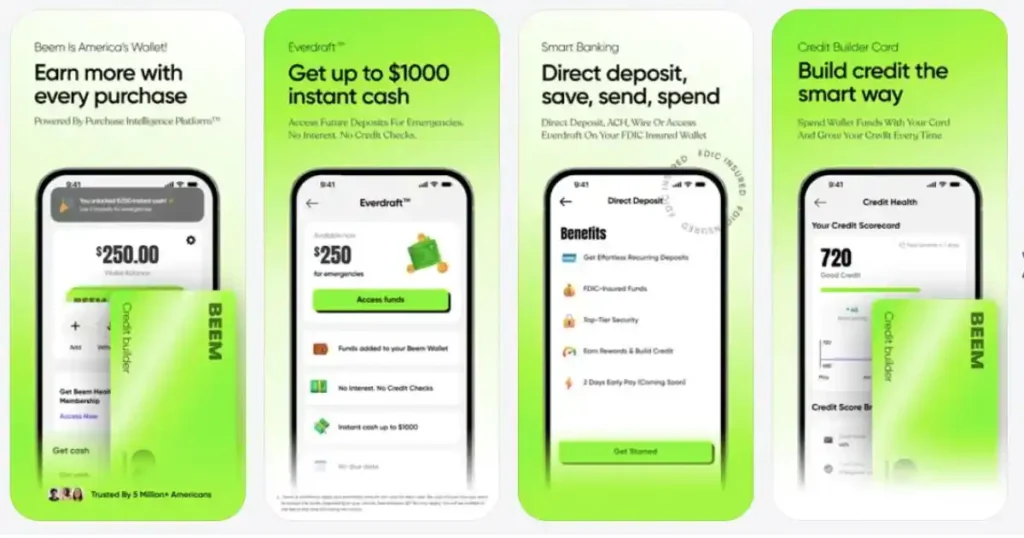
Beem also offers Everdraft™, a separate instant cash advance product for eligible users facing short-term cash-flow gaps. Eligible users may access up to $1,000 based on their financial profile and account activity. Everdraft™ is not a conventional personal loan or a federal employee benefit, and eligibility and applicable terms should be reviewed separately.
Best for: Federal employees who want to compare potential personal-loan offers from lending partners.
2. Upstart
Upstart is an online lending platform that considers credit information alongside other factors when evaluating personal-loan applications. Depending on the application, these may include income, employment, education, and other financial details.
This may be worth exploring if your credit history is limited or doesn’t fully reflect your ability to repay a loan.
Upstart offers personal loans to eligible applicants, with the available amount, APR, and repayment terms depending on the borrower and location. Checking an initial rate through a soft inquiry does not affect your credit score, although a formal application may involve a hard inquiry.
Federal employment alone does not guarantee approval or a competitive interest rate. The lender will still assess your application under its underwriting criteria.
Best for: Federal employees who want to compare online personal loans and may benefit from a broader underwriting process.
3. Upgrade
Upgrade offers personal loans that eligible borrowers can use for qualifying expenses, including debt consolidation and certain unexpected costs.
If you’re dealing with several high-interest balances, consolidating eligible debt into one installment loan may simplify repayment. However, consolidation only makes financial sense if the new loan’s total cost and terms improve your situation.
Origination fees may apply, and a longer repayment term can increase the total interest paid even when the monthly payment is lower.
Compare the APR, fees, repayment schedule, and total amount due before accepting an offer.
Best for: Federal employees who want a structured installment loan or are comparing debt-consolidation options.
4. LendingPoint
LendingPoint offers personal loans to eligible borrowers with a range of credit profiles. It may be worth considering if you want to compare conventional installment-loan offers and your credit history isn’t excellent.
Depending on the offer, funds may be used for qualifying expenses such as emergency repairs, medical bills, or debt consolidation.
Rates, fees, loan amounts, and repayment terms depend on the applicant and state. A loan that is easier to qualify for is not necessarily the least expensive option.
Review the APR, origination fee, monthly payment, and total repayment amount. If your budget is already stretched, consider whether a payment arrangement or specialized assistance program would be more affordable.
Best for: Federal employees with fair or developing credit who want to compare online installment loans.
5. OneMain Financial
OneMain Financial offers personal loans through online and branch-based channels. It may be worth exploring if you prefer to discuss your application with a representative or want to compare different borrowing structures.
Depending on the product and applicant, OneMain may offer secured or unsecured loans. A secured loan uses collateral, which introduces an additional risk: if you fail to meet the repayment obligations, the lender may be able to take the pledged asset under the agreement and applicable law.
Review the APR, fees, repayment period, and total cost carefully. If collateral is required, consider whether the risk is appropriate for the size and urgency of your expense.
Best for: Borrowers who want to compare personal loans and may value access to branch-based assistance.
6. Credit Union Personal Loans
A credit union may be one of the most practical options if you already have a membership through your agency, community, or another qualifying relationship.
Credit unions may offer unsecured personal loans, emergency financing, or small-dollar products to eligible members. Some institutions also offer specialized programs for federal workers during periods of financial disruption.
Availability and terms vary by institution. Ask about minimum loan amounts, APRs, membership requirements, fees, and repayment schedules.
If you only need a small amount, ask whether the credit union offers a small-dollar loan rather than a larger personal loan with a higher minimum borrowing amount.
Best for: Federal employees who want to investigate potentially affordable member-based lending.
Final Thoughts
Emergency loans can help federal employees manage urgent expenses, but specialized assistance may be a better first step. FEEA offers qualifying federal civilian and postal employees no-interest, no-fee emergency hardship loans up to $2,000, subject to its eligibility criteria and available funding. It also maintains separate resources for shutdown-related financial difficulties and disaster relief.
If you need a commercial loan, compare the APR, fees, monthly payment, and total repayment amount rather than choosing a provider solely because it promises fast funding. Beem’s personal-loan marketplace can help eligible applicants explore potential offers from lending partners, while credit unions and online lenders provide additional options.
Beem’s Everdraft™ is a separate short-term cash advance product for eligible users, not a federal employee benefit or a replacement for a conventional personal loan. Review the applicable eligibility and terms before using it.
The best solution is the one that addresses your immediate need without making your next few paychecks harder to manage. Check specialized assistance first, borrow only what you need, and make sure the repayment fits your budget.
Check out Beem for on-point financial insights and recommendations to spend, save, plan and protect your money like an expert. Download the Beem app today!
Frequently Asked Questions
1. Can federal employees get emergency loans?
Yes. Federal employees can explore emergency hardship loans through FEEA if they meet its requirements, as well as personal loans through eligible lenders, credit unions, and lending marketplaces. The best option depends on the reason for the emergency, the amount needed, and eligibility.
2. Does FEEA offer emergency loans to federal employees?
Yes. FEEA offers eligible permanent federal civilian and postal employees confidential, no-interest, no-fee emergency hardship loans with a regular maximum of $2,000. Applicants generally must have worked for the federal government for more than one year and experienced a qualifying hardship within the previous six months. Funding is subject to availability.
3. Can federal employees get emergency loans during a government shutdown?
Federal employees should review shutdown-specific assistance resources rather than assuming that a regular emergency hardship loan will cover the situation. FEEA directs employees whose financial difficulties were caused by a shutdown or furlough to its shutdown resources instead of its regular hardship loan application. Credit unions and other providers may have separate programs.
4. Can federal employees with bad credit get emergency loans?
Possibly. Some lenders consider income, employment, and other financial information alongside credit history. However, approval and rates depend on the provider and applicant. Federal employees should compare APRs and fees and check whether specialized assistance or credit-union products are available before accepting a high-cost loan.
5. How much can federal employees borrow through Beem’s personal-loan marketplace?
Beem advertises potential personal-loan offers ranging from $500 to $100,000 through lending partners. The amount available depends on the lender, applicant eligibility, and state availability. Checking personalized rates does not impact your credit score, but approval and final loan terms are not guaranteed.