

Table of Contents
College students often have unpredictable schedules. Between classes, assignments, studying, part-time jobs, and social activities, finding a side income opportunity that doesn’t require a fixed schedule can be difficult.
Mobile gaming can offer one flexible option. Some reward platforms give eligible users opportunities to earn rewards by playing participating mobile games and completing specific activities.
This doesn’t mean gaming can replace a job or provide guaranteed income. But if you already enjoy playing games on your phone, you may be able to turn some of that existing entertainment time into supplemental rewards.
This guide explains how mobile earning games work, how students can fit them between classes, what to watch out for, and how Beem Arcade can be part of a low-stress gaming routine.
Can College Students Really Earn From Mobile Games?
Yes, some legitimate gaming reward platforms allow eligible users to earn rewards for completing qualifying activities. The important distinction is that you aren’t necessarily paid simply for playing any mobile game.
A reward offer may require you to:
- Reach a specific level
- Complete a milestone
- Finish a challenge
- Play for a qualifying period
- Accomplish a particular in-game objective
The amount and availability of rewards can vary. For students, the appeal is mainly flexibility. You can potentially make progress during a 10- or 20-minute gap without committing to a traditional work shift.
What Is Beem Arcade?
Beem Arcade is Beem’s partner gaming product that gives eligible users opportunities to earn rewards through participating mobile games. Students can browse available games and choose opportunities that fit their interests and schedules.
The available games, rewards, qualifying activities, and eligibility requirements can change, so review the applicable terms before starting.
It’s also important to understand that Beem Arcade rewards aren’t the same as a game’s internal currency. Coins, gems, tokens, and similar items typically exist within the game itself.
Why Mobile Gaming Can Work for College Students
A traditional part-time job usually requires scheduled hours. Mobile gaming is different. You can potentially fit a short session around your existing schedule.
For example:
- 15 minutes before class
- 20 minutes between lectures
- 30 minutes during a long campus break
- A short evening session
- While relaxing after studying
The flexibility can make reward-based gaming easier to incorporate than another fixed commitment.
How Much Can a College Student Earn?
There isn’t a guaranteed amount. Potential rewards depend on:
- Available games
- Individual offers
- Completed milestones
- Time invested
- Eligibility
- Promotional terms
One week might provide several opportunities, while another may offer fewer games that interest you. It’s better to view gaming rewards as a small supplemental benefit rather than a predictable weekly income.
10 Types of Mobile Earning Games Students Can Try
The exact games available can change, but these categories can be worth exploring.
1. Puzzle Games
Puzzle games are convenient for short breaks because individual rounds can often be completed quickly. They can be particularly useful when you have only a few minutes before your next class.
2. Word Games
Word games offer short challenges that can fit naturally into gaps between classes. They’re also easy to pause when your schedule changes.
3. Trivia Games
Trivia games can provide quick rounds and simple objectives. If you’re already interested in quizzes and general knowledge, they can make a natural addition to a short gaming session.
4. Casual Arcade Games
Simple arcade games generally have straightforward controls and short gameplay loops. They can work well when you don’t want to spend several minutes learning complicated mechanics.
5. Card Games
Digital card games can offer relatively short rounds. They’re another option for students who want something they can start and stop easily.
6. Simulation Games
Simulation games can include farming, business, restaurant, or city-building formats. They’re more progression-oriented, so check the reward requirements before choosing one for short sessions.
7. Strategy Games
Strategy games can be engaging but may require more concentration. They’re better suited to longer breaks when you have enough uninterrupted time to think through your decisions.
8. Idle Games
Idle games can require less continuous attention. Some allow progress to accumulate while you’re away, although specific reward milestones may still require active gameplay.
9. Adventure Games
Adventure games can work if their objectives are divided into short missions. Check how long it takes to reach the qualifying milestone before committing.
10. Games Available Through Beem Arcade
Beem Arcade offers eligible users opportunities to earn rewards through participating mobile games.
The available selection can change, so students can check the current opportunities and choose games that fit their interests and available time.
How to Fit Gaming Between Classes
The biggest advantage for a student is flexibility. Suppose you have a 30-minute gap between lectures. Instead of spending the entire time playing, you could structure it like this:
5 minutes: Check your goal and prepare.
20 minutes: Play toward the qualifying milestone.
5 minutes: Save progress, check your next objective, and get ready for class.
This keeps gaming within a defined window.
A 15-Minute Student Gaming Routine
If your schedule is particularly busy, use a shorter routine.
Minutes 0–2
Review your current milestone.
Minutes 2–12
Focus on the activity that directly contributes to your goal.
Minutes 12–15
Check your progress and stop. You don’t need to complete an entire reward objective in one sitting. Several short sessions can contribute toward a larger milestone.
How to Choose a Game Based on Your Schedule
Your available time should influence the game you choose.
| Free Time | Better Fit |
| 5–10 minutes | Puzzle, trivia, casual games |
| 10–20 minutes | Word, arcade, card games |
| 20–30 minutes | Simulation, strategy, adventure |
| 30+ minutes | Longer progression-based games |
These are general guidelines rather than guarantees. The actual time required depends on the game and reward offer.
How to Maximize Rewards Without Increasing Your Gaming Time
You don’t necessarily need to play more. Instead, improve how you use the time you already have.
Read the Requirements
Know what qualifies before starting.
Focus on One Objective
Don’t waste a short session jumping between unrelated activities.
Track Your Progress
Know how close you are to the next milestone.
Choose Achievable Offers
A modest reward with a realistic requirement may be better than a larger reward requiring many hours.
Avoid Unnecessary Purchases
Don’t spend money inside a game simply to reach a reward faster.
Don’t Let Rewards Interfere With Your Studies
This is especially important for college students.
A gaming reward isn’t worth missing:
- A lecture
- An assignment deadline
- Study time
- Sleep
- An important meeting
Set a time limit before you start. If the game has a particularly engaging progression system, a timer can help you stop when your break ends.
Can Gaming Rewards Help With College Expenses?
They may provide supplemental rewards, but they shouldn’t be treated as a primary source of money for tuition, rent, textbooks, or other essential expenses.
A few dollars earned from gaming can be useful for discretionary spending or as a small addition to your overall budget.
But college students should avoid relying on uncertain gaming rewards to cover fixed financial obligations.
Should Students Spend Money on Games to Earn Rewards?
Generally, be cautious. Some mobile games contain optional purchases. If you spend $10 to pursue a reward worth $5, you’ve lost money rather than earned it.
Before making a purchase, ask:
- Would I buy this anyway?
- Is it necessary to reach the milestone?
- How much is the reward worth?
- Does the purchase improve the overall value?
If the numbers don’t work, don’t make the purchase.
How to Compare Gaming Offers
Consider four things:
Reward
How much can you potentially earn?
Time
How long could reaching the milestone take?
Difficulty
Is the objective realistically achievable?
Enjoyment
Would you actually enjoy playing the game?
A game that scores reasonably well across all four can be more attractive than one offering a large reward but requiring hours of repetitive gameplay.
Calculate Your Reward per Hour
A simple calculation can help. Suppose you earn a hypothetical $6 reward after two hours of qualifying gameplay. Your approximate reward rate is:
$6 ÷ 2 hours = $3 per hour
Now imagine another opportunity offers $3 after 20 minutes. That works out to approximately $9 per hour. The second opportunity could therefore be more efficient despite having a smaller total reward.
Are Mobile Earning Games Legit?
Some are, but students should be careful because gaming rewards can attract misleading offers. Before participating, look for clear information about:
- Eligibility
- Rewards
- Requirements
- Deadlines
- How activities are tracked
- Applicable terms
Avoid apps promising hundreds of dollars for a few minutes of gameplay.
Read: Skillz Games Review
How to Avoid Gaming Scams
Never give an unfamiliar website your:
- Banking password
- Game password
- Email password
- Verification code
- Account recovery information
Also avoid platforms that ask you to pay money before releasing a supposed reward. Stick with established reward platforms and official app stores.
Can You Earn From Games Without Spending Money?
Potentially. Some reward opportunities can be completed without purchases. However, the individual game may offer optional purchases, so read the requirements carefully.
The safest approach is to treat purchases as entertainment expenses rather than something you need to make in order to earn a reward.
What If You Need Money Between Paychecks?
Gaming rewards shouldn’t be treated as an emergency financial solution. If you’re short on money for an essential expense, playing a game for a few dollars may not solve the problem quickly enough.
Consider your existing financial resources and other available options first.
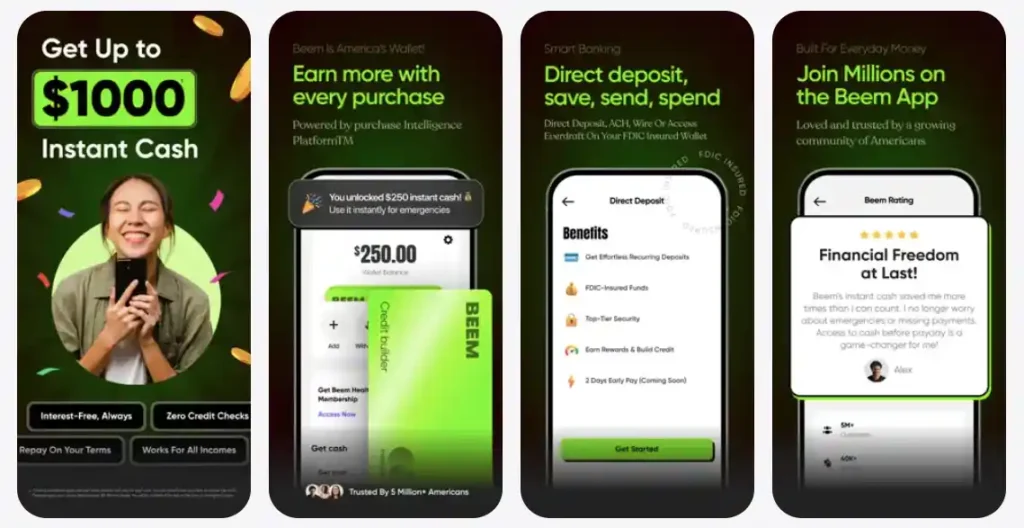
Beem Everdraft™ is Beem’s own instant cash advance product for eligible users managing short-term cash-flow needs. It is separate from Beem Arcade and isn’t a gaming reward.
Available amounts, eligibility requirements, fees, delivery speed, and repayment terms can vary. Any advance must be repaid according to the applicable terms.
How to Build a Low-Stress Gaming Routine
The best student gaming routine should feel manageable.
Try these rules:
- Set a daily time limit.
- Choose one or two games.
- Review requirements before starting.
- Don’t spend money chasing rewards.
- Stop when your scheduled session ends.
- Don’t let gaming interfere with school responsibilities.
The purpose is to add value to your free time, not create another obligation.
A Sample Weekly Schedule for Students
Here’s one way to incorporate gaming without disrupting your academic schedule:
Monday–Thursday
Spend 10–15 minutes during an existing break working toward a milestone.
Friday
Check your progress and complete any realistic objective.
Weekend
Decide whether the next milestone is worth pursuing.
You don’t need to play every day if your schedule doesn’t allow it.
What Makes Beem Arcade Useful for Students?
For students who already enjoy mobile games, Beem Arcade can provide another reason to explore participating titles.
The flexible nature of mobile gaming means you can potentially play during short windows rather than committing to a fixed work schedule.
However, the available games and rewards can change, and there’s no guarantee of a particular earning amount.
The best approach is to treat the rewards as an added benefit to an activity you already enjoy.
What to Do With the Rewards You Earn
Once you’ve earned rewards, consider using them intentionally. You could put them toward:
- Entertainment
- A small personal purchase
- Your discretionary budget
- Savings
If you’re earning rewards consistently, track them alongside your regular spending. Even small amounts can show you whether the routine is worthwhile over time.
Final Thoughts
Mobile earning games can be an appealing option for college students because they can fit into small gaps between classes without requiring a fixed work schedule.
The key is keeping expectations realistic. Gaming rewards vary, aren’t guaranteed, and shouldn’t replace a part-time job or other dependable source of income.
Beem Arcade is Beem’s partner gaming product that gives eligible users opportunities to earn rewards through participating mobile games. Students can explore available games and choose opportunities that fit their schedules and interests.
The smartest approach is to play games you actually enjoy, focus on achievable milestones, avoid unnecessary in-app purchases, and set clear limits around your gaming time.
If you can turn a few minutes of entertainment between classes into an opportunity to earn supplemental rewards without interfering with your studies, that’s an added benefit, not something you need to build your budget around.
Check out Beem for on-point financial insights and recommendations to spend, save, plan and protect your money like an expert. Download the Beem app today!
Frequently Asked Questions
1. Can college students really earn money playing mobile games?
Yes, some gaming reward platforms offer eligible users opportunities to earn rewards for completing qualifying activities in participating games. The amount varies and shouldn’t be treated as guaranteed income.
2. How does Beem Arcade work for college students?
Beem Arcade is Beem’s partner gaming product that gives eligible users opportunities to earn rewards through participating mobile games. Students can choose available games and work toward the qualifying milestones associated with each offer.
3. How much can a student earn from mobile games?
There is no standard amount. Rewards depend on the games available, completed milestones, eligibility, and time invested. For most students, gaming rewards are best viewed as supplemental rather than dependable income.
4. Do I have to spend money to earn gaming rewards?
Not necessarily. Some offers can be completed without spending money, although individual games may contain optional purchases. Avoid spending money simply to chase a reward.
5. Can gaming rewards replace a college student’s part-time job?
No. Gaming rewards can provide supplemental value but aren’t a reliable substitute for employment. Students should treat them as an optional way to earn rewards from gaming rather than a predictable source of income.