
Table of Contents
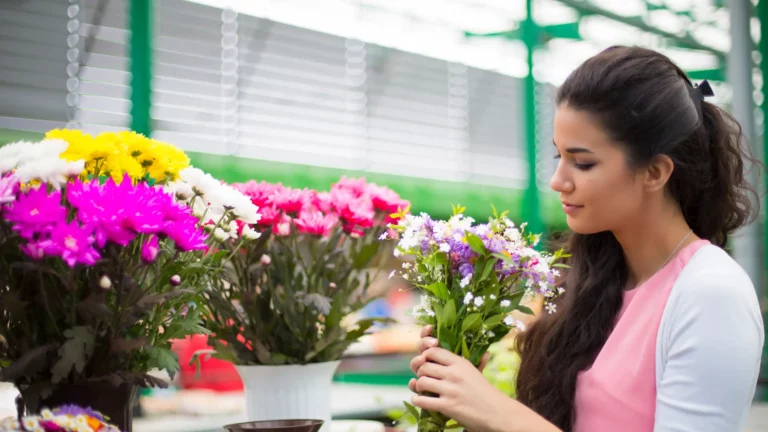
Standing at the checkout with a bouquet in one hand and an EBT card in the other is a moment a lot of SNAP recipients have found themselves in, whether it is for a birthday, a funeral, or just wanting something pretty on the kitchen table. The answer is a quick no, but the reasoning behind it, and what SNAP actually does cover in 2026, is more interesting and more useful to know than the simple yes or no suggests.
SNAP, the Supplemental Nutrition Assistance Program, has always drawn a clear line around what counts as food. That line has actually been shifting in 2026, with a growing number of states restricting certain grocery items for the first time in the program’s history, and even the federal agency that runs SNAP changing its name. Understanding exactly where flowers, plants, and a long list of other everyday items fall in 2026 can save you an awkward moment at the register and help you get the most out of every SNAP dollar.
This guide covers whether you can buy flowers with EBT, why the rule exists, what is and is not eligible under SNAP in 2026, and a few genuinely useful ways to stretch your benefits further.
Why Are Flowers Not SNAP Eligible?
The Supplemental Nutrition Assistance Program exists to help low-income households afford food, not to cover general household spending. The program’s authorizing statute and the regulations that implement it define eligible items narrowly: food and food products intended for home consumption, plus seeds and plants that produce food for the household to eat. Flowers fail this test on both counts. They are not edible, and unlike vegetable seedlings or fruit trees, ornamental flowers do not produce anything the household can eat later.
This distinction, between plants that grow food and plants that simply look nice, is the exact line the USDA draws, and it explains why a tomato seedling is SNAP eligible while a rose bush is not, even though both are, technically speaking, plants sold at the same garden center.
What SNAP Actually Covers in 2026
SNAP eligibility rules are broader than most people assume, covering considerably more than basic staples.
Fruits and vegetables, fresh, frozen, canned, or dried, are eligible without restriction in every state. Meat, poultry, and fish, including deli meats and even live shellfish, qualify as well. Dairy products, bread and cereal, and eggs are all standard eligible categories. Cooking staples like oils, condiments, spices, sugar, and baking supplies are covered too, since they are ingredients used to prepare food at home.
A few categories surprise people who assume SNAP only covers bare-bones groceries. Seeds and plants that produce food for the household to eat, including vegetable seedlings, herb starts, fruit trees, berry bushes, and seed potatoes, are eligible nationwide, and the USDA has noted that a dollar spent on garden seeds can produce many times that value in food over a growing season.
Beverages including soda, juice, sports drinks, coffee, tea, and bottled water have historically been eligible everywhere, though that is now changing in a growing number of states, covered in more detail below. Protein shakes and certain energy drinks are eligible as long as the product carries a Nutrition Facts label rather than a Supplement Facts label, which is the dividing line the USDA uses between food and supplement.
What Is Never SNAP Eligible
A handful of categories remain off-limits everywhere, regardless of state.
Flowers and ornamental plants are never eligible, as covered above. Alcohol and tobacco products are excluded under federal law without exception. Vitamins, supplements, and medicine do not qualify, since they are classified separately from food, regardless of how they are marketed. Pet food is not eligible, since SNAP benefits are restricted to food for people in the household. Hot, prepared foods intended to be eaten on the spot, like a hot rotisserie chicken or a slice of pizza from a deli counter, are generally excluded too, with one significant exception covered below. Household supplies, paper products, and cosmetics are also ineligible, since none of them are food.
The Big 2026 Change: State Waivers Restricting Soda and Candy
The most significant shift in SNAP eligibility in 2026 has nothing to do with flowers and everything to do with sugary food and drinks. As part of the federal “Make America Healthy Again” initiative, the USDA began approving state waivers that allow individual states to remove certain non-nutritious items from SNAP eligibility, something that had not been permitted at scale in the program’s history.
By mid-2026, roughly 18 to 22 states had either implemented or received approval for these waivers, including Arkansas, Colorado, Florida, Hawaii, Idaho, Indiana, Iowa, Louisiana, Missouri, Nebraska, North Dakota, Oklahoma, South Carolina, Tennessee, Texas, Utah, Virginia, and West Virginia, with several more states, including Kansas, Ohio, Nevada, and Wyoming, approved for waivers taking effect between late 2026 and 2028.
The restricted items vary by state but generally target soda, energy drinks, candy, and in some states like Iowa, a wider category of low-nutrition packaged foods. A few states, including Virginia initially, focused narrowly on sweetened beverages alone.
Growing Your Own: The Seeds and Plants Exception
One of the most underused parts of SNAP is the ability to buy seeds and plants that produce food. If you have a yard, a community garden plot, or even a sunny windowsill, you can use EBT to buy tomato starts, pepper plants, herb seeds, strawberry plants, fruit trees, and seed potatoes. Over the course of a growing season, a small investment in seeds can produce meaningfully more food value than the seeds themselves cost, making this one of the better-kept secrets of the program.
The distinction to remember is purpose. A seedling that will grow into something edible is eligible. A flowering plant grown purely for its appearance, like a rose bush, a mum, or a tulip bulb, is not, even if it is sold at the exact same nursery or garden center as the vegetable starts.
Read: How To Save Money On Wedding Flowers
Farmers Markets and Double Up Food Bucks
Many farmers markets accept EBT, and the same eligible-versus-not-eligible rules apply there as they do in a grocery store. You can buy fresh produce, eggs, meat, and food-producing seeds and plants, but not cut flowers, ornamental plants, or crafts, even from a vendor at the same market.
A genuinely valuable program worth knowing about is Double Up Food Bucks, active at farmers markets and some grocery stores in roughly 25 states. The program matches SNAP dollars spent on fresh fruits and vegetables, so a $10 SNAP purchase can become $20 worth of produce. It is administered by the nonprofit Fair Food Network and is one of the most effective ways to stretch a limited food budget further, particularly for households trying to prioritize fresh produce.
The Restaurant Meals Program Exception
While hot prepared food is generally excluded from SNAP, a handful of states operate a Restaurant Meals Program that allows certain SNAP recipients, typically people who are elderly, disabled, or experiencing homelessness, to use their EBT card at participating restaurants. States with an active program in 2026 include Arizona, California, Illinois, Maryland, Massachusetts, Michigan, New York, Rhode Island, and Virginia, though participation and eligibility rules vary by state and require prior approval. If you do not fall into one of these qualifying categories, hot prepared food remains off-limits regardless of location.
If You Want Flowers, Here Are Other Options
Since EBT will not cover a bouquet, a few practical alternatives are worth knowing for birthdays, holidays, or difficult moments like a funeral.
Many grocery stores let you split a transaction, paying for SNAP-eligible groceries with your EBT card and non-eligible items like flowers separately with cash, a debit card, or a credit card. Community organizations, places of worship, and local mutual aid groups sometimes provide flowers or small gifts for specific occasions at no cost. Grocery store floral departments frequently discount arrangements near closing time or right before the flowers would otherwise be discarded, which can make a bouquet meaningfully more affordable even outside of SNAP.
Conclusion
Flowers remain firmly outside what an EBT card can buy in 2026, and that has not changed and is unlikely to change, since the rule is built into the core definition of what SNAP is meant to cover. What has changed is the wider landscape around the program, with a growing number of states now restricting soda, candy, and other low-nutrition items for the first time, and the federal agency itself taking on a new name.
None of that affects the flower rule directly, but it is a reminder that SNAP eligibility is not as static as it might seem, and it is worth double-checking your state’s current list if you are ever unsure at the register. When in doubt, your state SNAP agency or the federal program website is the most reliable place to confirm what is eligible before you shop.
Check out Beem for on-point financial insights and recommendations to spend, save, plan and protect your money like an expert. Download the Beem app today!
Frequently Asked Questions: Buy Flowers
1. Can you buy flowers with an EBT or SNAP card?
No. Flowers are not classified as food under SNAP rules and cannot be purchased with EBT in any state, for any occasion. This applies to cut flowers, bouquets, and any decorative floral arrangement.
2. Can you buy plants with EBT?
It depends on the type of plant. Seeds and plants that produce food for the household to eat, such as vegetable seedlings, herb starts, and fruit trees, are SNAP eligible nationwide. Decorative or ornamental plants, including flowering plants grown purely for appearance, are not eligible.
3. What changed with SNAP eligibility in 2026?
The most significant change is a wave of state waivers, approved under the federal “Make America Healthy Again” initiative, that restrict SNAP purchases of soda, candy, and other low-nutrition items in roughly 18 to 22 states. The federal agency overseeing SNAP was also renamed from the Food and Nutrition Service to the Food and Nutrition Administration in June 2026.
4. Can you buy hot food with an EBT card?
Generally, no. Hot, prepared food intended to be eaten immediately is excluded from SNAP nationwide, with one exception: the Restaurant Meals Program, available in select states, allows certain elderly, disabled, or homeless SNAP recipients to use EBT at participating restaurants.
5. What is Double Up Food Bucks, and does it apply to flowers?
Double Up Food Bucks is a matching program available at many farmers markets and some grocery stores in about 25 states that doubles the value of SNAP dollars spent specifically on fresh fruits and vegetables. It does not apply to flowers or any non-food item, since it is designed to encourage produce purchases, not general spending.