

Table of Contents
Finding cheap health insurance in North Carolina became significantly more realistic in December 2023, when North Carolina finally expanded Medicaid after years of holding out.
That single policy change opened the door to free or near-free coverage for hundreds of thousands of NC residents who previously fell into a coverage gap: earning too much for the old Medicaid rules, but too little for marketplace subsidies to make a meaningful difference. If you checked your Medicaid eligibility before December 2023 and were turned away, your situation may have changed completely.
Beyond Medicaid expansion, North Carolina residents have access to subsidized marketplace plans through the federal exchange, CHIP for children, and catastrophic options for younger adults. This guide walks through every realistic path to affordable health coverage in NC, who qualifies, what it costs, and what to do when your budget is stretched at the moment your first premium comes due.
Is Cheap Health Insurance in North Carolina Actually Possible?
Yes, and for more North Carolinians than ever before. The Medicaid expansion that took effect in December 2023 extended free coverage to adults aged 19 to 64 who earn up to 138 percent of the federal poverty level. For 2024, that is approximately $20,120 per year for a single adult or $41,400 for a family of four. Prior to expansion, North Carolina’s Medicaid program covered very limited categories of adults, leaving a large uninsured working-poor population with nowhere to go.
For those who earn above the Medicaid threshold, the federal marketplace at Healthcare.gov offers subsidized private plans with premium tax credits that significantly reduce monthly costs. Enhanced federal subsidies have brought many plans within reach for middle-income households. Some income brackets qualify for zero-dollar monthly premiums after credits are applied.
The biggest barrier for most uninsured North Carolinians is not eligibility. It is knowing where to look and how to apply. Understanding which program applies to your income and household situation is the starting point.
Best Options for Cheap Health Insurance in North Carolina
NC Medicaid — Newly Expanded
North Carolina’s Medicaid program is now the most important affordable coverage option in the state for low-income adults. Following the December 2023 expansion, adults aged 19 to 64 earning up to 138 percent of the federal poverty level are eligible for Medicaid coverage at no cost. This includes working adults without dependents, a category that was previously excluded under North Carolina’s more restrictive pre-expansion rules.
NC Medicaid covers a comprehensive range of services including doctor visits, hospital care, emergency services, prescription drugs, mental health and substance use disorder treatment, maternity care, and preventive services. There are no monthly premiums for most enrollees, and cost-sharing is minimal or zero depending on the specific services accessed.
Enrollment in NC Medicaid is open year-round with no fixed enrollment window. If your income qualifies, you can apply and receive coverage relatively quickly. Applications are submitted through NC FAST, the state’s online benefits portal, or through your local Department of Social Services office. If you previously checked Medicaid eligibility in North Carolina before the December 2023 expansion and were turned away, it is worth applying again under the new rules.
One specific population worth calling out: North Carolinians who were working part-time, in seasonal jobs, agricultural work, or gig economy roles often had incomes that fell squarely in the former coverage gap. That gap is now closed. If you earn between roughly $15,000 and $20,000 per year as a single adult and did not previously qualify, the December 2023 expansion very likely changed your eligibility.
Federal Marketplace Plans (Healthcare.gov)
North Carolina uses the federal health insurance marketplace at Healthcare.gov rather than a state-run exchange. Residents who earn above the Medicaid threshold can shop for private insurance plans and apply premium tax credits that reduce monthly costs based on income.
Under current federal rules, no household earning up to 400 percent of the federal poverty level pays more than a set percentage of income toward premiums, with credits covering the rest. Enhanced subsidies in place since 2021 extend meaningful reductions further up the income scale. For households earning between 100 and 250 percent of the poverty level, Silver plan cost-sharing reductions also lower deductibles, copays, and out-of-pocket maximums.
Marketplace plans in North Carolina are offered in four metal tiers. Bronze plans carry the lowest monthly premiums with higher out-of-pocket costs when care is used. Silver plans offer middle-ground premiums and unlock cost-sharing reductions for qualifying income levels. Gold and Platinum plans have higher premiums but lower deductibles and copays, making them cost-effective for people who use their insurance regularly throughout the year.
North Carolina follows federal open enrollment dates: November 1 through January 15, with coverage starting February 1 for enrollments completed by December 15. If you enroll between December 16 and January 15, coverage begins February 1 as well. Outside this window, a qualifying life event is required for Special Enrollment.
Check this out: Save up to 40% on car insurance
Catastrophic Health Plans
North Carolina residents under age 30, or those who qualify for a hardship exemption, can access catastrophic health plans through the federal marketplace. These carry the lowest available premiums in the marketplace and cover three primary care visits per year at no cost before the deductible applies. They function as high-cost safety nets for major medical events rather than comprehensive coverage for routine care.
For young, healthy residents in North Carolina who primarily want protection against the financial consequences of a serious accident or illness but cannot afford higher monthly premiums, catastrophic plans offer meaningful protection at a lower cost. The trade-off is a high annual deductible that must be met before the plan pays for most services beyond those three covered primary care visits.
NC Health Choice — CHIP for Children
NC Health Choice is North Carolina’s Children’s Health Insurance Program, which covers children in households that earn too much to qualify for full Medicaid but too little for marketplace plans to be affordable. The program covers children from birth through age 18 in households earning up to a defined threshold above the Medicaid income limit.
Coverage through NC Health Choice includes well-child visits, dental care, vision care, immunizations, prescription drugs, hospital care, and emergency services. Premiums and cost-sharing are low and scaled to family income. For families who are not sure whether their children qualify for Medicaid or CHIP, applying through NC FAST screens for both programs simultaneously and routes the application to whichever program the child is eligible for.
Employer-Sponsored Insurance
For North Carolinians employed in traditional jobs with benefits, employer-sponsored health insurance is often the most affordable available option. Employers subject to ACA requirements must contribute at least 50 percent of the employee premium. In practice, many employers in North Carolina’s large employer sectors including healthcare, finance, technology, and government contribute significantly more, making employee premiums modest by comparison.
For gig workers, agricultural workers, self-employed residents, and those working for small employers not subject to coverage requirements, employer insurance is not an option. This population, which is significant in a state with North Carolina’s economic mix, relies most heavily on the Medicaid and marketplace pathways described above.
COBRA Continuation Coverage
COBRA allows people who lose job-based coverage to continue on their former employer’s plan for up to 18 months by paying the full premium, including the portion the employer previously covered. This is rarely the cheapest option and often costs significantly more than a marketplace alternative. However, COBRA can be worth maintaining for people who are in the middle of active medical treatment and need continuity of care, or who are between jobs and expect to gain new employer coverage within a short window.
Losing employer-sponsored coverage is a qualifying life event that triggers a Special Enrollment Period for the marketplace, meaning you do not have to wait for the annual window to enroll in a marketplace plan after a job loss.
How to Qualify for Subsidies on the NC Marketplace
Premium Tax Credits
Premium tax credits reduce your monthly marketplace premium based on your household income relative to the federal poverty level. They are applied in advance directly to the premium, meaning you pay a reduced amount each month rather than receiving a credit at tax time. The credit amount adjusts based on where your income falls relative to the applicable threshold, and it is calculated to cap the percentage of income you spend on a benchmark Silver plan.
For North Carolina residents earning between 100 and 400 percent of the federal poverty level, premium tax credits can reduce monthly costs to as low as zero in some income brackets. Enhanced credits extended through 2025 also provide meaningful reductions for households earning between 400 and 600 percent of the poverty level. Running your household income through Healthcare.gov’s plan comparison tool shows your estimated credit before you enroll.
Income accuracy matters. If your income changes during the year, update your marketplace application promptly. Underestimating creates a repayment liability at tax time. Overestimating means you overpay monthly. For gig workers, agricultural workers, and anyone with variable income, projecting a realistic midpoint for the year is the most important single step in getting your subsidy right.
Cost-Sharing Reductions
Cost-sharing reductions are available on Silver plans only for households earning between 100 and 250 percent of the federal poverty level. They lower your deductible, copayments, and out-of-pocket maximum, making Silver plans dramatically more affordable to actually use throughout the year, not just to hold on paper.
This is why a Silver plan often makes more financial sense than a Bronze plan for lower-income NC residents even when the Bronze premium appears cheaper at first glance. A Bronze plan with a $7,000 deductible that never gets met may cost less per month but cost more total in a year where any meaningful medical care is needed. Silver with cost-sharing reductions applied can bring that deductible down to $500 to $1,500 for qualifying income levels, which completely changes the real cost comparison.
Tips to Lower Your Health Insurance Costs in North Carolina
Report Income Changes Quickly
Marketplace credits are based on projected annual income, and North Carolina has a significant portion of workers with variable earnings: seasonal workers, agricultural employees, gig drivers, independent contractors, and people picking up side income alongside a primary job. When income shifts, updating your marketplace application within 30 days of the change prevents both underpayment and overpayment situations. Missing a significant income decrease can mean months of higher premiums than necessary.
Choose the Right Plan Tier for How You Actually Use Healthcare
The right tier depends on your health and how often you expect to use your coverage. If you are young, healthy, and rarely see doctors, a Bronze plan keeps monthly costs down and the high deductible only matters if something unexpected happens. If you manage a chronic condition, take regular prescriptions, or see specialists, a Gold plan’s lower deductibles and predictable copays often produce a lower total annual cost even with the higher monthly premium. Run the numbers for your likely usage before defaulting to the cheapest monthly option.
Verify Your Providers Are In-Network
North Carolina’s mix of urban centers and rural counties creates significant variation in provider network coverage. Charlotte, Raleigh, Durham, and Asheville have robust networks across most plans. Rural counties in the eastern and western parts of the state may see narrower networks depending on which insurer you choose and which plan tier. Before enrolling, search each plan’s provider directory to confirm that your primary care doctor, any specialists you see, and your preferred hospital are included. Out-of-network care in a state with significant rural healthcare access challenges is a risk worth managing at the enrollment stage.
Use a Health Savings Account with a High Deductible Plan
Enrolling in a qualifying High Deductible Health Plan opens access to a Health Savings Account, where pre-tax contributions can be used to pay for qualified medical expenses. HSA funds roll over year to year and grow tax-free. For healthy NC residents who can absorb a higher deductible when needed, the combination of a lower-premium high-deductible plan and an HSA is one of the most tax-efficient approaches to managing healthcare costs available under current law.
What to Do When You Cannot Afford Your First Premium Payment
The coverage gap that North Carolina closed in December 2023 was a real crisis for hundreds of thousands of residents. But there is a smaller, more personal gap that still catches people: you find the right plan, you enroll, and then the first premium comes due at exactly the wrong moment. Before your paycheck clears. The week a different bill hit. During a month that is already stretched.
Missing that first payment means your coverage never activates. Your enrollment sits pending until it lapses, and you are back to uninsured until the next enrollment window opens, which for NC marketplace plans can mean months without coverage.
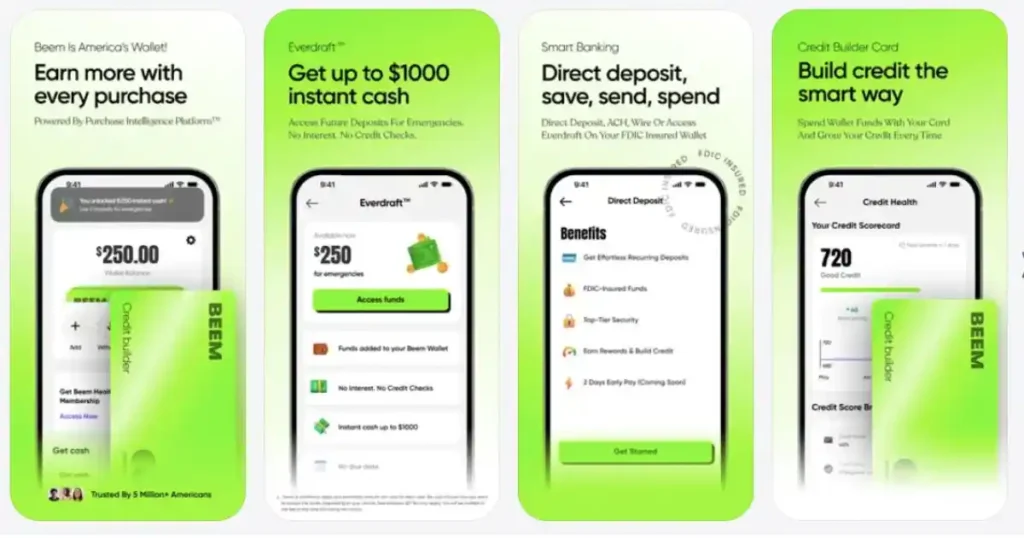
That is exactly what Beem Everdraft is built for. Everdraft gives you access to up to $1,000 in instant cash advance with no credit check, no interest, and no income restrictions. If your first premium is due and the timing is wrong, you can get funds into your account fast and make sure your coverage activates on schedule. Repayment happens automatically when your next verified deposit hits. No interest piling up. No due date pressure.
Health coverage that does not activate because of a timing gap is a real financial risk. A short-term cash bridge to lock in your enrollment protects you from a much larger potential cost down the road.
What Happens If You Miss Open Enrollment in North Carolina?
North Carolina follows federal marketplace enrollment rules. The standard open enrollment window runs from November 1 through January 15. Missing this window means you cannot enroll in a marketplace plan until the following November unless you qualify for a Special Enrollment Period.
Qualifying life events that trigger a Special Enrollment Period include losing health coverage from any source, getting married or divorced, having or adopting a child, moving to a new area that changes your plan options, gaining US citizenship or lawful immigration status, or experiencing a significant income change that affects your subsidy eligibility. You typically have 60 days from the qualifying event to enroll.
NC Medicaid operates year-round with no enrollment window. If your income qualifies at any point during the year, you can apply through NC FAST and receive coverage without waiting. The December 2023 expansion means many more North Carolinians now qualify than were eligible before. Losing a job, having income drop, or a household change that brings your income below the Medicaid threshold are all reasons to apply immediately rather than waiting for marketplace open enrollment.
Check out Beem for on-point financial insights and recommendations to spend, save, plan and protect your money like an expert. Download the Beem app today!
Frequently Asked Questions
What is the cheapest health insurance in North Carolina?
For residents who qualify, NC Medicaid is the cheapest option because eligible enrollees pay no monthly premiums and face minimal cost-sharing. Following the December 2023 expansion, many more adults now qualify than before. For those who earn above the Medicaid threshold but qualify for marketplace subsidies, a subsidized Bronze or Silver plan through Healthcare.gov can cost as little as zero to thirty dollars per month depending on household income and family size.
Did North Carolina expand Medicaid?
Yes. North Carolina expanded Medicaid in December 2023, making it one of the later states to do so. The expansion extended Medicaid eligibility to adults aged 19 to 64 earning up to 138 percent of the federal poverty level, which is approximately $20,120 per year for a single adult. Before expansion, North Carolina’s Medicaid program covered very limited categories of adults and excluded most working-age adults without dependents. If you were previously turned away from NC Medicaid, your eligibility may have changed under the new rules.
Can I get free health insurance in North Carolina?
Yes. North Carolinians who qualify for NC Medicaid under the expanded eligibility rules pay no monthly premiums and face very limited cost-sharing. Some marketplace plans also reduce to zero monthly cost after premium tax credits are applied for households in certain income brackets. Free or near-free coverage is available to a significantly larger portion of NC residents following the 2023 Medicaid expansion than was the case before.
What is NC Health Choice?
NC Health Choice is North Carolina’s Children’s Health Insurance Program, known federally as CHIP. It covers children in households that earn too much for full Medicaid but too little for marketplace plans to be affordable. Coverage includes routine and preventive care, dental, vision, prescriptions, hospital care, and emergency services. Premiums are low and scaled to family income. Applications for both Medicaid and NC Health Choice can be submitted simultaneously through the NC FAST portal.
Does North Carolina require health insurance?
No. North Carolina does not have its own individual health insurance mandate. The federal individual mandate penalty was reduced to zero beginning in 2019, meaning there is currently no tax penalty at the state or federal level for going uninsured in North Carolina. However, going without coverage remains a significant financial risk. A single emergency room visit or hospitalization can generate bills that far exceed a full year of premium payments on even a mid-tier marketplace plan.