
Over 27 million Americans work part-time, according to the Bureau of Labor Statistics. Yet most financial products, from traditional bank loans to many cash advance apps, are designed with full-time earners in mind.
Part-time workers face smaller paychecks, inconsistent schedules, and limited access to employer benefits, but their financial emergencies are just as urgent and just as expensive.
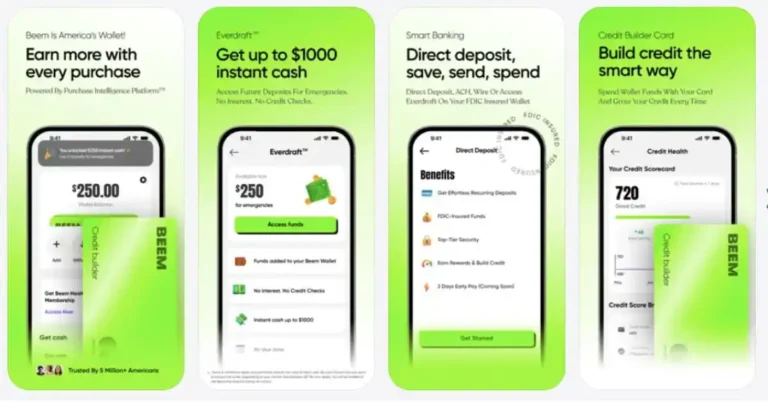
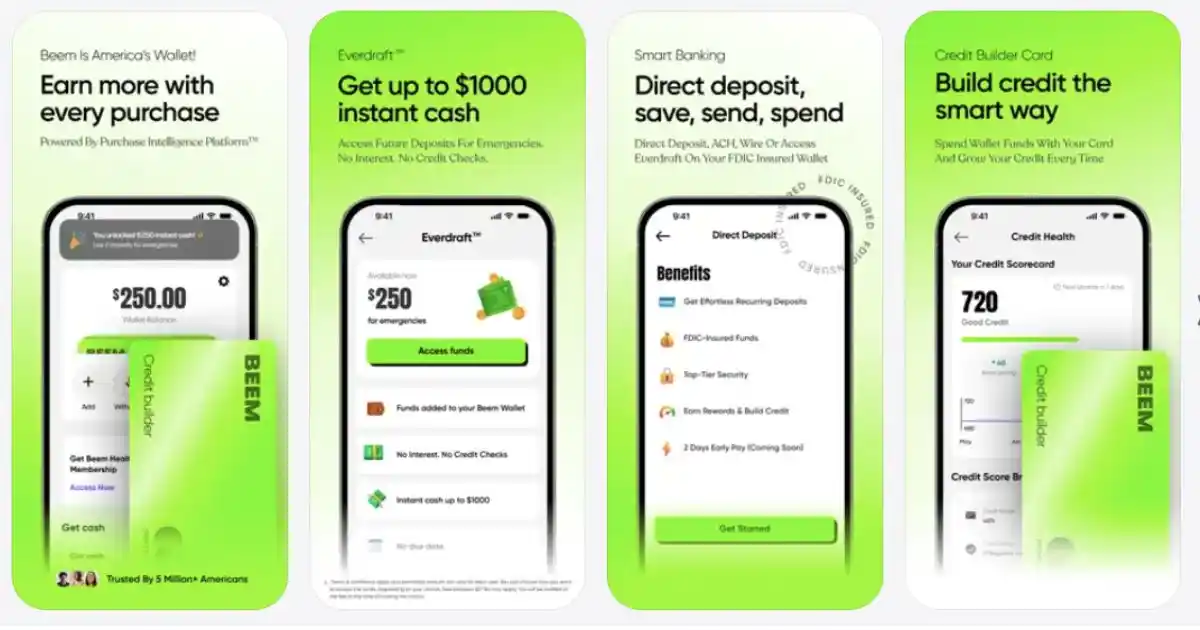
Beem’s Everdraft gives part-time workers access to cash advances up to $1,000 with no interest, no credit check, and no requirement for full-time employment.
This article covers why part-time workers struggle with most financial tools, how Beem fills that gap, and practical strategies for managing money when your hours are never guaranteed.
The Financial Reality of Part-Time Work in America
Part-time employment is not a niche category. It represents a massive and growing segment of the American workforce.
The Bureau of Labor Statistics defines part-time work as fewer than 35 hours per week, and as of recent data, approximately 27.2 million Americans fall into this category.
But here is what the headline number does not capture: part-time work comes in many forms, and each carries its own financial challenges.
Voluntary Part-Time Workers
Some workers choose part-time schedules. Parents balancing childcare, students attending college, semi-retired professionals, and people managing health conditions often prefer fewer hours. Their income is lower by design, but their bills (rent, utilities, insurance, groceries) do not scale down proportionally.
Involuntary Part-Time Workers
Roughly 4.2 million Americans work part-time because they cannot find full-time positions. This group, classified by the BLS as “part-time for economic reasons,” wants more hours but cannot get them.
Their income is not just lower; it is uncertain. Shifts get cut without warning. Hours fluctuate week to week. Planning a budget around income that changes every pay period is nearly impossible.
Multiple-Job Part-Time Workers
An increasing number of Americans cobble together income from two or three part-time positions. A barista working mornings, a retail associate working evenings, and a weekend tutor might collectively work 40+ hours but still be classified as part-time by each employer.
None of these jobs individually offers the stability or benefits of full-time employment, and the administrative complexity of managing multiple pay schedules, tax withholdings, and income streams creates unique financial stress.
The Common Thread
Regardless of why someone works part-time, the financial profile is similar: smaller paychecks, variable schedules, limited access to employer-sponsored financial benefits, and heightened vulnerability to cash flow disruptions. A $300 car repair that a full-time worker might absorb within a single pay cycle can throw a part-time worker’s finances off track for weeks.
Why Most Financial Products Fail Part-Time Workers
The financial system was largely built for people with stable, full-time income. Part-time workers run into barriers at almost every turn.
Banks Set Minimum Thresholds
Many bank products, from personal loans to lines of credit, require minimum income thresholds that part-time wages often do not meet. A part-time retail worker earning $1,200 per month may not qualify for even a small personal loan, regardless of how responsibly they manage their money.
Credit Scores Penalize Thin Files
Part-time workers, especially younger workers and those re-entering the workforce, often have thin credit files. Without a long history of full-time employment and traditional credit products, their credit scores may be low or nonexistent. This locks them out of credit cards, personal loans, and even some bank accounts that require a credit check.
Earned Wage Access Apps Require Employer Integration
Popular earned wage access apps like EarnIn, Payactiv, and DailyPay require your employer to integrate with their platform or at minimum, require verifiable direct deposit from a single consistent employer. Part-time workers, especially those juggling multiple jobs, often do not meet these requirements.
A worker splitting time between two retail stores may have two small direct deposits instead of one large one, and neither employer may use the timekeeping software these apps require.
Payday Loans Are Predatory
Payday loans are technically available to part-time workers, but they are among the most harmful financial products on the market. The Consumer Financial Protection Bureau (CFPB) has documented how payday loans trap borrowers in debt cycles through fees that can equate to APRs of 300% to 400% or more. For part-time workers with less financial margin, the consequences of entering a payday loan cycle are even more severe.
The Result: A Financial Blind Spot
Part-time workers need financial tools just as much as, and often more than, full-time workers. But the products designed to help people bridge cash flow gaps frequently exclude the very people who experience those gaps most often.
How Beem Solves This for Part-Time Workers
Beem was built on a fundamentally different assumption than most financial apps: that your employment type should not determine your access to financial support. Whether you work 15 hours a week or 50, Beem evaluates your eligibility the same way: by looking at your actual income history.
No Full-Time Employment Requirement
Everdraft does not ask whether you work full-time or part-time. It does not ask for an employer name, a timekeeping login, or proof of a 40-hour workweek. The app connects to your bank account and reviews your deposit history. If you have consistent income flowing in, regardless of the source or the hours behind it, you are eligible.
This is a fundamental design choice, not a workaround. Beem’s model recognizes that income is income. A part-time nurse earning $1,500 biweekly and a full-time office worker earning the same amount have the same financial reality. Both should have the same access to cash advance tools.
No Credit Check
Part-time workers are disproportionately affected by thin credit files. Beem eliminates this barrier entirely. Everdraft does not run a hard or soft credit inquiry. Your credit score is never a factor in determining eligibility or your advance limit. This means a 19-year-old college student working part-time at a coffee shop with no credit history has the same access pathway as a 45-year-old professional with a 780 score.
No Minimum Income Requirement
Beem does not impose a blanket minimum income threshold. Your Everdraft limit is calibrated to your actual income level and deposit patterns. A part-time worker earning $800 per month will have a different limit than someone earning $4,000 per month, but both can access the feature. The system scales to your financial reality instead of disqualifying you for not earning enough.
Multiple Income Streams Are Recognized
If you work two or three part-time jobs and all deposits land in the same bank account, Beem sees your total income picture. You do not need to verify each employer separately or prove that any single job meets a minimum hour or income threshold. This is especially important for multi-job workers whose aggregate income is substantial even though no single paycheck is large.
What Part-Time Workers Get With Beem Beyond Cash Advances
Cash advances solve the immediate problem. But part-time workers face ongoing financial complexity that a one-time advance cannot address. Beem’s platform includes tools specifically suited to the realities of managing money on variable, part-time income.
Budgeting for Unpredictable Paychecks
Standard budgeting apps assume a fixed monthly income. You enter your salary, allocate percentages to categories, and track spending against those targets. This model breaks down when your income changes every pay period.
BudgetGPT takes a different approach. It analyzes your actual deposit patterns (including fluctuations) and builds budgeting recommendations around your real cash flow. If your hours were cut last week and your next paycheck will be $200 less than usual, BudgetGPT adjusts its recommendations accordingly. It flags upcoming bills that might collide with a lighter paycheck and suggests where to trim spending preemptively.
For a part-time worker whose income can swing 30% or more from one pay period to the next, this kind of adaptive budgeting is not a nice-to-have. It is essential.
Stretching Every Dollar Further
When your income is limited, the margin between getting by and falling short can be as small as $20 or $30. Two Beem tools directly address this:
PriceGPT compares prices across retailers in real time. Before you buy groceries, household supplies, or other essentials, PriceGPT checks whether a better price exists elsewhere. Over a month, saving $3 here and $5 there adds up to real money for a part-time worker operating on a tight budget.
DealsGPT finds cashback offers and discounts at thousands of brands. Unlike coupon apps that require you to search and clip, DealsGPT surfaces relevant deals based on your spending patterns. The cashback you earn flows back into your financial ecosystem, creating a small but consistent buffer.
Finding More Hours and Income
One of the most practical tools for part-time workers is one that most financial apps do not even think to offer.
JobsGPT surfaces job and gig opportunities based on your location and profile. If your current employer cut your hours this week, JobsGPT can help you find a short-term gig or a new part-time position to fill the gap. For workers constantly navigating the uncertainty of variable schedules, having an income-discovery tool integrated into the same app that manages your cash flow is uniquely powerful.
Building Credit From a Part-Time Income
Part-time workers often lack access to traditional credit-building products. Without full-time employment, qualifying for a credit card or a small loan can be difficult. Beem’s credit-building tools work independently of your employment status. Consistent, responsible use of the platform helps build your credit profile over time, creating a foundation for better financial products in the future.
Sharing Access Across a Household
Many part-time workers are part of households where multiple family members work variable hours. Beem Pass lets you share Everdraft access and financial tools with family members under a single subscription. Instead of each person paying for separate financial apps, one Beem subscription can cover the household, reducing costs while extending protection to everyone.
Real Scenarios: How Part-Time Workers Use Everdraft
Abstract features become meaningful when you see them in context. Here are three scenarios that illustrate how part-time workers use Beem in practice.
Scenario 1: The College Student
Maya works 20 hours a week at a campus bookstore and earns about $650 biweekly. Her car needs a $275 brake repair, but her next paycheck is nine days away and her checking balance is $80. Traditional options: skip the repair (unsafe), ask family for money (uncomfortable), or put it on a credit card she does not have.
With Everdraft, Maya requests a $275 advance through the Beem app. The funds arrive within minutes. She pays the mechanic that afternoon. When her next paycheck deposits, $275 is automatically repaid. No interest. No fees beyond her Beem subscription. No debt spiral.
Scenario 2: The Multi-Job Parent
Carlos works mornings at a warehouse and three evenings a week at a restaurant. Combined, he earns about $2,800 per month, but his schedule shifts constantly. This month, the restaurant cut his shifts by half due to slow business. His rent is due in four days and he is $400 short.
Beem recognizes both direct deposits in Carlos’s bank account and has set his Everdraft limit based on his combined income history. He requests a $400 advance. Funds arrive within minutes. Rent gets paid on time. When his next round of deposits hits, the $400 is repaid automatically. Meanwhile, BudgetGPT has already flagged that his restaurant income is trending down and suggests he use JobsGPT to explore additional evening shifts.
Scenario 3: The Semi-Retired Professional
Diane works 15 hours a week as a part-time bookkeeper, supplementing her retirement savings. She earns about $1,100 per month. An unexpected dental bill of $550 arrives, and her insurance covers only $200. She needs $350 quickly.
Everdraft provides the $350 within minutes. Diane repays it from her next paycheck with no interest. She also uses PriceGPT to comparison-shop for a dental savings plan that could reduce her out-of-pocket costs in the future.
How to Get Started With Beem as a Part-Time Worker
Setting up Beem and accessing Everdraft takes just a few minutes:
1. Download the Beem app from the App Store or Google Play. Account creation requires basic personal information and takes under five minutes.
2. Link your primary bank account. This should be the account where your paychecks or income deposits land. If you have multiple jobs depositing into the same account, Beem will see all of them.
3. Let Beem review your income history. The app analyzes your deposit patterns to determine your Everdraft limit. There is no paperwork, no employer letters, and no pay stub uploads. The process is automatic.
4. Check your Everdraft limit. Your initial limit will reflect your income level and deposit consistency. It may start lower than the $1,000 maximum, but responsible usage and Beem Boost can increase it over time.
5. Request an advance when you need one. Open the app, choose your amount, and receive funds within minutes. Repayment happens automatically from your next deposit.
6. Explore the full platform. Set up BudgetGPT to start tracking your cash flow. Browse DealsGPT for cashback opportunities. Check JobsGPT if you are looking for more hours. Activate credit building if you want to strengthen your credit profile.
Part-Time Income Does Not Mean Part-Time Financial Access
The financial industry has treated part-time workers as an afterthought for too long. Lower income does not mean lower financial needs. Variable schedules do not mean variable emergencies. And the absence of a full-time employer relationship should not be the reason someone cannot access $300 to fix a flat tire or $200 to cover a utility bill before payday.
Beem was designed around a simple principle: financial access should be based on what you earn, not how you earn it. Everdraft evaluates your deposits, not your job title. BudgetGPT adapts to your cash flow, not a textbook salary. JobsGPT helps you find more income when you need it. And FDIC-backed security protects your funds with the same insurance standard as the largest banks in the country.
Part-time work is a reality for 27 million Americans. Beem makes sure that reality does not come with second-class financial access.