
Your car will not start. The mechanic says $600. You have $83 in your checking account and payday is nine days away. Two options sit in your pocket: a credit card and a phone with three cash advance apps installed. Which one should you use?
This is not a hypothetical for most Americans. The Federal Reserve reports that 37% of adults could not cover a $400 emergency with cash or savings. When that emergency hits, the decision between using a credit card and using a cash advance app determines whether you solve the problem for $5 or for $200.
Cash advance apps vs credit cards is not an abstract financial debate. It is a real-time decision that millions of people face every month, and most of them get it wrong because they do not understand how the costs actually compare.
Here is the full breakdown: how each option works in an emergency, what it really costs, how it affects your credit, and which one leaves you in a better position when the crisis is over.
How Credit Cards Work in an Emergency

Most people think they understand credit cards. Swipe, pay later, done. But credit cards offer two very different ways to access money in an emergency, and the cost difference between them is enormous.
Option 1: Swiping for a Purchase
If your emergency involves paying a business that accepts cards, you swipe and pay later. You are charged the purchase APR (typically 22% to 28% in 2026), but if you pay the balance in full by your statement due date, you pay zero interest thanks to the grace period.
This is the cheapest way to use a credit card in an emergency. The problem: people in financial emergencies often cannot pay in full within 30 days, so interest accrues at 22% to 28% APR and compounds monthly.
Option 2: Credit Card Cash Advance
If your emergency requires actual cash (a landlord who only takes checks, a utility that charges card fees), you can take a cash advance from your credit card at an ATM. This is where credit cards become expensive fast.
Most cards charge a cash advance fee of 3% to 5% (minimum $5 to $10), plus a cash advance APR of 25% to 30%, higher than the purchase APR. Crucially, there is no grace period on cash advances. Interest starts accruing the moment you withdraw, not at the end of your billing cycle.
On a $500 credit card cash advance at 5% fee and 29.99% APR: $25 upfront in fees, then roughly $12.50 in interest per month. Three months to pay off costs approximately $62.50 total. Credit card cash advance fees make this one of the most expensive ways to access emergency cash.
This distinction matters for the cash advance apps vs credit cards comparison. A purchase swipe paid within the grace period costs nothing. A cash advance from the same card costs 3% to 5% upfront plus 25% to 30% APR from day one. Same plastic, radically different economics.
How Cash Advance Apps Work in an Emergency
Cash advance apps provide a fundamentally different model. You request an advance ($50 to $1,000 depending on the app), the funds deposit into your bank account (same day to 1-3 business days), and the advance is automatically repaid from your next paycheck. The defining feature: zero interest.
Cash advance apps advance a portion of income you have already earned or are expected to earn, secured by your upcoming deposit.
The short repayment window and automatic deduction keep default risk low, which is what allows these apps to charge zero interest while remaining profitable through small subscription fees or optional tips.
The cost structure of a typical cash advance app in 2026: interest at $0, subscription of $0 to $9.99/month, optional express delivery of $0 to $5.99, and no mandatory fees.
Compare that to the credit card cash advance: $25 upfront plus $12.50/month in interest on $500. The credit card cash advance vs cash advance app cost gap is a different order of magnitude.
Cash Advance Apps vs Credit Cards: The Full Comparison
| Feature | Credit Card (Purchase) | Credit Card (Cash Advance) | Cash Advance App |
| Typical Amount | Up to credit limit | Up to cash advance limit (often 20-30% of credit limit) | $50 to $1,000 |
| Cost if Paid Quickly | $0 (if paid within grace period) | 3-5% fee + 25-30% APR from day one | $0 to $9.99 subscription |
| Cost if Paid Over 3 Months | $25-$40 in interest on $500 | $60-$75 in fees and interest on $500 | $0 to $30 in subscription fees |
| Interest Rate | 22-28% APR | 25-30% APR (no grace period) | 0% |
| Speed | Instant (at point of sale) | Instant (ATM withdrawal) | Same day to 1-3 business days |
| Credit Check to Access | Already approved (existing card) | Already approved (existing card) | None |
| Credit Score Impact | Increases utilization ratio | Increases utilization ratio | No impact (no hard inquiry) |
| Repayment Structure | Minimum payment + interest | Minimum payment + interest (higher APR) | Automatic full repayment from next deposit |
| Debt Spiral Risk | Moderate (minimum payments extend debt) | High (no grace period, high APR) | Very low (auto-repay, no rollover) |
| Requires Credit Card | Yes | Yes | No |
The table reveals something that the cash advance apps vs credit cards question obscures: this is actually a three-way comparison.
Credit card purchases and credit card cash advances are financially different products that happen to live on the same card.
Against cash advance apps, credit card purchases win on speed and lose on debt risk. Credit card cash advances lose to cash advance apps on virtually every metric.
The Scenario Test: $500 Emergency
Run all three options through the same car repair.
Credit Card Purchase (best case). Swipe $500. Pay in full within 30 days: $0 cost. Make minimum payments ($25/month): takes 24 months, costs approximately $130 in interest.
Credit Card Cash Advance. Withdraw $500 from ATM. $25 fee immediately. Pay off in one month: $37 total. Three months: $62. Six months: $100.
Cash Advance App (Beem). Request $500 through Everdraft™. Zero interest. Auto-repay from the next deposit. Total cost: $0 to $9.99.
The winner depends on repayment speed. If you can pay a credit card in full within the grace period, the card wins ($0 cost, instant swipe). If you cannot, the cash advance app wins decisively because it forces full repayment within one to two weeks rather than letting debt compound for months.
The uncomfortable truth: people who could pay $500 in full within 30 days probably are not in a financial emergency. The cash advance app is built for the person who cannot pay next month but can repay from their next paycheck.
When Credit Cards Win
Credit cards are the better emergency option in specific situations.
Large purchases above $1,000. Cash advance apps max out at $1,000 (Beem’s ceiling). For a $2,000 emergency dental bill at a merchant that accepts cards, a credit card is the only non-loan option, especially if you have a 0% introductory APR card.
When you can pay within the grace period. If you have the cash coming within 25 to 30 days, a credit card purchase costs nothing. This is the best way to get emergency cash for people with reliable income and a clear repayment timeline.
Building credit and earning rewards. Responsible credit card usage builds your score over time. Purchases also earn cashback or points and come with consumer protections (dispute rights, fraud liability, extended warranties). Cash advance apps do not offer these benefits.
When Cash Advance Apps Win
Cash advance apps are the better emergency option in more situations than most people realize.
When you do not have a credit card. Roughly 82 million Americans lack credit cards. Cash advance apps require no credit history, no credit check, and no prior approval. If you have a bank account with income deposits, you qualify.
When you cannot pay the balance in full next month. If $500 on a credit card accrues interest at 24% APR for three to six months, you pay $60 to $130 in interest. A cash advance app costs $0 to $10 and forces repayment on the next deposit, preventing the debt from lingering. This is the critical scenario where cash advance apps vs credit cards is not even close.
When you need cash, not a card swipe. Rent, private transactions, and utilities with card surcharges require bank funds. A credit card cash advance costs 3% to 5% plus high APR. A cash advance app deposits at zero interest.
When your credit utilization is already high. Adding an emergency charge near your credit limit damages your score. Cash advance apps have zero impact on utilization.
When you want to avoid debt accumulation. Credit cards let you carry balances indefinitely at high interest. Cash advance apps force automatic repayment. Are cash advance apps better than credit cards for preventing debt spirals? Unquestionably yes.
The Best Cash Advance App for Emergencies in 2026
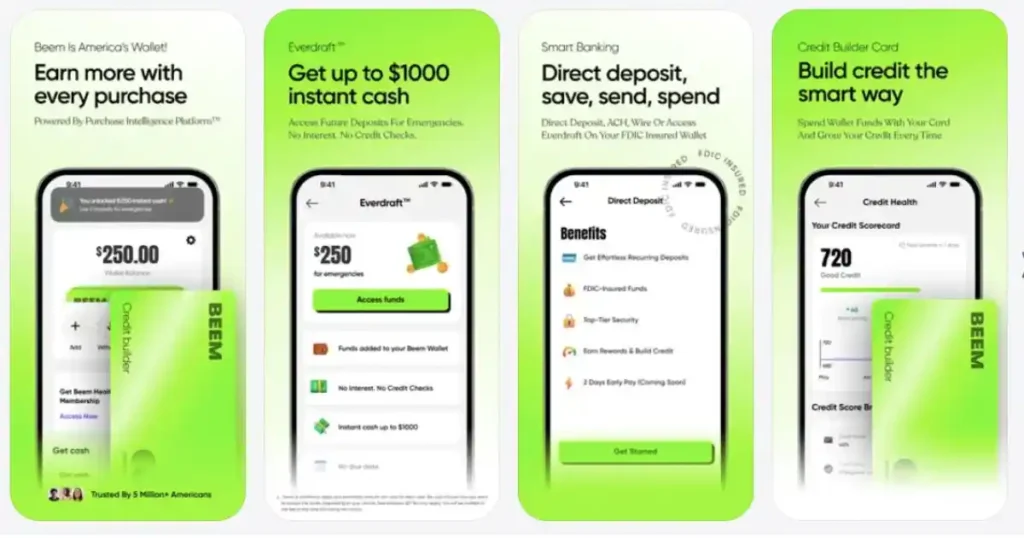
If you have decided a cash advance app is the right move, Beem is the strongest option available. Everdraft™ provides up to $1,000 with zero interest, no credit check, and same-day delivery. That limit covers most emergencies that send people reaching for credit cards.
What makes Beem particularly relevant to the cash advance apps vs credit cards conversation is the financial toolkit that comes with the advance. BudgetGPT builds a spending plan that prevents future emergencies from catching you off guard.
DealsGPT finds cashback on everyday purchases. PriceGPT compares prices so you save at checkout. AndJobsGPT connects you to income opportunities when you need to earn more.
A credit card solves the emergency. Beem solves the emergency and works on the conditions that created it.
People Also Ask About Cash Advance Apps vs Credit Cards
Are cash advance apps better than credit cards for emergencies?
It depends on repayment speed. If you can pay a credit card balance in full within the grace period (25-30 days), a credit card purchase costs $0 and wins. If you will carry a balance, a cash advance app is significantly cheaper: zero interest versus 22-28% APR. For most people in genuine financial emergencies, cash advance apps are the safer option because they force automatic repayment and prevent debt accumulation.
What is the difference between a credit card cash advance and a cash advance app?
A credit card cash advance charges a 3-5% upfront fee plus 25-30% APR with no grace period. A cash advance app deposits funds into your bank at zero interest with automatic repayment from your next deposit. Credit card cash advance fees make ATM withdrawals one of the most expensive borrowing methods. Cash advance apps eliminate those costs entirely.
Do cash advance apps affect your credit score?
No. Cash advance apps do not run hard credit inquiries and do not report advance activity to credit bureaus. Credit cards affect your utilization ratio every time you add a balance. Some apps like Beem offer separate credit-building features that can positively impact your score.
Can I use a cash advance app if I do not have a credit card?
Yes. Cash advance apps require a bank account with income deposits, not a credit card. Beem’s Everdraft™ provides up to $1,000 with no credit card, no credit check, and no interest.
How fast can I get money from a cash advance app vs a credit card?
Credit cards are faster at point of sale (instant swipe) and ATMs (instant withdrawal). Cash advance apps deliver funds same day to 1-3 business days. For emergencies at merchants, credit cards have the speed advantage. For emergencies requiring bank funds, cash advance apps deliver within hours at zero cost versus credit card cash advance fees of 3-5% plus immediate interest.
What is the best way to get emergency cash in 2026?
For amounts under $1,000 when you cannot pay a credit card in full within 30 days, a cash advance app like Beem ($1,000, zero interest) is cheapest. For amounts above $1,000 at card-accepting merchants, a credit card with low APR or 0% intro rate is the best path. Avoid credit card cash advances from ATMs whenever possible.
Disclaimer: This article is for informational purposes only and does not constitute financial advice. Credit card terms, APRs, and fees vary by issuer. Cash advance app features and limits are subject to change. Always verify current terms with your provider. Beem is not a bank. Banking services are provided by FDIC-insured partner institutions.