

Table of Contents
Cash advances get a bad reputation for one reason: they are often used when someone is already stressed, and stress can lead to short-term decisions that create long-term problems.
But a cash advance itself is not automatically irresponsible. It is a tool. Like any tool, it depends on how you use it, how often you use it, and whether you have a plan for what happens next.
This post is a practical guide on how to use cash advances responsibly, with real-life scenarios that make sense for everyday Americans. No guilt, no lectures. Just realistic uses that help you avoid late fees, protect essentials, and keep your finances stable until your next deposit hits.
The Rule That Makes A Cash Advance “Responsible”
A responsible cash advance has three traits. If your cash advance meets those conditions, it is serving its purpose: a short bridge, not a long-term crutch:
- It protects something essential (housing, utilities, transportation, health, work).
- It prevents a bigger cost (late fee, overdraft, shutoff, missed shift, penalty rate).
- It is repaid without creating a new crisis.
15 Real Ways People Use Cash Advances Responsibly
1) Avoiding A Late Rent Payment
Rent is one of the most expensive things to be late on. A small cash advance that prevents a late fee or notice can be a responsible move if you know your next deposit is close.
Responsible version: Cover the gap, repay on your next inflow, and use the rest of the month to rebuild a buffer.
2) Keeping The Lights Or Internet On
Utility shutoffs create domino effects. If a cash advance prevents a shutoff or reconnection fee, it can be the cheapest option.
Responsible version: Use it once, then adjust timing (due dates, reminders, autopay) so it is not repeated monthly.
3) Covering A Prescription Or Clinic Co-Pay
Health costs are rarely optional. If you are choosing between medication and bills, a small advance that protects your health is a rational use.
Responsible version: Borrow only what you need for the health expense, not “extra.”
People Also Read: Is Beem Available in My State?
4) Fixing A Car Issue That Would Cost You Income
Transportation is income. If a repair prevents you from getting to work, the real cost is not the repair. It is the lost shift or lost job.
Responsible version: Use an advance to protect your ability to earn, then pay it back from the income it helped you preserve.
5) Bridging A Payroll Timing Delay
Even stable jobs have payroll delays: holidays, bank posting issues, new-job payroll cycles, or HR glitches.
Responsible version: Use the cash advance as a temporary bridge, not a replacement for payroll.
6) Covering Childcare For A Work Shift
Missing a shift can be more expensive than paying for childcare. Many families use a small cash advance to keep work steady.
Responsible version: Cover only the childcare amount, and look for longer-term schedule or childcare solutions after.
7) Preventing An Overdraft Domino
Overdraft fees can stack fast. Sometimes a small cash advance is cheaper than multiple overdrafts if you are in a tight week.
Responsible version: Use the advance to keep your balance above zero and avoid repeated small debits pushing you negative.
8) Paying A Minimum Due On A Critical Bill
Some bills have penalties that escalate quickly: insurance premiums, phone service, car payments.
Responsible version: Pay what keeps the account current, not what feels emotionally relieving in the moment.
9) Buying Work Essentials That Unlock Income
This includes work boots, uniform costs, a tool replacement, data plan renewal for gig work, or a transit pass.
Responsible version: Borrow for the thing that directly enables income, not optional upgrades.
10) Handling A One-Time Emergency Travel Cost
Unexpected travel happens: family emergencies, urgent trips, last-minute transportation.
Responsible version: Use it for the urgent travel piece only and keep a repayment plan tied to your next deposit.
11) Covering A Deposit To Avoid Losing Housing
Security deposits or move-in costs can be a trap when your current situation is unstable.
Responsible version: Use a cash advance only if it prevents a worse outcome (like losing a stable place to live).
12) Keeping A Phone Line Active
A phone is not just communication. It is access to work, school, banking, verification codes, and emergency services.
Responsible version: Pay the bill that keeps your line active, then set reminders so it does not become a recurring emergency.
13) Getting Through A Temporary Reduction In Hours
Hours drop. Seasonal work slows. Kids get sick. A short cash bridge is sometimes better than turning to high-interest debt.
Responsible version: Use it as a one-off buffer while you stabilize hours, not as a permanent supplement.
14) Avoiding A Payday Loan Or High-Cost Borrowing
This is one of the most responsible reasons: using a lower-cost, more transparent option to avoid predatory borrowing.
Responsible version: Borrow smaller, repay faster, and treat it as a one-time replacement for a worse alternative.
15) Handling A Surprise “Same-Week” Expense
A broken tire. A school fee. A required bill you forgot. The key here is not the expense. It is the timing.
Responsible version: Borrow just enough to cover the real need, then rebuild your buffer once the week passes.
People Also Read: How Much Money Can I Get From Beem?
Responsible Use Checklist: How to Use Cash Advances Without Getting Stuck
Before tapping into a cash advance, ask yourself the following questions to ensure it’s truly a responsible decision:
1. Is This A Short-Term Solution?
A responsible cash advance should never be the solution to a long-term problem. Ask yourself, “Is this emergency truly time-sensitive, and will I be able to repay the amount quickly?” The key is to think in terms of short-term, not “just until next payday.”
2. Does This Payment Protect Something Essential?
Is the advance going towards something non-negotiable, like keeping a roof over your head or preventing a critical utility shutoff? Responsible borrowing means prioritizing expenses that are vital for maintaining stability and well-being.
3. Am I Borrowing Only What I Need?
Borrowing more than necessary only adds to the pressure. Focus on borrowing just enough to cover the gap and avoid the temptation of overextending yourself. For example, if you need $100 to prevent a shutoff, don’t borrow $250 “just in case.”
4. Can I Repay This Quickly?
You should always have a realistic plan to repay the cash advance in full as soon as your next deposit comes in. If you can’t see a clear path to repayment, reconsider taking the advance, or take the time to restructure your finances first.
5. Have I Fixed The Root Cause?
A one-time bridge is fine, but if you keep needing cash advances, that indicates an underlying issue, such as mismatched timing between your paycheck and bills, overspending, or a lack of emergency savings. Responsible use means addressing the root problem so you don’t fall into a cycle.
The “Two-Step” Plan That Keeps Cash Advances From Becoming A Habit
Responsible cash advance use has a missing piece: what you do after.
Step 1: Use the advance to solve the urgent timing gap.
Step 2: Fix the root issue that created the gap.
The root issue is usually one of these:
- due dates that do not match deposit timing
- autopay timing collisions
- no buffer (even a small one)
- subscription leaks
- unpredictable work hours
If you solve one root issue per month, you reduce how often you need advances without needing a dramatic lifestyle change.
How Beem Helps You Use Cash Advances Responsibly
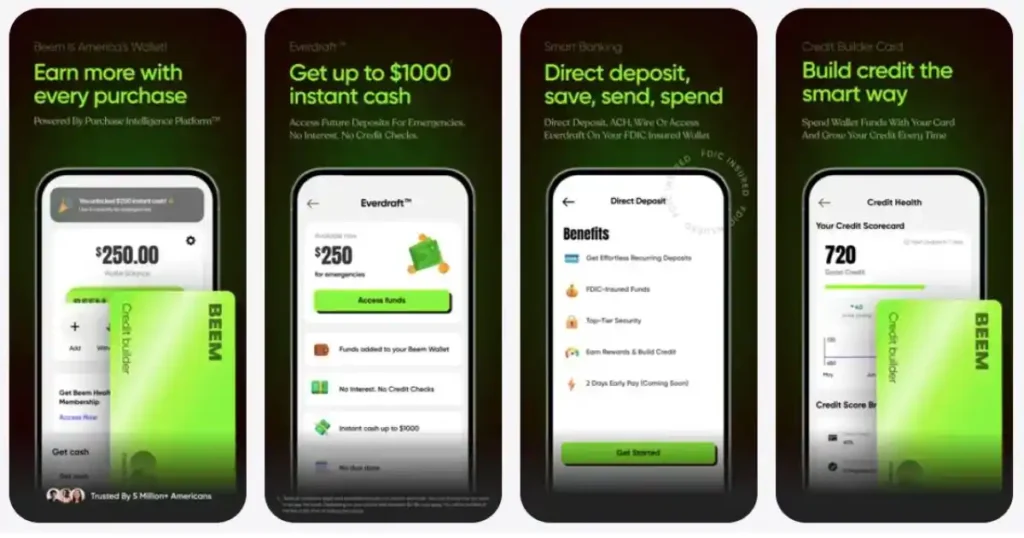
At Beem, we want to provide a financial tool that helps users navigate short-term challenges without turning to predatory lending or high-interest credit products. That’s why we designed Everdraft™ to be a transparent, responsible alternative to traditional payday loans.
Here’s how Beem supports you in using cash advances responsibly:
1) No Interest, No Credit Checks: Just A Bridge
One of the key features of Everdraft™ is that it doesn’t come with interest. Unlike payday loans that often have APRs upwards of 400%, Beem allows you to access your own funds without extra fees on top of what you owe. This makes Everdraft™ a true short-term solution instead of a costly cycle of interest payments.
Additionally, there are no credit checks, meaning your financial history won’t be an obstacle. This feature gives users a more inclusive option to address urgent needs without the pressure of accumulating high fees or facing denial due to poor credit.
2) Transparent Fees And Flexible Repayment
Beem allows for instant cash advances, but with a transparent flat fee structure. Unlike some lenders that may sneak in hidden fees or charge you for every transaction, Beem’s fees are clear upfront, ensuring you know exactly what you’ll pay before you commit.
More importantly, Beem lets you decide how quickly you repay. This flexibility helps you control the terms based on when your next deposit is available. If you need time, you’re not pressured with penalty rates or escalating fees.
3) Practical Guidance For Responsible Use
We know that the best way to help our users use Beem responsibly is by offering proactive tips. From setting up automatic savings to adjusting your bill due dates, Beem actively helps users avoid frequent borrowing.
Beem’s budgeting tools, spending notifications, and repayment reminders are just a few ways that Everdraft™ integrates into a responsible money management plan. Our goal is to make sure our users are not just getting quick fixes but building long-term habits that reduce the need for cash advances.
4) A “Smart” Cash Advance: Making Every Dollar Work
When you use Beem, you aren’t just getting access to a quick fix. You’re getting access to a financial ecosystem that empowers you to make smarter financial choices. Whether it’s choosing between a free standard ACH transfer or a paid instant transfer, Beem always gives you a choice. And that choice empowers you to avoid recurring debt by staying within your budget limits.
People Also Read: Beem App Review
Responsible vs Risky Cash Advance Use
| Situation | Responsible Use Looks Like | Risky Use Looks Like |
| Rent due tomorrow | Borrow the gap, repay on next inflow | Borrow max and hope it works out |
| Bills piling up | Pay the one bill that prevents shutoff | Use cash advance for general spending |
| Tight week | Prevent overdrafts and late fees | Use repeated advances for daily expenses |
| Income drop | Temporary bridge with plan | Ongoing dependency without adjustment |
| Emergency expense | Cover essential amount only | Add “extra” because it feels available |
Final Thoughts
Cash advances should be a tool, not a lifestyle. When used wisely, they provide a temporary bridge to get through tight spots. Responsible ways to use cash advance apps like BEEM means borrowing small amounts for essential needs, repaying promptly, and correcting the root cause of financial gaps, such as bill due dates, budgeting, or savings. The goal is not to become reliant on them, but rather to use them sparingly and strategically as an option of last resort.
If you’re using cash advances to avoid bigger costs, protect essentials, and repay quickly, they can be a responsible financial tool in today’s world. However, the key to avoiding the trap of recurring borrowing is to focus on long-term financial health: make adjustments to your budgeting, manage cash flow timing, and build small savings so you need fewer advances as time goes on.
The ultimate goal should be to limit reliance on advances while empowering yourself to manage your finances more proactively. By borrowing wisely, repaying promptly, and addressing the causes of financial gaps, you can make cash advances a temporary fix, not a permanent solution.
FAQs
1. What Is The Best Way To Use Cash Advances Responsibly?
The best way to use a cash advance is by borrowing only what you need for essential expenses. This ensures you’re not overextending yourself and that you’re covering only the most immediate and necessary expenses. Once you’ve borrowed, make sure you have a clear repayment plan tied to your next inflow.
2. Are Cash Advances Ever A Good Idea?
Yes, cash advances can be a good option if used strategically. They are most beneficial when they prevent a larger financial penalty, like overdraft fees, missed payments, or utility shutoffs. They also protect essentials like food, transportation, or shelter.
3. How Often Is Too Often?
If you’re relying on cash advances more frequently than once a month, that’s a signal you may need a more sustainable plan. Constantly needing advances may suggest budgeting issues or a mismatch in bill payment cycles. It’s important to avoid the trap of using them as a short-term fix without addressing the larger financial habits at play.
4. Should I Use A Cash Advance For Groceries?
A cash advance for groceries can be responsible when it helps avoid bigger consequences, like missing a critical bill payment or running out of essentials. However, if you find yourself using cash advances regularly to cover groceries, that’s a sign of budgeting gaps that need addressing. If groceries become a recurring use case, it’s time to assess your spending habits or consider adjusting your grocery budget to avoid using cash advances as a regular solution.
5. What’s The Biggest Mistake People Make With Cash Advances?
The biggest mistake people make is borrowing more than they actually need because the money is available. When you borrow more than necessary, you create an unnecessary burden and extend your repayment period. Always aim to borrow only the exact amount needed to cover the immediate expense, and avoid borrowing “extra” just because you qualify for a larger advance.