
Table of Contents
Responsible borrowing is not about never needing help. It is about using the right kind of help in the right way, for the right length of time.
That is exactly why this topic matters. When money gets tight, people often do not make bad decisions because they are careless. They make them because the pressure is immediate, the bill is real, and the options feel limited. That is where long-term debt cycles begin.
A short-term cash problem gets solved with the wrong product, the repayment hits too hard, and then the next week’s shortage gets covered with even more borrowing. The CFPB has described this pattern clearly in the payday-loan market: more than four out of five payday loans are re-borrowed within a month, and repeated rollovers can turn one unaffordable loan into a longer-term debt trap.
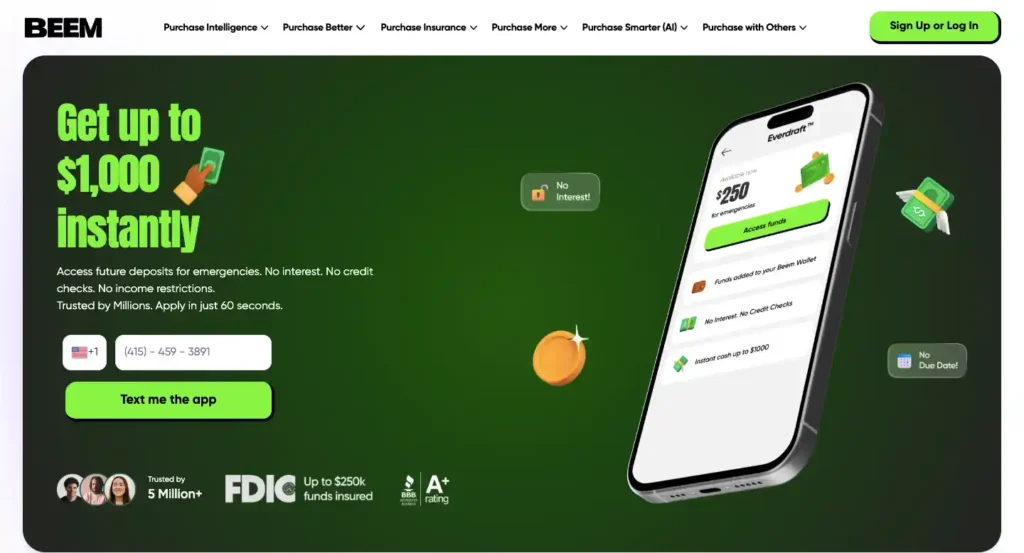
At Beem, we built Everdraft™ to work differently. Everdraft™ offers eligible users interest-free emergency cash with no credit check, no rollover fees, and automatic repayment tied to the next qualifying deposit. That structure matters because Beem and responsible borrowing should go together. The goal is to help people absorb a short-term timing gap without pushing them into the kind of long-term debt cycles that high-cost short-term lending often creates.
What Long-Term Debt Cycles Actually Look Like
Long-term debt cycles rarely begin with one huge financial collapse. More often, they begin with something small and familiar: a late paycheck, a utility bill that lands before the deposit, a grocery week that costs more than expected, or a rent gap that needs to be covered for a few days.
The problem begins when the repayment structure is too aggressive or too expensive. The CFPB has explained that many short-term, lump-sum loans create unaffordable repayment pressure, forcing borrowers to choose between defaulting, skipping essentials, or borrowing again. That repeated re-borrowing is what turns a one-time shortage into a cycle.
That distinction matters for readers because a short-term cash need is not automatically dangerous. A dangerous pattern is when the product itself makes it easy to get stuck. That is the line that responsible borrowing has to protect.
People Also Read: The Complete BEEM Pricing Guide
Why Beem Is Built Differently
Everdraft™ is designed to reduce the exact patterns that often trap people in short-term debt. We do not charge interest on the advance itself. We do not charge rollover fees. We do not require a hard credit check. Repayment is automatic when the next qualifying deposit arrives, which means the structure is built around cash-flow timing rather than a punishing due-date cliff.
Our pricing model matters here too. We use a flat monthly subscription and an optional flat instant-transfer fee if you want money immediately. Standard ACH transfers are free.
There are no tips, no percentage-based advance fees, and no hidden fee layers that quietly behave like interest. That transparency is important because responsible borrowing gets much harder when the cost of using a product is hard to understand.
How Everdraft™ Supports Responsible Borrowing
The healthiest use of Everdraft™ is simple. Use it as a bridge for a short-term timing problem, not as a substitute for income.
That usually looks like this: you are covering an exact shortfall, the next deposit is close and real, and the purpose is to protect something essential or prevent a higher cost.
Rent, groceries, transportation, utilities, a minimum payment that prevents a penalty, or a same-week emergency expense are all examples of situations where a short-term bridge can be responsible. The point is not to “borrow because money is available.” The point is to close a defined gap without creating a larger one.
This is also why Everdraft™ limits are structured the way they are. Different plans offer different emergency cash ceilings, from smaller entry-tier amounts up to $1,000 on Pro, and not every user starts at the highest level.
That encourages users to think in terms of solving a real gap rather than treating borrowing capacity like spendable income.
What Responsible Borrowing Looks Like In Practice
Responsible borrowing is usually not dramatic. It is boring on purpose, and that is what makes it healthy. A responsible Beem user generally does four things.
Step 1: They borrow only the amount needed to solve the immediate problem.
Step 2: They tie the advance to a realistic incoming deposit, not a hopeful one.
Step 3: They think about transfer speed like a cost decision, not an impulse decision. If the money is needed immediately and a late fee or overdraft would cost more, an instant transfer can make sense. If the expense can wait a few days, free ACH protects more of their cash.
Step 4: They treat the repayment as the end of the bridge, not as the start of the next borrowing cycle.
That is the clearest way Beem and responsible borrowing fit together. The structure gives people room, but the healthiest results still come from using that room carefully.
People Also Read: The Complete BEEM App Review
The Biggest Mistake People Make With Short-Term Cash
The biggest mistake is not usually “borrowing.” It is borrowing without a boundary.
That can look like using the maximum available amount when only a smaller amount is needed. It can look like covering lifestyle spending instead of essentials. It can look like taking an advance against income that is uncertain rather than income that is already in motion.
Those are the habits that turn a short-term solution into a longer-term problem, even when the product itself is better structured than a payday loan.
This is where discipline matters more than intention. Most people do not set out to create a debt cycle. They slide into one because the first advance solved a real problem and then the second one was used a little too loosely. Responsible borrowing means not letting that slide happen.
Early Warning Signs That A Short-Term Bridge Is Becoming A Pattern
One of the most useful things readers can learn is how to spot the moment when borrowing is starting to shift from “helpful” to “habit.”
A short-term tool is starting to become risky when you are using it most pay periods, when the same category keeps triggering the need for it, or when you are borrowing before you even know exactly what gap needs to be covered.
Another warning sign is when the next deposit no longer feels like enough to reset the month. If the repayment itself creates immediate panic, the borrowing may be too frequent or too large for the current situation.
That does not mean Beem is the wrong tool. It means the problem is getting bigger than a short-term bridge. At that point, the next move should be reducing the root cause: fixed expenses, recurring leaks, timing issues, or unstable income.
That is where planning tools and income-support tools in the Beem ecosystem can help, but the key point remains the same: Everdraft™ should relieve pressure, not quietly become part of the pressure.
People Also Read: How Instant Cash Advance Works
Responsible-Borrowing Simplified
| Situation | Responsible Beem Use | Risky Pattern |
| Rent is short by $120 before payday | Borrow the $120 gap and repay when the deposit lands | Borrow the maximum available because “it might help later” |
| Groceries and fuel are tight this week | Use Everdraft™ for essentials only | Add nonessential spending because funds are available |
| You need money today | Use instant transfer only if speed prevents a bigger cost | Pay for instant delivery every time out of habit |
| Your next deposit is already expected | Use the advance against that real incoming cash flow | Borrow against a hoped-for sale, bonus, or side income |
| You have used advances several cycles in a row | Step back and fix the pattern causing the shortage | Keep repeating the same bridge without changing anything |
How To Keep Beem From Becoming Part Of A Debt Cycle
The cleanest way to avoid long-term debt cycles is to treat every advance like a signal. It is telling you something about your timing, your spending, or your margin.
If Everdraft™ helped you once, great. The next step is to ask why the gap happened. Was the bill due before payday? Were there too many automatic charges clustered into one week?
Did groceries, fuel, or utilities run higher than expected? Did your income arrive later than usual? The more honestly you answer that question, the less likely you are to need the same bridge again next cycle.
This is where short-term financial health improves. Not from pretending you will never need help, but from using help once and then removing one weak point from the system.
Responsible-Borrowing Check Before You Use Everdraft™
One of the best ways to keep short-term borrowing from turning into a long-term pattern is to pause for 30 seconds before you tap confirm. A quick check like this helps make sure you are using Everdraft™ as a bridge, not drifting into the kind of repeat borrowing cycle the CFPB has warned about in the payday-loan market.
The CFPB has found that more than four out of five payday loans are re-borrowed within a month, which is exactly the kind of long-term debt cycle responsible borrowing is meant to avoid. Beem is structured differently. Everdraft™ charges no interest and no rollover fees on the advance itself, but your habits still matter.
Is this for an essential need or to avoid a bigger cost?
Good examples include rent gaps, groceries, utilities, transportation, or a payment that prevents a larger fee. If the purchase is optional, it is usually not the best use of a short-term bridge.
Do I know the exact amount I need?
Responsible borrowing is usually precise. If the gap is $85, solve the $85 problem instead of borrowing the maximum available “just in case.” That precision is what helps keep a bridge from turning into next week’s stress.
Is my next deposit real and close, or am I borrowing against hope?
The safest use of Everdraft™ is when repayment is tied to a real upcoming deposit, not a best-case scenario. That keeps the advance anchored to cash flow instead of optimism.
Would free ACH work, or is speed actually worth paying for?
If waiting a few days does not create damage, standard transfer protects more of your cash. If waiting would trigger a late fee, overdraft, or missed essential payment, paying for speed may make sense.
If I needed this two cycles in a row, what would that tell me?
This is the most important question. One advance can be a bridge. Repeating the same advance for the same reason is usually a sign that the underlying timing, spending, or income pattern needs attention. That is how you stop a short-term tool from becoming part of a long-term debt cycle.
People Also Read: Are Emergency Funds Better Than Cash Advances
Final Thoughts
Beem and responsible borrowing belong in the same sentence only if the structure and the behavior both support it. We designed the Beem app’s Everdraft™ to be a safer kind of short-term cash tool: zero interest, no rollover fees, no credit check, transparent pricing, and repayment tied to the next qualifying deposit instead of a punishing debt trap model.
That said, no product can make borrowing responsible by itself. The healthiest use of Beem is still disciplined use. Borrow the exact gap, protect essentials, repay cleanly, and treat every advance as a bridge instead of a habit. That is how you use short-term help without drifting into the long-term debt cycles that make financial stress last much longer than the original problem.
People Also Ask
1. What Does “Beem And Responsible Borrowing” Actually Mean?
It means using Everdraft™ the way it is designed to be used: as a short-term bridge for real timing gaps, not as a substitute for income or a habit that repeats every cycle. Responsible borrowing with Beem is about solving the exact problem in front of you, keeping the cost clear, and repaying cleanly when the next qualifying deposit arrives.
2. How Does Beem Help Avoid Long-Term Debt Cycles?
Everdraft™ is structured to avoid several of the patterns that commonly trap people in high-cost short-term debt. It charges zero interest on the advance, has no rollover fees, and uses automatic repayment when the next qualifying deposit arrives. That is very different from products where borrowers repeatedly re-borrow and rack up new fees each cycle.
3. Is Beem Safer Than A Payday Loan?
For many short-term cash needs, yes. Payday loans are frequently associated with repeated re-borrowing and expensive fee cycles, while Everdraft™ is designed as an interest-free, no-rollover-fee alternative with more transparent pricing. That does not remove the need for discipline, but it does create a much healthier structure for responsible short-term use.
4. What Is The Most Responsible Way To Use Everdraft™?
Use it for a defined, near-term essential gap, borrow only the amount needed, and tie it to a real upcoming deposit rather than a best-case guess. Then let the repayment clear the bridge and avoid turning the next week into another borrowing week. That is the strongest responsible-borrowing pattern on Beem.
5. When Should I Worry About Falling Into A Debt Pattern?
You should pay attention when the same shortage keeps coming back, when you are borrowing before you know the exact gap, or when repayment leaves you immediately short again. Those are signs the issue may be bigger than a short-term timing problem and needs a broader fix around income, expenses, or bill timing.