
Table of Contents
Being a student between jobs is one of the most financially precarious positions a young adult can find themselves in. You are managing the intersection of tuition costs, living expenses, loan obligations, and the necessities of daily life, all on an income that has temporarily stopped flowing. The financial margin that was already tight during employment disappears entirely, and the gap between what needs to be paid and what is available to pay it becomes both immediate and urgent.
The Financial Reality of Being a Student Between Jobs
Essential Expenses Do Not Pause for Job Searches
Rent, utilities, groceries, transportation, phone bills, and loan minimum payments continue on their normal schedules regardless of employment status. For a student who was managing these expenses on a part-time income, even a brief gap in employment creates an immediate cash flow problem with no natural resolution until a new income source is established. The expenses are not discretionary. They cannot simply be deferred while the job search continues.
Student Financial Profiles Create Access Barriers
Most traditional financial products require credit history, stable income documentation, or both. Students between jobs typically have limited credit history, inconsistent income records reflecting part-time or seasonal work, and no current employment to document. These characteristics create access barriers to the conventional financial products that non-student adults might turn to during a period of income disruption, leaving students with fewer options precisely when they need more.
The Cost of Stress on Academic Performance
Financial stress during a job gap does not stay contained to the financial domain. Research consistently shows that financial anxiety significantly affects academic performance, concentration, and overall well-being. A student who is anxious about how to cover next week’s groceries is less able to focus on coursework, perform well in job interviews, and make the deliberate, forward-looking financial decisions the situation requires.
The Thin Line Between Temporary and Cascading
A brief period between jobs can become a cascading financial crisis if the first missed payment triggers a late fee, the late fee reduces available funds for the next bill, and the next bill is missed as well.
For students managing very tight margins, this cascade can develop quickly and take significantly longer to unwind than the original income gap that created it. Early, proactive financial management is what prevents a temporary employment gap from becoming a multi-month financial recovery project.
People Also Read: How Fast is Beem Instant Transfer
Common Financial Mistakes Students Make Between Jobs
Using High-Interest Debt as a First Response
The most common and most financially damaging response to a student income gap is immediate reliance on high-interest credit. A credit card cash advance at 28 percent APR, a payday loan at a triple-digit effective rate, or an informal high-fee lending arrangement all solve the immediate cash need while creating a more expensive problem that must be repaid from the same limited income the next job provides.
Ignoring the Problem Until It Becomes a Crisis
Financial avoidance is a well-documented psychological response to financial stress. Students who do not monitor their accounts closely during a job gap often discover the full extent of the problem only when a payment fails, an account goes negative, or a bill goes to collections. By that point, the costs associated with the gap are significantly higher than they would have been with early, proactive management.
Raiding Long-Term Savings for Short-Term Gaps
Students who have accumulated modest retirement savings, fixed-term savings products, or investment accounts sometimes liquidate these assets to cover short-term income gaps. The combination of early withdrawal penalties, taxes, and lost compound growth makes this approach significantly more expensive than its face value suggests.
A $500 withdrawal from a retirement account at age 22 can cost multiples of that amount in lost retirement value over a forty-year compounding period. Preserving long-term savings during short-term gaps is almost always the more financially sound approach.
How Beem Everdraft Supports Students Between Jobs
Accessible Without a Strong Credit History
Beem evaluates Everdraft eligibility based on income patterns and bank account activity rather than credit scores or credit history length. For students whose credit profiles reflect age and limited credit exposure rather than financial irresponsibility, this approach provides fair access based on actual financial behavior.
Zero Interest Keeps the Gap From Getting More Expensive
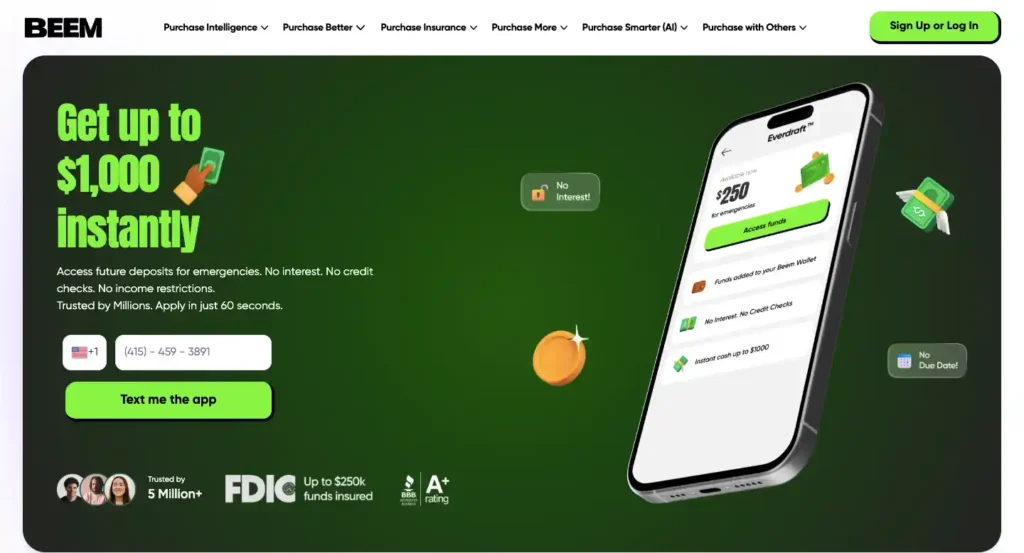
The defining financial risk of a student income gap is that short-term solutions create longer-term costs. Everdraft eliminates this risk by charging zero interest on advances of up to $1,000. The advance amount is the repayment amount, full stop. No interest accruing while the job search continues, no fees compounding over the gap period, and no financial product, making the start of the next employment period harder than the gap itself already was.
Covers the Essential Expenses That Cannot Wait
Everdraft advances are deposited directly into the connected bank account and can be used for any essential expense.
For students between jobs, this flexibility matters because the financial needs of a job gap are not uniform. One student needs to cover rent. Another needs to cover groceries. Another needs to maintain transportation to attend job interviews. Everdraft addresses the most urgent need rather than restricting use to predefined categories that may not match the individual situation.
Repayment Aligns With Employment Recovery
Everdraft repayment is triggered by incoming deposits rather than a fixed calendar deadline. For students between jobs, this means repayment occurs when the first paycheck from the new job arrives rather than on an arbitrary date that may fall before employment has been reestablished. This alignment with actual income recovery is one of the most important features of Everdraft for students specifically, because the timeline for finding a new job is genuinely unpredictable.
People Also Read: How Beem Pass Works
How Beem’s AI Tools Support Students Between Jobs
BudgetGPT: Financial Clarity When Clarity Is Most Needed
Financial stress during a job gap makes clear thinking about money harder precisely when it is needed most. BudgetGPT tracks spending in real time, automatically categorizes transactions, and provides students with a clear, accurate picture of their financial position at any time. This clarity replaces financial anxiety with financial information, the foundation of every good financial decision during a difficult period.
BudgetGPT also identifies forward-looking cash flow gaps before they arrive, giving students enough advance notice to take proactive action. Knowing three days in advance that the account will run short before a bill is due is significantly more actionable than discovering the shortfall the moment a payment fails.
JobsGPT: Accelerating Income Recovery
The fastest path out of a student income gap is a new job, and JobsGPT helps students find it faster. By identifying income opportunities based on the user’s profile and location, including part-time positions, campus employment, gig-economy options, and freelance opportunities aligned with student schedules, JobsGPT provides practical, immediately actionable income discovery that complements the short-term financial support Everdraft provides.
The combination of Everdraft for immediate stability and JobsGPT for income recovery creates a complete short-term financial strategy: cover the gap while actively working to close it, rather than simply managing the gap indefinitely.
PriceGPT and DealsGPT: Making Student Budgets Go Further
Students between jobs are operating on maximum financial constraint, which makes every dollar of spending reduction more valuable than it would be in normal financial conditions. PriceGPT helps identify better prices on the essential purchases that student budgets cannot eliminate, while DealsGPT surfaces savings opportunities based on actual spending patterns. The cumulative effect of consistent smart purchasing during a gap period meaningfully reduces the total advance amount needed and shortens the time to financial recovery.
Practical Short-Term Money Strategies for Students Between Jobs
Immediately Audit Every Expense
The first action when a job gap begins is a complete, honest audit of every recurring expense. Identify subscriptions, memberships, and services that can be paused or cancelled immediately. Streaming services, gym memberships, and non-essential subscriptions represent immediate, painless budget reductions that extend the runway of available funds without affecting essential living standards. BudgetGPT automates this audit by categorizing all transactions and surfacing recurring charges that may have been forgotten.
Establish a Daily Spending Limit
Rather than managing a monthly budget during a job gap, managing a daily spending limit creates tighter, more responsive financial control. Divide available funds by the number of days until expected income arrives and treat that daily figure as an absolute limit. This approach prevents the gradual budget drift that monthly management allows and creates a clear, actionable daily financial target that is easier to maintain under financial stress.
Prioritize the Job Search as a Financial Activity
Every day of unemployment is a financial cost. Treating the job search with the same urgency and time commitment as a paying job, structuring daily hours, setting application targets, and using JobsGPT to identify relevant opportunities, is itself a financial strategy. The faster employment is reestablished, the shorter the period of financial strain and the smaller the total advance needed to bridge the gap.
Communicate With Creditors Early
Creditors, landlords, and service providers are generally more accommodating when contacted proactively before a payment is missed than after. A student who calls their landlord three days before a rent payment is due to explain a temporary employment gap is in a significantly better negotiating position than one who simply misses the payment and waits for a late notice.
Use Campus and Community Resources
Most college campuses offer emergency financial assistance programs, food pantries, and student support services specifically designed for students experiencing temporary financial hardship. These resources are frequently underutilized because students are unaware of their existence or feel uncomfortable accessing them.
People Also Read: How Beem Supports Workers With Irregular Schedules
Cost Comparison: Handling a Student Income Gap
| Option | Cost on $300 Gap | Repayment | Risk Level |
| Beem Everdraft | $0 mandatory, 0% interest | Aligned with the next deposit | Low is used as a bridge |
| Credit Card Cash Advance | 3% to 5% fee plus 25%+ APR | Minimum monthly payment | High if balance carried |
| Payday Loan | $45 to $90 in fees | Fixed next payday | Very high: effective APR 390%+ |
| Bank Overdraft | $25 to $35 per transaction | Immediate | None but costly per event |
| Family Loan | Typically zero cost | Variable | Relationship risk |
| Campus Emergency Fund | Zero cost | Sometimes repayable | Low, eligibility dependent |
Final Thoughts
Being a student between jobs is a temporary situation with real, immediate financial consequences that deserve real, practical tools rather than generic advice to spend less and save more. The financial challenge posed by a student income gap is not a disciplinary problem. It is a timing problem: essential expenses arriving before income has been reestablished. The Beem app’s tools address that timing problem directly and affordably.
Zero-interest Everdraft provides the immediate bridge. BudgetGPT provides financial clarity, reducing anxiety and improving decision-making. JobsGPT accelerates income recovery. PriceGPT and DealsGPT make every available dollar go further. Used together as a deliberate short-term financial strategy, these tools give students the stability to manage the gap, the visibility to manage it intelligently, and the income discovery support to close it as quickly as possible. The gap is temporary. The financial habits built during it can last a career.
People Also Ask
1. Can college students with no credit history use Beem Everdraft?
Yes. Beem evaluates Everdraft eligibility based on income patterns and bank account activity rather than credit history length or credit score. Students with limited credit history can qualify based on their banking activity and prior income deposits. A consistent history of deposits from part-time or seasonal work supports a strong eligibility profile even without an established credit record.
2. How quickly can a student access Everdraft funds between jobs?
Most users receive an approval decision within minutes of connecting their bank account. Standard fund delivery takes one to three business days. The optional instant transfer delivers funds significantly faster for students facing an immediate deadline. Setting up the Beem account before the job gap begins means that when a need arises, accessing available funds requires only a few taps in the app.
3. What happens to Everdraft repayment if it takes longer than expected to find a job?
Everdraft repayment is triggered by incoming deposits rather than a fixed calendar deadline. If finding a new job takes longer than anticipated, repayment will not occur until a qualifying deposit is received in the connected account. This alignment with actual income recovery means the advance genuinely bridges the gap rather than creating a fixed repayment deadline that may fall before employment has been reestablished.
4. How does JobsGPT help students find work faster?
JobsGPT identifies income opportunities based on the user’s profile and location, including part-time positions, campus employment, and gig economy options. For students between jobs who need income recovery as quickly as possible, JobsGPT provides practical, immediately actionable opportunity discovery that complements the short-term financial support Everdraft provides.
5. Should students use Everdraft for every expense during a job gap?
No. Everdraft is most effectively used for essential, non-deferrable expenses: rent, utilities, groceries, transportation to job interviews, and minimum debt payments. Discretionary spending should be eliminated or minimized during a job gap, regardless of the availability of advance notice.