

Table of Contents
A lot of cash advance comparisons stop at the headline number. One app says “up to $500.” Another says “up to $1,000.” That sounds useful until real life gets involved. What matters is not just the maximum.
It is how the money becomes available, what fees show up around the transfer, how the limit is structured, and whether the product expands with your actual financial behavior. That is the real difference between Dave ExtraCash Limits and the Beem Advance Model.
This guide breaks that down clearly. Dave’s current ExtraCash product is built as an overdraft-style account model with a stated range of $25 to $500, though Dave also says few members qualify for the full $500.
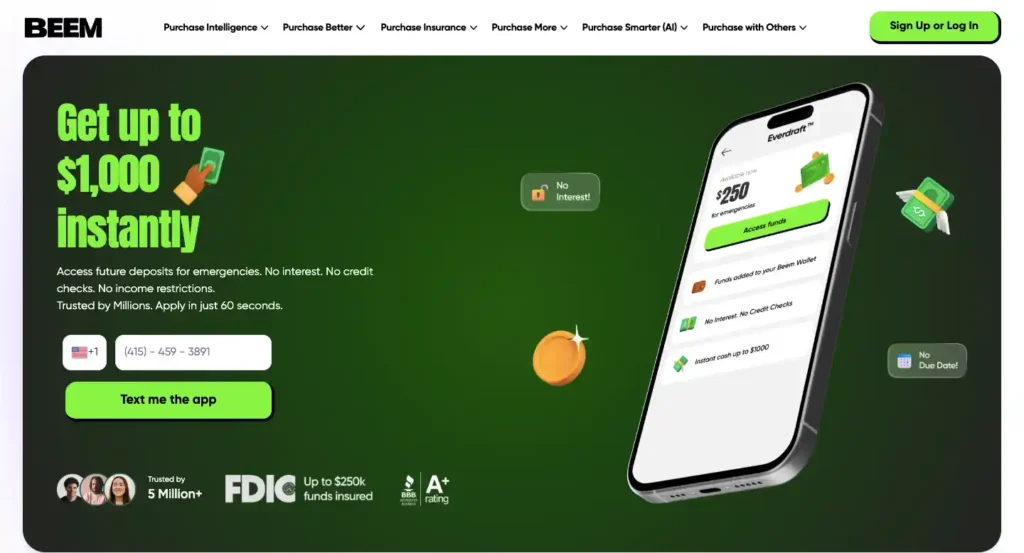
Beem’s Everdraft™ is a cash advance feature with a personalized range from $10 to $1,000, and Beem says limits can grow over time based on income, deposit history, account activity, and responsible use.
Dave Extracash Limits Are Not Just One Simple Number
Dave’s marketing headline can make ExtraCash look like a single-limit product, but the underlying structure is more layered than that. Dave says ExtraCash amounts range from $25 to $500, that not all members qualify, and that few qualify for the full $500. It also says your ability to qualify is updated daily and is at the bank’s discretion, not something you can request manually.
That matters because “up to $500” is not the same as “you can always pull $500.” Dave explicitly says higher ExtraCash amounts cannot be requested. So for users comparing options, the smarter reading is this: Dave has a public ceiling, but your usable amount may be lower, can change daily, and remains controlled by eligibility rules set by its bank partner.
There is another wrinkle that many users miss. Dave says your total ExtraCash limit can consist of up to two individual transfers, one at a time, on the same day if available.
It also notes that overdraft and express fees apply to each transaction. That means your limit is not always experienced as one clean lump sum. In practice, it may be split across multiple transfers, with fees attached to each draw.
People Also Read: Beem And Responsible Borrowing
What Dave Extracash Actually Costs
Dave no longer frames ExtraCash the way many older blog posts still describe it. Its current help content says ExtraCash has no interest, no credit check, and no late fees, but it does charge an overdraft service fee equal to the greater of $5 or 5% of the transfer amount. Dave also says there may be an optional express fee if you send the money to an external debit card.
Speed depends on where you send the money. Dave says delivery to Dave Checking is instant and free, delivery to an external debit card takes within 1 hour and costs 1.5% of the transfer amount, and delivery to an external bank via ACH takes 2 to 3 business days and is free.
Dave also says you must open both an ExtraCash overdraft deposit account and a Dave Checking account to use the product, and that Dave membership can cost up to $5 per month.
That combination is important. Dave ExtraCash is not just a simple “borrow and repay” tool. It is tied to membership, tied to specific account setup, and tied to a fee structure that can stack depending on how you move the funds. The limit is one part of the picture, but the delivery method and service fee shape the real user experience just as much.
The Beem Advance Model Works Differently
Beem’s model is not built around a fixed public cap first and a user experience second. It is built around a personalized advance amount that Beem says depends on income, deposit history, and account activity.
Beem’s help center says eligible users can borrow from $10 up to $1,000 through Everdraft™, and that not everyone starts at the maximum. It also says limits may increase over time.
That is the core of the Beem Advance Model. Instead of presenting one number and leaving users to discover later how much is really accessible, Beem frames the advance as an amount that adjusts to the user’s profile. Beem says Everdraft™ eligibility depends on bank account history and that the app reviews account activity regularly, which can lead to higher available amounts over time.
Beem also spells out the basic access requirements more directly. Its help center says users need an active Beem account, a supported U.S. checking account, an eligible subscription plan, a verified debit card linked to the primary bank account, and no pending dues. Once those conditions are met, the available Everdraft™ amount appears in the app, and Beem says access is often available within minutes.
People Also Read: Beem For Single Parents and Emergency Expenses
Beem’s Model Is About Progression, Not Just Qualification
One of the more meaningful differences is what happens after you get in. Dave says higher ExtraCash amounts cannot be requested and that eligibility updates daily at the bank’s discretion.
Beem, by contrast, says your Everdraft™ amount can rise over time as the system reviews your account, and it also offers Beem Boost, which can temporarily increase your available amount if you meet responsible-use criteria such as paying dues on time, avoiding overdrafts, and maintaining healthy spending behavior.
That makes the Beem Advance Model feel less static. It is still rules-based, and it is still not a guaranteed path to the maximum for everyone, but the model is designed to evolve with the user.
For someone comparing the two, that is a real distinction: Dave emphasizes eligibility and bank discretion, while Beem more openly emphasizes personalized limits that may grow with stronger account behavior. That is an inference from the way each company describes its product mechanics.
Fees Are Where The Comparison Gets More Practical
If all you compare is the top-line amount, Beem already has the higher ceiling. But the fee structure is where the models separate even more.
With Dave, the product itself includes an overdraft service fee equal to the greater of $5 or 5% of the transfer amount. Instant delivery to Dave Checking is free, but sending to an external debit card adds a 1.5% express fee, while external ACH is free but slower. Dave membership itself can cost up to $5 per month.
With Beem, Everdraft™ itself carries no interest and no credit check, but access requires a subscription. Beem says the app shows a fee breakdown before confirmation, including the subscription fee if it is the first withdrawal and an instant transfer fee if applicable. Beem’s plan pages also say ACH withdrawals are free while debit-card instant fees apply.
On the Lite plan, Beem lists $1.99 per month with emergency cash of $10 and instant withdrawal starting at 99¢. On the Basic plan, it lists $3.99 per month with emergency cash up to $50 and instant withdrawal starting at $4.
That means Dave and Beem each have costs, but they express them differently. Dave’s model attaches a service fee to the ExtraCash draw itself and may add delivery fees depending on the transfer method.
Beem’s model requires subscription access and may add an instant transfer fee depending on how funds are withdrawn, while also offering free ACH. For users trying to understand the true cost, that distinction is more useful than a vague “no interest” comparison.
People Also Read: How Beem Handles Economic Uncertainty
What This Means In Plain English
Dave ExtraCash Limits are best understood as controlled access inside Dave’s own system. There is a public range, but the usable amount is determined by eligibility, may be split across as many as two transfers, and comes with an overdraft service fee structure. If you are already comfortable operating inside Dave Checking, the instant-to-Dave option is convenient because it is free.
The Beem Advance Model is better understood as a personalized growth model. It starts with eligibility based on banking behavior and deposits, requires subscription access, and can expand as your profile strengthens. It is less about one fixed public number and more about a dynamic amount that changes with usage and account quality.
That difference matters because many people do not just want a cash advance once. They want a product that fits how their financial life actually works month after month. Dave is more account- and fee-structured around ExtraCash as an overdraft-style feature.
Beem is more behavior and profile-structured around an advance amount that can evolve. That comparison is partly interpretive, but it follows directly from how each company describes its product.
Comparing Dave ExtraCash Limits vs Beem Advance Model
| Feature/Aspect | Dave ExtraCash | Beem Advance Model (Everdraft™) |
| Available Limit | $25 to $500, depending on eligibility | $10 to $1,000, based on account profile |
| Eligibility Criteria | Updated daily, based on bank’s discretion | Based on income, deposit history, and account activity |
| Fee Structure | $5 or 5% of transfer amount, plus optional express fees | No interest, no credit checks; subscription required, fees apply to instant transfers |
| Transfer Speed | Instant to Dave Checking (free), 1 hour to external debit card (1.5% fee), ACH (free, 2-3 business days) | Instant transfers available (fees apply); ACH is free |
| Transfer Limits | Up to two separate transfers per day | Flexible; amount based on profile, with potential increases over time |
| Additional Costs | Optional express fee (1.5% for external debit card) | Instant transfer fees if applicable |
| Repayment Terms | Fixed, must repay within pay period | Flexible repayment, based on user’s behavior and agreement |
| Qualification for Larger Amounts | Limited to availability based on eligibility | Limits grow over time based on responsible use and account behavior |
| Subscription Fee | $0 (membership costs $1 per month for basic access) | Yes, starting at $1.99 per month |
| Speed of Access | Instant to Dave Checking; external transfers may take longer | Instant access once eligible, within minutes |
People Also Read: How Fast Is Beem Instant Transfer
Which Model May Make More Sense For Different Users
If you want something tightly connected to a checking ecosystem and you are comfortable with the current Dave setup, Dave may feel straightforward. Its instant transfer to Dave Checking is free, and the product is clearly defined within Dave’s own account structure.
If you care more about a higher potential ceiling, a personalized qualification model, and the possibility of growing your access over time, Beem may feel more aligned. Beem’s published cap is higher at up to $1,000, and its help center explicitly says your limit may increase over time and can also be expanded temporarily through Beem Boost.

Final Verdict
The cleanest way to understand this comparison is simple. Dave ExtraCash Limits tell you the outer frame of what Dave may allow, but the real experience depends on bank discretion, up to two transfers, service fees, and how you choose to move the money.
The Beem Advance Model is less about one fixed promise and more about a personalized access system. It starts from your income and banking behavior, requires subscription access, shows fees before you confirm, and may increase your available amount over time.
So if you are comparing Dave ExtraCash Limits vs Beem Advance Model, the smarter question is not just “Which one has the bigger headline cap?” It is “Which one is built in a way that makes more sense for how I actually manage cash flow?” On that question, the Beem app’s model is clearly designed to be more flexible, more personalized, and more capable of growing with the user.
FAQs on Dave ExtraCash Limits vs Beem Advance Model
1. What are Dave ExtraCash limits right now?
Dave says ExtraCash amounts range from $25 to $500, but also says not all members qualify and few qualify for the full $500. It also says the limit can consist of up to two separate transfers and is determined at the bank’s discretion.
2. How is the Beem Advance Model different?
Beem says eligible users can access $10 to $1,000 through Everdraft™, and that the exact amount depends on income, deposit history, and account activity. Beem also says the limit may increase over time and can be boosted temporarily through Beem Boost for users who meet responsible-use criteria.
3. Does Dave charge fees on ExtraCash?
Yes. Dave says ExtraCash has an overdraft service fee equal to the greater of $5 or 5% of the transfer amount. It also says instant delivery to Dave Checking is free, external debit card delivery costs 1.5%, and ACH to an external bank is free but slower.
4. Does Beem charge fees on Everdraft™?
Beem says Everdraft™ has no interest and no credit check, but all users must subscribe to access it. Beem also says users see a fee breakdown before confirming a withdrawal, including any subscription fee and any instant transfer fee if applicable. Its plan pages state ACH withdrawals are free while debit instant fees apply.
5. Is Dave or Beem better if I want my limit to grow?
Based on each company’s current documentation, Beem is more explicit about growth. Dave says higher ExtraCash amounts cannot be requested and that eligibility is updated daily at the bank’s discretion. Beem says limits may increase over time based on account activity and that Beem Boost can add more when users meet certain responsible-use conditions.