

Table of Contents
Running a small business means living with cash flow unpredictability as a permanent feature of financial life. Revenue comes in waves. Expenses arrive on fixed schedules. The gap between the two is where micro cash crunches live, and every small business owner encounters them regardless of how well the business is performing overall.
A micro cash crunch is not a sign that the business is failing. It is a timing problem: a client invoice paid two weeks late, a seasonal revenue dip that overlapped with a quarterly expense, a personal obligation that landed during a slow revenue week. The business is sound. The cash flow timing is not. And while the business works itself back to normal, the owner’s personal financial obligations do not pause to accommodate the wait.
What Is a Micro Cash Crunch?
A micro cash crunch is a short-term personal cash flow gap created by the timing mismatch between business revenue and personal financial obligations. It is distinct from a structural business problem because the underlying business is viable and the revenue is coming. The crunch is purely about when that revenue arrives relative to when personal bills are due.
How Micro Cash Crunches Differ From Business Cash Flow Problems
Business cash flow problems involve the business itself lacking funds to cover operational expenses. Micro cash crunches are personal: the business owner’s household expenses, rent, utilities, groceries, and personal debt payments, become difficult to cover during periods when business revenue has not yet converted to personal income. The distinction matters because the tools appropriate for each problem are different. Business cash flow requires business financing solutions. Personal micro cash crunches require personal liquidity tools.
Who Experiences Micro Cash Crunches Most Frequently
Sole proprietors and single-member LLC owners who pay themselves from business revenue are most vulnerable to micro cash crunches because their personal income is directly tied to revenue timing. Freelancers running client-based businesses, service providers with invoice-based billing, seasonal business owners, and any small business owner whose personal draw is tied to receivables collection rather than a fixed salary will encounter micro cash crunches as a regular feature of their financial lives.
People Also Read: Beem for Shift Workers With Irregular Pay Schedules
The Most Common Micro Cash Crunch Triggers
Late Client Payments
The most common micro cash crunch trigger for small business owners is a client invoice paid later than expected. Net-30 payment terms that stretch to Net-45 in practice, a client who processes invoices only once a month, or a payment delayed by an accounts payable backlog can all create a two to four week gap between when revenue was expected and when it actually arrives. Personal bills due during that gap cannot wait for the client to process the payment.
Seasonal Revenue Dips
Many small businesses experience predictable seasonal revenue patterns with slower periods that reduce personal draw availability. A landscaper whose revenue drops in winter, a retailer whose slow months precede the holiday season, or a tax professional with a quiet summer all face periods where business revenue does not comfortably support both business operations and personal financial obligations simultaneously.
Upfront Business Expenses
Growth investments, inventory purchases, equipment repairs, and marketing spend often require upfront cash outlays before the revenue they generate arrives. When a business owner depletes personal liquidity to fund a business expense that will generate future revenue, the personal cash flow gap that results is a direct consequence of business investment rather than financial mismanagement.
The Owner-Last Pay Problem
Many small business owners pay themselves last, prioritizing employee payroll, vendor payments, and operational expenses before their own draw. In tight months, this discipline means the owner absorbs the full impact of any revenue shortfall personally while keeping the business operational. The business survives. The owner’s personal cash flow takes the hit.
Why Traditional Solutions Fall Short for Small Business Owners
Business Credit Cards Carry High Personal Risk
Business credit cards often require a personal guarantee, meaning the owner’s personal credit is on the line for business spending. Using a high-APR business card to cover personal expenses during a micro cash crunch creates interest costs that compound quickly and add personal financial pressure on top of the business timing problem the owner was already managing.
Small Business Loans Require Extensive Documentation
Traditional small business loans and lines of credit require financial statements, business tax returns, revenue documentation, and time-consuming application processes that are entirely disproportionate to the short-term personal cash flow need a micro cash crunch represents. A two-week timing gap does not warrant a multi-week loan application process, even when that process eventually approves the funds.
Drawing Down Personal Savings Is Costly Long-Term
Many small business owners respond to micro cash crunches by drawing from personal emergency savings or retirement accounts. Emergency savings depleted for routine timing gaps are unavailable for genuine emergencies. Early retirement account withdrawals carry taxes and penalties that make them significantly more expensive than the temporary gap they are covering.
People Also Read: Beem For Seasonal Employment Gaps: All You Need to Know

How Beem Everdraft Addresses Personal Micro Cash Crunches
Fast Access Without Business Documentation
Everdraft is a personal financial product that evaluates personal bank account activity rather than business financial statements. Small business owners whose personal bank account reflects consistent deposit activity, whether from business draws, client payments, or mixed income sources, can qualify for Everdraft based on that personal financial behavior without providing business tax returns, profit and loss statements, or any business documentation. The approval process takes minutes, not weeks.
Zero Interest Keeps the Gap From Getting More Expensive
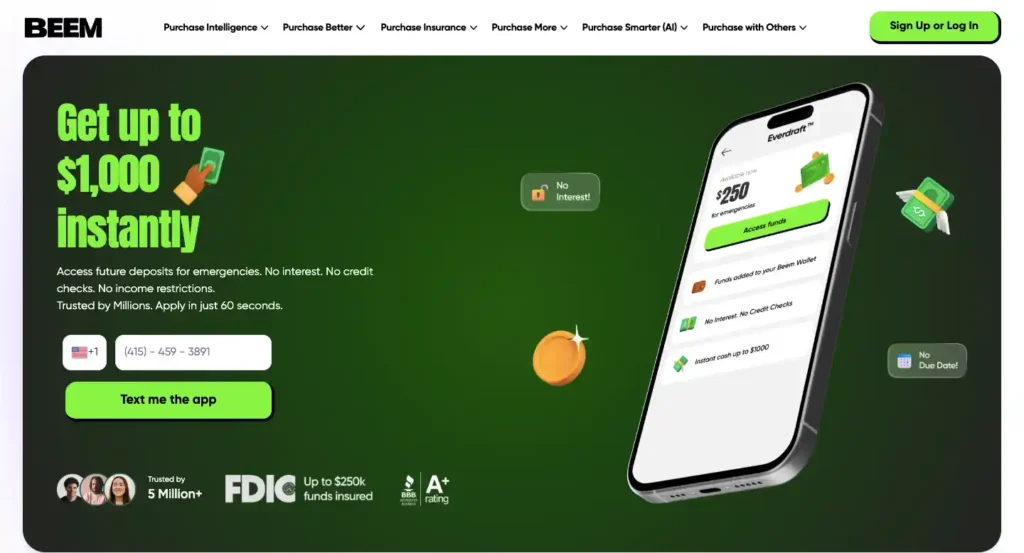
A micro cash crunch is a timing problem, not an income problem. The revenue is coming. Adding interest to a problem that will resolve itself in two to four weeks is an unnecessary cost that compounds the pressure the owner is already managing. Everdraft charges zero interest on advances of up to $1,000. The advance amount is the repayment amount, full stop, regardless of how many days pass between the advance and the arriving deposit.
Repayment Aligned With Revenue Arrival
Everdraft repayment is triggered by incoming deposits rather than a fixed calendar deadline. For small business owners whose income timing varies based on client payment schedules, this alignment is particularly valuable. Repayment occurs when the client payment or business draw arrives in the personal account, not on an arbitrary date that may fall before the revenue has converted to personal income.
No Credit Check Protects the Credit Profile
Small business owners often have credit profiles that reflect the financial complexity of running a business, including periods of elevated personal credit utilization during business investment phases. Beem’s no-credit-check approval process evaluates personal deposit activity rather than credit bureau data, meaning a temporarily elevated credit utilization from business investment does not affect Everdraft eligibility.
How BudgetGPT Supports Small Business Owner Cash Flow Visibility
Separating Personal From Business Cash Flow
One of the most common financial management challenges for sole proprietors is the blurring of personal and business cash flow visibility. BudgetGPT tracks personal spending and deposit activity in real time, giving small business owners a clear picture of their personal financial position that is distinct from the business revenue picture. This separation is essential for accurate personal cash flow management during micro crunch periods.
Identifying the Actual Gap Size
During a micro cash crunch, knowing the precise size of the personal cash flow gap is essential for making smart decisions about advance amounts. BudgetGPT’s real-time tracking and forward-looking analysis identifies exactly which personal expenses are due before the next expected deposit, allowing owners to request an advance sized to the actual need rather than a round number that may be larger than necessary.
Forward-Looking Cash Flow Alerts
BudgetGPT’s forward-looking analysis identifies upcoming personal cash flow gaps before they arrive, giving small business owners advance notice to plan proactively. Knowing five days in advance that a personal expense cluster will land before the next client payment is expected allows deliberate action rather than reactive scrambling when the gap actually forms.
How PriceGPT and DealsGPT Help During Tight Cash Flow Periods
Making Every Personal Dollar Go Further
During micro cash crunch periods when personal liquidity is constrained, reducing personal spending without reducing quality of life is a high-value strategy. PriceGPT helps small business owners find better prices on personal everyday purchases, while DealsGPT surfaces relevant savings opportunities based on actual spending behavior. The cumulative effect of smarter personal spending during a crunch period reduces the total advance needed and shortens the time to cash flow recovery.
People Also Read: Beem For Commission-Based Workers: How To Handle Income Volatility
Practical Cash Flow Strategies for Small Business Owners
Maintain a Personal Liquidity Buffer Separate From Business Funds
The most effective structural protection against personal micro cash crunches is a personal liquidity buffer of two to four weeks of personal essential expenses held in a dedicated personal account. This buffer is separate from business operating funds and emergency savings, and its sole purpose is absorbing the timing gaps that business revenue variability creates.
Pay Yourself on a Fixed Schedule
Establishing a fixed personal draw schedule, even when business revenue is variable, creates personal cash flow predictability that reduces micro crunch frequency. When business revenue is sufficient, the fixed draw transfers on schedule. When revenue is temporarily lower, the fixed draw may need to be partially covered by a short-term tool like Everdraft until receivables arrive.
Invoice Proactively and Follow Up Consistently
Late client payments are the most common micro cash crunch trigger and the most preventable. Invoicing immediately upon project completion, setting clear Net-15 or Net-30 payment terms, and following up consistently on outstanding invoices shortens the revenue-to-personal-income conversion timeline. Every day shaved off the average invoice payment cycle directly reduces the frequency and severity of personal cash flow timing gaps.
Use Everdraft for Personal Gaps, Not Business Operations
Everdraft is most effectively used for personal financial obligations during a micro cash crunch, covering rent, utilities, groceries, and personal debt payments while business revenue catches up. It is not designed to fund business operations, payroll, or inventory. Keeping the personal and business applications of financial tools distinct ensures that Everdraft serves its intended purpose as a personal liquidity bridge rather than being stretched into a business financing role it is not designed to fill.
Micro Cash Crunch Scenarios: Beem in Practice
| Trigger | Personal Impact | Beem Solution |
| Client invoice paid 3 weeks late | Rent due before payment arrives | Everdraft bridges the timing gap |
| Seasonal revenue dip | Personal draw reduced for 6 weeks | Everdraft covers essential personal expenses |
| Upfront business expense depletes personal liquidity | Personal account thin before revenue returns | Everdraft provides zero-interest personal bridge |
| Owner-last pay in tight month | Personal obligations partially unfunded | Everdraft covers the personal shortfall |
| Multiple client payments delayed simultaneously | Extended personal cash flow gap | Everdraft plus JobsGPT for supplementary income |
Final Thoughts
Micro cash crunches are not a sign of business failure. They are the predictable arithmetic outcome of running a viable business whose revenue timing does not perfectly align with the fixed schedule of personal financial obligations. Every small business owner who has waited on a client payment while a personal bill sat due knows the specific stress of that timing gap, and it is a stress that deserves a better solution than high-interest credit cards or depleted emergency savings.
Beem’s combination of zero-interest Everdraft advances, real-time BudgetGPT visibility, and smarter personal spending through PriceGPT and DealsGPT gives small business owners a personal financial toolkit specifically suited to the timing challenges of business ownership. The business is sound. The revenue is coming. The Beem app bridges the gap between those two realities at zero mandatory cost, which is exactly what a timing problem, rather than an income problem, deserves.
People Also Ask
1. Can small business owners use Beem Everdraft for personal cash flow gaps?
Yes. Everdraft is a personal financial product evaluated based on personal bank account activity. Small business owners whose personal accounts reflect consistent deposit activity from business draws or client payments can qualify without providing any business financial documentation.
2. Does Beem require business financial statements or tax returns?
No. Beem evaluates personal bank account deposit patterns rather than business financial documentation. There are no business tax return requirements, profit and loss statement submissions, or revenue verification processes. The approval assessment is based entirely on personal account activity, making it accessible to sole proprietors and small business owners without the documentation burden of traditional business financing.
3. How does Everdraft repayment work when business revenue timing is unpredictable?
Everdraft repayment is triggered by incoming deposits to the connected personal account rather than a fixed calendar deadline. When a client payment or business draw arrives in the personal account, repayment is collected automatically. If the deposit arrives later than expected, repayment simply occurs when it does arrive, with no penalty fees or interest charges for the extended period.
4. Is zero interest on Everdraft genuinely applicable to small business owner situations?
Yes. Everdraft charges zero interest on advances up to $1,000 regardless of how many days the advance is outstanding before the qualifying deposit triggers repayment. For small business owners whose revenue timing is variable, this zero-interest structure means the personal bridge costs nothing in mandatory charges regardless of whether the gap resolves in five days or fifteen.
5. What is the best way for a small business owner to use BudgetGPT?
Use BudgetGPT to maintain a clear, real-time picture of personal cash flow that is distinct from business financial tracking. During micro crunch periods, BudgetGPT’s forward-looking analysis identifies exactly which personal expenses are due before the next expected deposit, allowing advance requests sized to the actual gap rather than a larger precautionary amount that creates a bigger repayment obligation than necessary.