


Table of Contents
For a lot of people, “start building credit” sounds simple until the first barrier shows up: put down a deposit. That is where the whole idea often breaks. If money is already tight, locking up $200 to $500 just to qualify for a secured card can feel less like a starting point and more like a wall.
The FTC explains that secured credit cards usually require you to deposit money with the issuer, often up to 100% of the credit limit, while Beem says you can build credit here without a secured deposit requirement.
That is what makes Beem for credit building without a deposit such an important topic. This is not about making credit building sound easy. It is about making it possible for people who do not have extra cash sitting on the side.
With Beem, the goal is to help you build credit through normal financial behavior, not by asking you to tie up money first and hope it pays off later. Beem’s credit-building features can help users build credit without a secured deposit, without a credit-builder loan, and without requiring a hard credit check to activate the feature.
Why Building Credit Without A Deposit Matters
A deposit requirement sounds reasonable when you read it from a lender’s side. It is collateral. It lowers risk. It gives the issuer something to fall back on if payments go wrong. The FTC explains secured cards this way very clearly.
But from the consumer side, that same structure can shut people out before they even begin. If you are trying to build credit because money is already tight, the deposit itself becomes the obstacle.
This is especially true for people with no credit history, thin files, or recent financial setbacks.
CFPB reporting has found that about 26 million adults in the U.S. are credit invisible and another 19 million have unscorable files, for a total of 45 million consumers with limited or unusable credit records. That is a huge number of people trying to enter a system that often expects them to bring cash up front just to prove they deserve a chance.
People Also Read: How Smart Banking Helps Build Credit
Why Secured Cards Are Not Always A Great Starting Point
Secured cards do help some people. That part is true. If the issuer reports your activity and you use the card responsibly, a secured card can build or rebuild credit over time. The FTC says that many secured card issuers do report usage to the credit bureaus, and that can help improve credit history.
But the structure still carries friction. You have to lock up money first. You are still using a credit product. You can still be charged fees or interest depending on the card terms. And because it is still credit, overspending or carrying a balance the wrong way can turn a credit-building attempt into a debt problem.
That is exactly why so many people need another path. Beem positions its credit-building system as different from secured cards because it does not require upfront collateral and does not rely on revolving debt to create a positive history.
How BEEM For Credit Building Without A Deposit Works
At Beem, the core idea is simple: use money you already have, keep spending behavior responsible, and let that activity support your credit profile.
Beem says the credit-building setup does not require a secured deposit and is designed to work through normal spending behavior rather than through a traditional credit card balance. It also says users can build credit without owning a traditional credit card and without taking out a credit-builder loan.
That matters because it changes the emotional math of credit building. Instead of asking whether you can spare a deposit, you start with the more realistic question: can I use my regular financial activity more strategically? If the answer is yes, then credit building starts to feel like something that can fit into real life instead of something you have to pay extra to access.
How Everyday Spending Turns Into Credit Progress
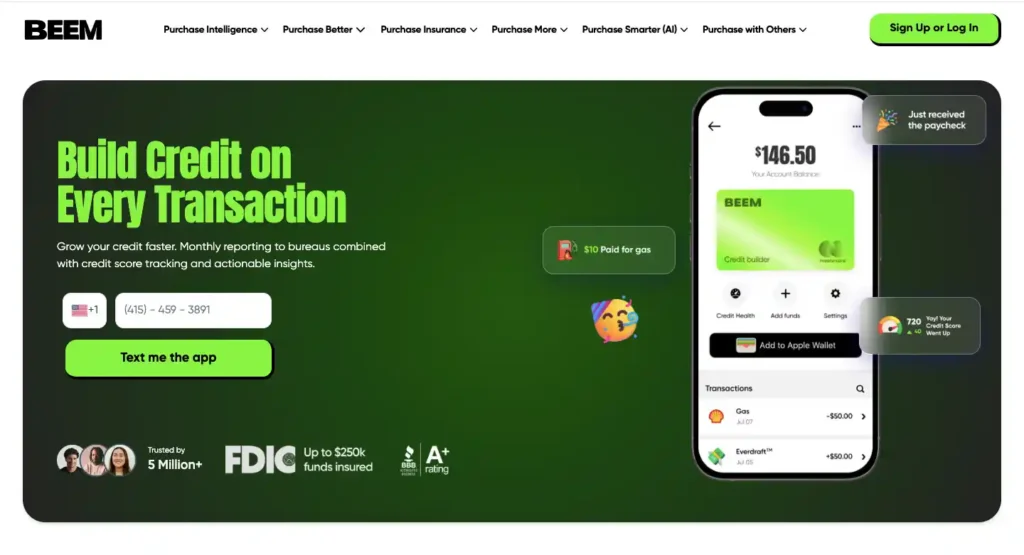
One of the strongest parts of the Beem approach is that it does not ask you to invent a whole separate financial routine just to build credit. The Beem card requires no upfront money and helps build credit through everyday purchases such as groceries, gas, and bills. It also states that activity is reported monthly to all three major credit bureaus: Experian, Equifax, and TransUnion.
That changes the experience in a meaningful way. You are not opening a product just to keep it alive with tiny test charges. You are using something that can fit into normal life. For people living paycheck to paycheck, that matters a lot.
Credit building works better when it is woven into the spending you were already going to do, not added as another financial task you have to remember to perform perfectly every month.
People Also Read: Can BEEM Help Build Credit For Free
Why This Feels Different From A Traditional Debit Card
A regular debit card spends money you already have, but the FTC notes that debit cards usually do not help you build credit history. That is because debit activity generally is not treated the same way as credit activity for bureau reporting.
The Beem model is different because the credit-building value comes from the reporting layer attached to your activity. That is what makes this category useful for people who want the day-to-day comfort of spending what they actually have while still making forward progress on their credit file.
It removes one of the biggest reasons beginners struggle: the fear of borrowing just to prove they can be trusted with borrowing. Beem explicitly frames this as credit building without debt risk and without needing a secured deposit.
What Everdraft™ Does And Does Not Do For Credit Building
This is an important distinction. Everdraft™ and Beem’s credit-building features live in the same app, but they do not do the same job. Everdraft™ cash advances do not involve a hard credit inquiry and are not reported as debt to credit bureaus, so taking an advance has no positive or negative impact on your credit score by itself. It also says credit building activity and Everdraft™ usage operate independently inside the app.
That is actually a good thing. It keeps the short-term cash tool from complicating the credit-building side of your financial life. If you need Everdraft™ for a real cash gap, that does not mean you are hurting the work you are doing to build credit. And if you are focused on credit building, you do not need to use Everdraft™ at all to make that progress.

What Helps Your Credit Building Work Better
No tool does all the work on its own. The product matters, but the behavior around it still matters too.
Consistency matters first. Credit building is not about one good week. It is about repeated positive reporting over time. Beem says monthly reporting to all three major bureaus is what turns normal activity into something visible to the credit system.
Second, avoid letting other parts of your credit life cancel out the progress. If you are using Beem to build a positive history but also missing payments somewhere else, the results will be slower and less visible. Beem is careful about this and notes that score changes depend on multiple factors beyond Beem’s reporting, including inquiries, utilization, and negative marks elsewhere.
Third, think in months, not days. This is not a hack. It is a process. The win is not that your score transforms overnight. The win is that you now have a credible, realistic way to build history without first putting down collateral you may not have.
Credit Building Without A Deposit: How Beem Compares
One of the easiest ways to make this topic clearer is to compare the no-deposit Beem path with the older credit-building model many people already know: the secured card. The traditional secured-card route usually asks you to deposit money first, often up to 100% of the credit limit.
Beem’s current credit-building setup is positioned differently. It does not require a secured deposit, and Beem says activity is reported to all three major credit bureaus.
Beem For Credit Building Without A Deposit vs Secured Cards
| Comparison Point | Beem Credit Building | Traditional Secured Card | Why It Matters |
| Upfront Deposit | No secured deposit required | Usually requires a cash deposit, often tied to the credit limit | This lowers the barrier to getting started when spare cash is limited |
| How You Start | Through Beem’s credit-building feature and everyday activity | By applying for a secured credit card and funding the deposit | One path starts with your existing financial routine, the other starts with locked-up cash |
| Credit Bureau Reporting | Beem says activity is reported to Experian, Equifax, and TransUnion | Many secured cards report, but terms vary by issuer | Reporting is what turns activity into credit-building progress |
| Need For Existing Credit History | Beem says no existing credit history is required to benefit | Often available to people with limited credit, but approval still depends on issuer rules | This matters for beginners and thin-file users |
| Debt Risk Feeling | Designed to fit around everyday spending rather than revolving-card behavior | Still a credit card product, so balances and misuse can create debt risk | Many people want credit progress without feeling pushed toward debt |
| Best Fit | People who want to build credit without tying up cash first | People who can afford a deposit and want a traditional card path | The right option depends on whether cash access or product familiarity matters more |
People Also Read: How to Build Credit While Living Paycheck to Paycheck
Conclusion
Credit building without a deposit matters because credit should not be reserved only for people who already have spare cash.
That is the strongest case for Beem for credit building without a deposit. You do not have to lock up money first. You do not have to rely on a secured card structure just to get started. And you do not have to pretend that taking on more debt is the only path to a stronger credit file.
The Beem app positions this as a lower-barrier way to turn normal financial activity into monthly credit reporting, without the traditional secured-card entry cost.
FAQs On Beem For Credit Building Without A Deposit
1. Can I Really Build Credit Without Putting Down A Deposit?
Yes. Beem credit-building says you can build credit without a secured deposit, without a credit-builder loan, and without needing a traditional credit card. That is one of the main differences between this approach and a secured card.
2. How Is This Different From A Secured Credit Card?
A secured card usually requires you to deposit money with the issuer, often up to 100% of the credit limit, according to the FTC. With Beem, the credit-building approach is designed around everyday activity without that upfront collateral barrier.
3. Does Beem Report To All Three Major Credit Bureaus?
Yes. Activity is reported to Experian, Equifax, and TransUnion on a monthly basis, which is important because broader reporting gives your positive behavior a better chance to shape your file across the credit system.
4. Do I Need Good Credit To Start?
No existing strong credit profile appears to be required for the credit-building feature to be useful. Beem says there is no hard credit check to activate the feature and that people with no existing credit history can still benefit.
5. Does Everdraft™ Help Build Credit Too?
No, not directly. Beem says Everdraft™ cash advances are not reported as debt to credit bureaus and do not affect your score. They are separate from the credit-building side of the app.
Source: FTC