
Table of Contents
A medical emergency never checks your bank balance before it happens. One moment everything is fine. Next, you are in an emergency room, an urgent care clinic, or a pharmacy counter staring at a bill you did not plan for and cannot afford right now.
According to a Kaiser Family Foundation survey, nearly 100 million Americans carry some form of medical debt. Almost half of U.S. adults say they would struggle to cover an unexpected $500 medical expense out of pocket.
The healthcare cost crisis is not just about uninsured Americans. It hits insured workers with high deductibles, gig workers without employer coverage, seniors navigating Medicare gaps, and single parents who cannot postpone a sick child’s treatment because the timing is financially inconvenient.
Beem provides a way to manage these unexpected costs without falling into debt traps, draining emergency savings that do not exist, or delaying care that cannot wait.
How Much Do Common Medical Emergencies Actually Cost?
Understanding the scale of unexpected healthcare costs helps frame why a financial tool like Beem matters. The average emergency room visit in the United States costs between $1,200 and $2,200 for insured patients after accounting for copays and deductibles. For uninsured patients, that number jumps to $2,500 or higher.
Urgent care visits range from $100 to $600 depending on the treatment required. Prescription costs for a single course of antibiotics, pain medication, or specialty drugs can range from $30 to $500 or more without adequate coverage.
Even with insurance, out-of-pocket costs can be substantial. The average individual health insurance deductible in the U.S. exceeds $1,700 annually. That means you are paying the first $1,700 of medical costs yourself before insurance covers anything beyond copays. For a family, the average deductible exceeds $3,500.
These are not numbers that most households can absorb without disruption, especially when they arrive without warning.
Why Most Financial Options Fail During Medical Emergencies
Why Credit Cards Create Long-Term Damage
Credit cards are the default response for many Americans facing unexpected medical bills. But charging a $1,200 ER visit to a credit card with a 24% APR and making minimum payments means you will pay closer to $1,800 by the time the balance is cleared.
For someone already living paycheck to paycheck, that interest compounds the financial damage of the medical event itself.
Why Payment Plans Are Not Always Available
Hospital payment plans sound reasonable in theory, but they often require credit checks, minimum monthly commitments, and administrative fees.
Some providers send unpaid balances to collections within 90 days, damaging your credit score before you have had a meaningful chance to pay. And many urgent care clinics and pharmacies do not offer payment plans at all. They expect payment at the point of service.
Why Medical Credit Cards Carry Hidden Risks
Products like CareCredit offer deferred interest financing, which means if you do not pay the full balance within the promotional period (usually 6 to 24 months), you are charged retroactive interest on the entire original amount.
A $1,000 medical bill on a deferred interest plan that is not fully paid in time can balloon to $1,300 or more overnight.
How Beem Helps Cover Unexpected Medical Costs
Everdraft™ Cash Advance for Immediate Medical Expenses
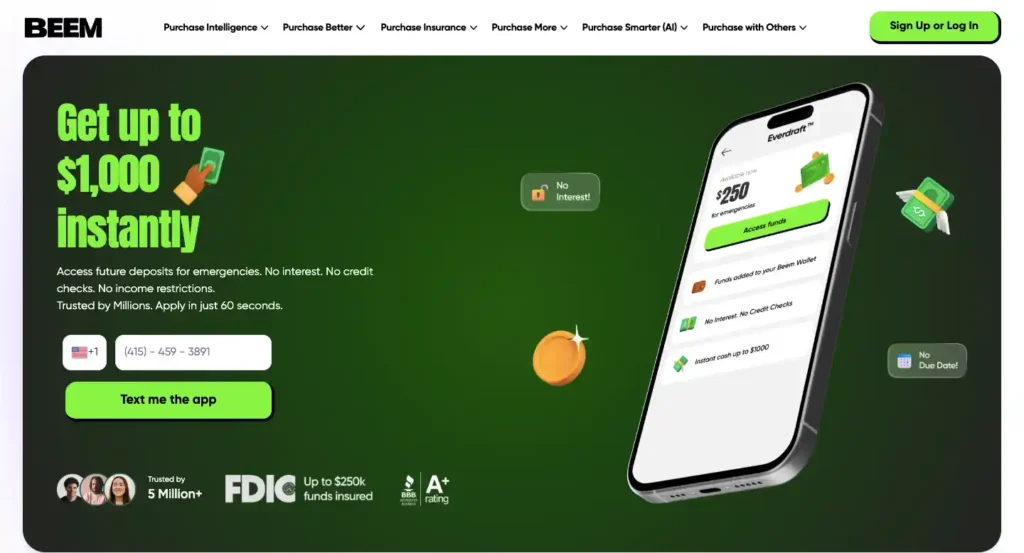
Beem’s Everdraft™ provides cash advances up to $1,000 with no credit check, no interest, and no hidden fees. For the most common unexpected medical expenses, including ER copays, urgent care visits, prescription costs, lab work, imaging, and follow-up appointments, $1,000 covers or significantly reduces the immediate financial burden.
Unlike medical credit cards that carry deferred interest risks, Everdraft™ charges zero interest. Unlike personal credit cards that compound debt at 20% to 30% APR, Everdraft™ does not add to your cost.
You borrow what you need to cover the medical expense, and you repay without a penalty structure designed to extract more money from you over time.
No Income Restrictions for the People Who Need It Most
Medical emergencies do not discriminate by income type, and neither does Beem. Gig workers without employer-sponsored health insurance are among the most exposed to surprise medical bills.
A DoorDash driver who breaks a wrist cannot work and faces an ER bill simultaneously. An Uber driver whose child spikes a 104-degree fever at midnight is not thinking about whether their income qualifies for a cash advance app. They are thinking about getting to the hospital.
Beem supports income from gig platforms, freelance work, and government benefits including SSI, SSDI, Medicare-linked income, VA healthcare-adjacent benefits, and unemployment. There is no minimum income requirement. If you need cash to cover a medical bill, your income type is not a barrier.
Withdraw to Venmo or Cash App for Faster Access
When a pharmacy requires payment before releasing a prescription or an urgent care clinic collects copays at check-in, speed matters. Beem’s ability to send Everdraft™ funds directly to Venmo or Cash App means you can access your advance and make payments faster than waiting for a traditional bank deposit to clear.
For underbanked Americans without a primary bank account, this withdrawal flexibility may be the only practical way to convert a cash advance into a usable payment.
Preventing Medical Cost Crises Before They Happen
BudgetGPT: Building a Medical Emergency Buffer
One of the most effective defenses against unexpected medical costs is a dedicated emergency buffer, even a small one. BudgetGPT helps you identify where that buffer can come from within your existing income. It does not just tell you to “save more.”
It analyzes your actual spending and income patterns and finds realistic amounts you can set aside each pay period for medical contingencies. Even $25 to $50 per paycheck, compounded over several months, creates a cushion that reduces your reliance on any external borrowing when a medical bill hits.
PriceGPT: Comparing Prescription and Healthcare Costs
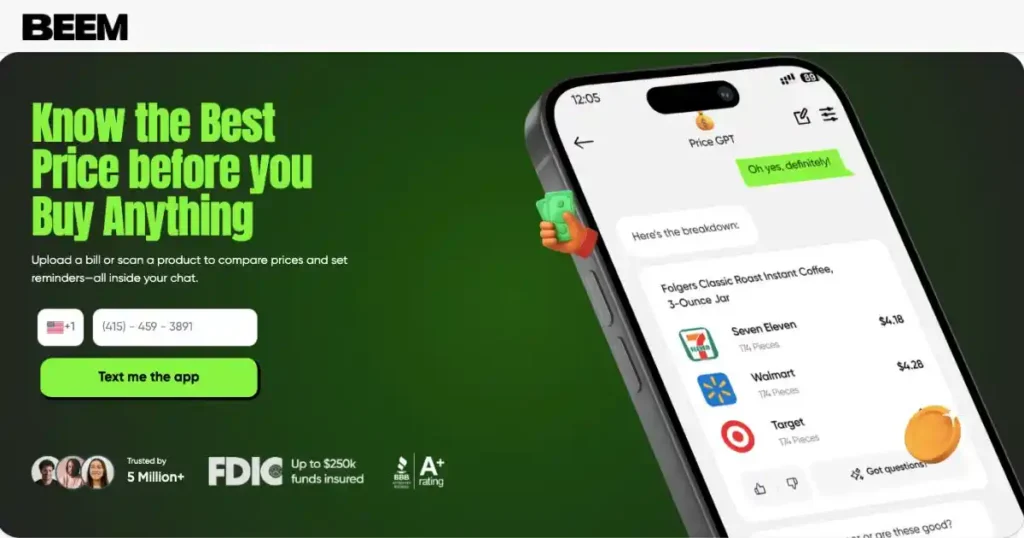
Prescription drug prices vary dramatically between pharmacies, sometimes by 300% or more for the same medication. PriceGPT helps you compare costs before you fill a prescription, ensuring you are not overpaying at one pharmacy when the same drug costs a fraction of the price at another.
For seniors managing multiple prescriptions on fixed income, this single feature can save hundreds of dollars annually.
Disability Protection: When Medical Emergencies Become Income Emergencies
The worst medical emergencies are not just expensive. They are disabling. A serious injury or illness that prevents you from working transforms a one-time medical bill into an ongoing income crisis. For gig workers and freelancers with no employer disability coverage, this scenario is financially catastrophic.
Beem’s disability protection provides a safety net when a medical event takes you out of the workforce. Instead of facing both mounting medical bills and zero income simultaneously, disability protection helps stabilize your finances during recovery.
This is not a feature that other cash advance apps offer, and it addresses the specific intersection of healthcare costs and income loss that makes medical emergencies so financially destructive.
Who Benefits Most from Beem During Medical Emergencies?
Gig workers and freelancers who carry high-deductible health plans or no insurance at all. A single medical event can consume weeks of earnings while simultaneously preventing you from working.
Single parents who cannot delay a child’s medical care regardless of their financial situation. When your child needs an ER visit, a prescription, or an urgent care appointment, you go. The bill is secondary to the care. Beem ensures the bill does not become a financial crisis.
Seniors on fixed income navigating Medicare coverage gaps, supplemental insurance limitations, and prescription costs that fluctuate unpredictably. Social Security and pension payments are fixed. Medical costs are not. Beem bridges that mismatch.
Paycheck-to-paycheck workers whose employer insurance carries high deductibles. Having insurance does not mean having cash. A $1,700 deductible is meaningless if you do not have $1,700 available when the medical bill arrives.
People Also Ask: Beem for Medical Emergencies
1. Can I use Beem to pay for a medical emergency?
Yes. Beem’s Everdraft™ provides cash advances up to $1,000 that can be used to cover ER copays, urgent care visits, prescriptions, lab work, and other unexpected medical expenses. No credit check is required.
2. Does Beem work if I do not have health insurance?
Yes. Beem has no income restrictions and does not require health insurance. Whether you are uninsured, underinsured, or carrying a high-deductible plan, Everdraft™ provides cash to help cover out-of-pocket medical costs.
3. Can gig workers use Beem for medical bills?
Yes. Beem fully supports gig income from Uber, DoorDash, Lyft, Etsy, and other platforms. Gig workers without employer health insurance are among the most vulnerable to surprise medical bills, and Beem requires no minimum income to qualify.
4. Can seniors use Beem for Medicare gaps?
Yes. Beem supports Social Security, SSI, SSDI, and other fixed-income sources. For seniors facing out-of-pocket costs from Medicare coverage gaps or prescription expenses, Everdraft™ provides up to $1,000 with no credit check.
5. Is Beem better than a medical credit card?
Beem’s Everdraft™ charges zero interest, unlike medical credit cards that carry deferred interest risks where unpaid balances can trigger retroactive interest charges. Everdraft™ also requires no credit check and has no income restrictions, making it more accessible than most medical credit card products.
6. What happens if a medical emergency prevents me from working?
Beem offers disability protection, a safety net feature that provides financial support if you become disabled and cannot work. This addresses the dual crisis of medical bills and lost income that makes medical emergencies especially devastating for gig workers and freelancers.
Disclaimer: The information provided in this article is for educational and informational purposes only and should not be considered financial or medical advice. Healthcare costs, insurance coverage, deductibles, and prescription prices vary widely based on provider, location, plan type, and individual circumstances. Beem is a fintech platform, not a bank or healthcare provider. Banking services are provided through FDIC-insured partner banks. Everdraft™ cash advance amounts depend on individual eligibility and are not guaranteed at any specific amount. Beem does not pay healthcare providers directly; funds are advanced to the user who is responsible for making payments.