
Table of Contents
Subscription charges are small until they hit at the wrong time. A streaming app, cloud storage bill, phone protection plan, fitness app, kids’ learning platform, or software renewal might only be $9.99, $18, or $29. But when it lands two days before payday, that charge can create more damage than its price tag suggests.
A failed recurring payment can interrupt a service you rely on, trigger an overdraft or non-sufficient funds fee, and start a chain reaction across the rest of your week. The CFPB explains that automatic payments can help you avoid late fees, but if your account balance is too low when the payment hits, both the bank and the company may charge fees.
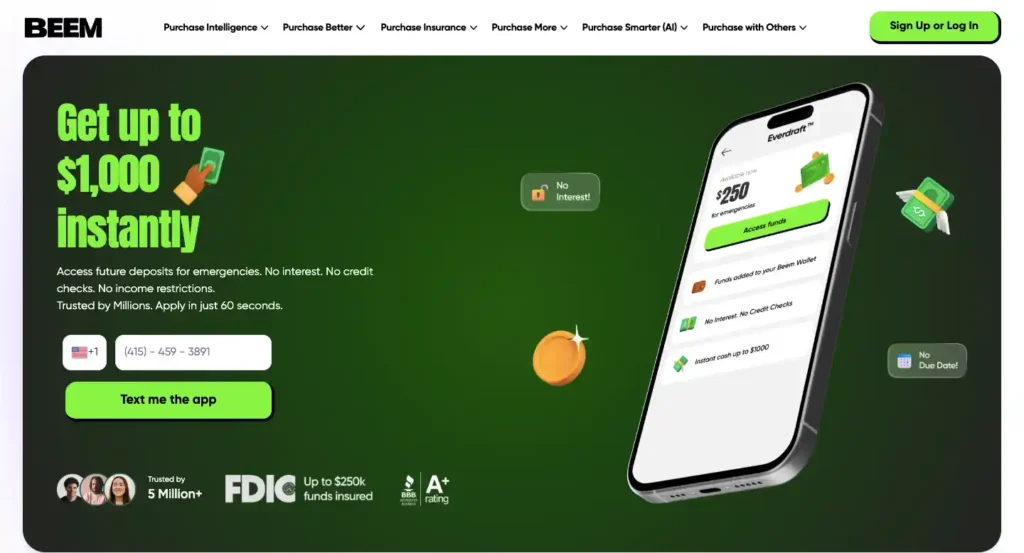
That is the real use case for Beem for subscription payment gaps. Everdraft™ is not about keeping every random subscription alive. It is about covering the right recurring payment at the right moment when the issue is timing, not chronic overspending. Beem’s current cash advance product is built for short-term financial gaps, and eligible users can access up to $1,000 without a credit check.
What Subscription Payment Gaps Actually Look Like
A subscription payment gap is not just “I forgot a charge was coming.” Sometimes it is that. But more often, it is a mismatch between the billing date and the cash in your account. The rent cleared. Groceries got bought. Gas took the last $40. Then a recurring subscription runs before your paycheck arrives. That is the gap.
What makes this problem tricky is that subscriptions are often designed to feel invisible. They renew quietly. They use autopay. They may come through as recurring debit card charges or bank withdrawals.
If your margin is already thin, one small recurring charge can arrive at exactly the wrong moment and create a much bigger financial mess than the subscription itself. CFPB notes that recurring electronic payments can still trigger overdraft fees even if you did not opt in to overdraft coverage for one-time debit card transactions.
People Also Read: How BEEM Subscription Works
Why Small Subscription Charges Cause Outsized Stress
People often underestimate subscription gaps because the amounts seem too small to matter. But financial stress is not always created by the biggest bill. Sometimes it is created by the wrong bill at the wrong time.
A $14.99 charge can create an overdraft fee. A failed payment can shut off a service you actually use every day. A second recurring charge can land while the first one is still unresolved.
CFPB’s overdraft guidance makes clear that recurring electronic payments can still carry overdraft risk, and its broader overdraft research shows these fees tend to hit consumers with limited financial cushion hardest.
That is why this topic matters for Beem users. Subscription payment gaps are usually not dramatic enough to trigger emergency planning, but they are disruptive enough to erode a budget quietly. They sit in the category of preventable damage, which is exactly where a short bridge like Everdraft™ can make sense.
How Everdraft™ Fits When A Recurring Charge Lands Too Early
Everdraft™ works best when the service matters, the amount is manageable, and your income is about to catch up. That is the heart of Beem for subscription payment gaps.
If your phone protection plan renews on Wednesday and your paycheck lands on Friday, that is a timing problem. If your child’s educational app renews two days before a deposit hits, the same issue.
If the charge is worth keeping and the shortfall is temporary, Everdraft™ can help you cover it before a failed payment turns into a fee, service interruption, or a domino effect inside your account. Beem’s current product pages position Everdraft™ as a flexible cash advance for everyday financial gaps, offering eligible users up to $1,000 with no credit check.
The discipline here matters. The smartest move is not using Everdraft™ to preserve every subscription you forgot to cancel. The smartest move is protecting the recurring charges that still earn their place in your monthly life.
People Also Read: BEEM vs Overdraft Fees Explained
Which Subscriptions Are Worth Bridging And Which Ones Are Not
Not every subscription deserves emergency protection. This is where people either gain control or keep drifting.
Essential Recurring Services
Some subscriptions act more like utility support than entertainment. Cloud storage tied to work, software needed for income, child-learning platforms you actively use, or a phone-related service you genuinely depend on may be worth bridging. If the service disruption would create a real problem, covering that charge can be rational.
Continuity-Based Services
Some subscriptions are not strictly essential, but they still have continuity value. Think therapy apps, medication management tools, fitness plans you actively use, or a platform tied to a family routine you do not want to reset. These are case-by-case decisions. The right question is simple: if this charge fails today, does it create more hassle or cost than the amount itself?
Low-Value Lifestyle Subscriptions
Then there are the subscriptions that survive mostly because they are easy to ignore. A streaming service you barely open, a premium app you forgot about, a trial that rolled into paid billing, or duplicate entertainment subscriptions usually do not deserve a cash bridge.
Beem’s current subscription-focused content makes this exact point: paid apps or subscriptions are only worth carrying when they actually change your financial life, not when they continue by default.
How To Stop A Subscription Gap Before It Triggers Fees
If the payment has not hit yet, you still have options. Start with the merchant. CFPB says you can stop automatic payments by contacting the company to withdraw authorization, then follow up with a letter or email.
If needed, you can also tell your bank to stop the next scheduled payment by giving a stop payment order at least three business days before the payment date.
This matters because sometimes the best financial move is not bridging the charge. It is removing the charge before it lands. That is especially true for low-value subscriptions, forgotten renewals, or services you no longer actually use. Beem helps most when you are making intentional choices, not when autopay is making them for you.
How Beem Helps You Spot Subscription Trouble Earlier
One of the biggest reasons subscription gaps keep happening is that recurring charges fade into the background. They stop feeling like decisions and start behaving like noise. That is expensive.
Beem’s AI-driven planning tools are built around the opposite idea. Current Beem content explains that the app analyzes income patterns, bill schedules, and real spending behavior to identify paycheck gaps before they happen. It also notes that subscription detection helps stop forgotten recurring charges from quietly worsening a cash shortfall. That changes the game because awareness is usually the step before control.
If you can see the mismatch before the renewal date, you get choices. You can move money, pause the service, cancel the charge, or use Everdraft™ strategically. If you only notice it after the payment fails, you are already dealing with consequences instead of options.
People Also Read: How AI Helps With Paycheck Gaps
How To Build A Better System For Recurring Charges
The long-term fix is not “never use subscriptions.” It is making subscriptions behave on your terms.
Move billing dates closer to payday where possible. Put must-keep subscriptions in one mental bucket and optional ones in another. Automate only the recurring expenses you are fully comfortable carrying every month.
Beem’s automation and budgeting content consistently points to the same principle: automate minimum essentials first, not convenience spending. That is especially useful with recurring bills because it reduces the chance that small lifestyle charges crowd out more important payments.
And if you know a short gap is coming, solve it before the charge hits. A planned $18 bridge is almost always better than an overdraft fee, a failed payment plus a last-minute scramble.
Which Subscription Payments Are Worth Bridging?
| Subscription Type | If The Payment Fails | Is It Usually Worth Bridging With Beem? | Better Next Step |
| Work Software Or Cloud Tools | You may lose access to files, client work, or productivity tools | Usually yes | Cover the gap if the shortfall is temporary |
| Child Learning Or School-Related Apps | A child’s routine or access may be interrupted | Often yes | Bridge it if it is actively used, and the billing gap is short |
| Phone Protection Or Device Coverage | You may lose continuity on a service tied to a key device | Sometimes | Keep it if the coverage is still valuable and current |
| Therapy, Health, Or Medication Support Apps | Care continuity may be disrupted | Often yes | Bridge it if the service is part of ongoing care |
| Streaming Services | Entertainment access stops | Usually no | Pause, cancel, or restart later |
| Premium Lifestyle Apps You Rarely Use | Little or no real disruption | No | Cancel before the next billing cycle |
| Duplicate Subscriptions | You keep paying twice for similar value | No | Consolidate to one service |
| Trial-To-Paid Renewals | Surprise charge with low commitment value | No | Cancel and remove autopay |
Conclusion
Subscription payment gaps are rarely about one app, one charge, or one bad choice. They are usually about timing. A small recurring payment hits before money does, and suddenly a manageable month turns messy.
That is where the Beem app is most useful. Everdraft™ can help protect the subscriptions that actually matter when the shortfall is temporary, and the cost of failure outweighs the charge itself. At the same time, Beem’s planning tools help you catch recurring charges early enough to decide whether they deserve protection at all.
The smartest way to think about Beem for subscription payment gaps is simple: bridge the right charges, cancel the wrong ones, and stop letting autopay make your decisions for you.
People Also Ask: Beem For Subscription Payment Gaps
1. What Does Beem For Subscription Payment Gaps Actually Mean?
It means using Everdraft™ to cover a recurring charge when the service is worth keeping, and the gap is only temporary. The goal is not to prop up every subscription. The goal is to prevent a timing mismatch from turning into overdraft fees, failed payments, or unnecessary disruption.
2. Can A Small Subscription Really Trigger Bank Fees?
Yes. CFPB says banks can charge overdraft fees for recurring electronic payments even if you did not opt in for one-time debit card overdraft coverage. In some cases, both the bank and the merchant may charge fees when a payment is made to an account with insufficient funds.
3. Should I Use Everdraft™ For Every Subscription Renewal?
No. The best use of Everdraft™ is selective. It makes sense for recurring charges that are essential or genuinely valuable and where the gap is temporary. It usually doesn’t make sense to keep low-value lifestyle subscriptions or services you forgot to cancel.
4. Can I Stop A Subscription Payment Instead Of Covering It?
Yes. CFPB says you can contact the company to revoke authorization for automatic payments, and you can also ask your bank for a stop payment order at least three business days before the scheduled payment. That is often the better option for subscriptions you no longer need.
5. How Does Beem Help Prevent Repeat Subscription Gaps?
Beem’s AI-based planning tools can identify paycheck gaps before they happen by analyzing income patterns, bill schedules, and spending behavior. Current Beem content also notes that subscription detection can help surface recurring charges that might otherwise go unnoticed.