
Table of Contents
When you’re looking for a quick solution to bridge the gap between paychecks, you may encounter a frustrating roadblock: income requirements. Some cash advance apps require you to meet a minimum income threshold to qualify for an advance, while others, like Beem, don’t impose these restrictions. But why is there such a discrepancy between apps, and what does this mean for you as a user?
In this blog, we’ll explore why some cash advance apps have income requirements, why it’s part of their business model, and how Beem’s “no income restrictions” approach differs. We’ll also clarify what income verification means for apps that do require it and why it’s important for your overall financial health.
What Are Income Requirements In Cash Advance Apps?
Income requirements refer to the minimum amount of income a person must have in order to qualify for a cash advance. These thresholds vary depending on the app, but most require proof of consistent income before granting access to advances.
Income requirements are typically set as a fixed dollar amount that must be earned weekly or monthly. For example, a cash advance app might say you must have a minimum monthly income of $1,500 to qualify for an advance. If you don’t meet this threshold, you’re either denied access to funds or limited to a smaller amount.
The goal of income requirements is to ensure that users have the financial ability to repay the advance. This process helps minimize the risk for the company offering the cash advance and allows them to stay in business by protecting themselves against customers who may struggle to pay back what they borrow.
People Also Read: How Instant Cash Advances Work
Why Do Some Cash Advance Apps Require Income?
1. Risk Management
The most common reason for income requirements in cash advance apps is risk management. Fintech companies use income levels as a way to assess the likelihood that the borrower will be able to repay the advance. Without income verification, the risk of non-repayment increases, which can cause the app to lose money and fail to stay sustainable.
By requiring proof of income, cash advance apps can be more confident that the borrower will be able to pay back the loan and avoid bad debt. This is especially true for short-term loans where repayment needs to happen quickly.
2. Accountability and Stability
Income verification helps ensure that the customer has enough financial stability to handle the funds they are borrowing. If someone has a steady, regular income, they are more likely to repay a loan on time. Apps use income requirements as a measure of financial stability to prevent people from borrowing more than they can afford.
For example, apps that target low-income consumers may impose income thresholds to ensure that users don’t fall further into debt by borrowing more than they can handle.
3. Regulatory Compliance
In many jurisdictions, lending laws require certain checks to be made to ensure that borrowers aren’t being given credit or advances they can’t afford to repay. These checks include income verification and creditworthiness evaluations. While some cash advance apps choose to skip credit checks, income requirements help them meet regulatory standards by proving that the borrower has the ability to repay the loan.
How Beem’s No-Income-Restrictions Model Differs
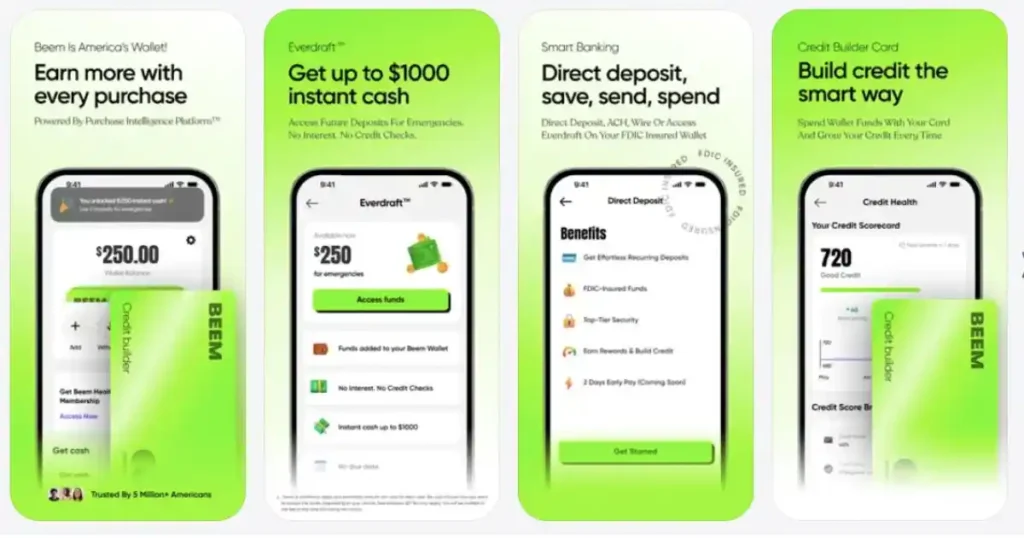
At Beem, we take a different approach to eligibility. Unlike many other cash advance apps, we don’t require a minimum income threshold to access Everdraft™. Instead, we focus on evaluating cash flow, not credit scores or traditional income requirements.
Here’s how Beem works differently:
- Income Flexibility: We understand that income doesn’t always come from a traditional job. That’s why Beem doesn’t set a minimum income requirement. Freelancers, gig workers, contractors, and those with irregular incomes are still eligible for an Everdraft™ cash advance as long as their bank account shows consistent deposits.
- Cash Flow Focus: Beem evaluates your cash flow patterns, not your employment status. As long as your account shows steady deposits, you can qualify for Everdraft™ instant cash, regardless of whether you’re self-employed, part-time, or full-time.
- No Hard Credit Checks: Unlike traditional loan products, BEEM doesn’t perform a hard credit check. We believe in offering flexibility to users without penalizing them for having a non-traditional income stream. We’re not evaluating you based on your paycheck or credit score; we’re evaluating your ability to repay based on actual deposits.
- Easier Access for Everyone: Beem is designed to be more inclusive. By focusing on cash flow, we can provide advances to a broader set of people, including those who may not qualify for other cash advances that rely on income verification.
People Also Read: How Eligibility Criteria For Cash Advance Works
What Are The Risks of Income Requirements?
While income requirements can help apps mitigate risk, they also come with potential downsides:
1. Excludes Non-Traditional Workers
Many gig workers, freelancers, and part-time workers may not meet the income thresholds set by certain apps, even if they have a stable and reliable income. These individuals might be left without access to necessary funds during emergency situations because their income doesn’t come in the form of a typical paycheck.
At Beem, we don’t think that should be a barrier. That’s why our focus is on consistent deposits, regardless of where the income is coming from.
2. Creates Barriers for Low-Income Users
Income requirements can also create barriers for people living paycheck to paycheck or those in low-income brackets. If these users don’t meet the minimum income requirements, they may not be able to access cash when they need it most. At Beem, we strive to be more inclusive by focusing on cash flow stability over strict income thresholds.
3. May Not Reflect True Repayment Ability
Just because someone earns a high income doesn’t necessarily mean they are able to repay a cash advance. Income doesn’t always correlate with a person’s ability to manage their finances. By focusing on consistent deposit behavior instead of fixed income levels, we believe we can get a clearer picture of your ability to repay.
How Cash Advance Apps Without Income Requirements Make Access Easier
Apps like BEEM that don’t have income requirements often offer a more flexible, inclusive approach to cash advances. Here’s how:
1. No Minimum Income Thresholds
This is the biggest difference. Beem doesn’t ask for a minimum income to qualify. Instead, we look at your deposit behavior over time and offer advances based on your current cash flow, regardless of where your income comes from. This opens up access to those who may be self-employed, freelancers, or gig workers.
2. Faster Access for More People
Without the need for traditional income verification, apps like Beem can get cash into your hands faster. You don’t need to wait for documents to be submitted or for your employment to be confirmed. We check your account activity, confirm your available balance, and let you choose how fast you want the funds delivered.
3. Less Friction
The process is simple and friction-free. By focusing on what’s happening in your account instead of diving into paperwork and pay stubs, Beem makes it easier for people to access cash during times of need. This process works well for those with irregular income patterns, like freelancers or people with multiple income sources.
Why Flexibility in Eligibility Is Crucial for Financial Inclusion
Traditional cash advance models often leave people behind by requiring a full-time job or specific income. However, financial inclusion means making financial services accessible to everyone, no matter their job type, income source, or work schedule.
How Beem Supports Financial Inclusion:
On the BEEM app, we believe in providing a pathway to access cash for everyone. By not imposing minimum income restrictions, we allow a larger population of users, such as:
- Gig economy workers who are paid per task or project, such as rideshare drivers, delivery drivers, or freelancers
- Part-time employees who might not earn a consistent monthly salary
- People on fixed incomes, like Social Security, who may face financial difficulties when timing doesn’t align with their checks
With Beem’s no-income restriction policy, we’re able to serve these groups fairly, empowering them with the ability to borrow money during times of need. By focusing on consistent deposit behavior instead of income levels, Beem expands the opportunity for users who typically get left behind by traditional financial services.
A Practical Guide: How To Choose the Right Cash Advance App Based on Eligibility Criteria
Choosing the right cash advance app can feel overwhelming, especially when you don’t know what eligibility criteria are important. Not all apps are built the same, and understanding how they assess eligibility will help you choose the right one for your situation.
Here’s a checklist of questions to ask before downloading a cash advance app:
1) What are the income requirements?
Some apps require a minimum monthly income or specific types of income (like W-2 payroll). At Beem, we don’t require a minimum income or job status. Instead, we focus on consistent deposits and account activity.
2) How does the app verify income?
Ask if the app uses bank verification or payroll integration to assess your eligibility. Some apps ask for pay stubs or proof of employment, while Beem uses bank account deposits to determine eligibility based on cash flow.
3) Are there any hidden fees or charges?
Check for any fees attached to using the service, like transfer fees for faster withdrawals or monthly account maintenance fees. At Beem, we aim for full transparency, including fees for expedited transfers.
4) What is the delivery speed for funds?
Does the app offer instant cash, or do they use slower methods like ACH? With Beem, you can choose between free standard ACH delivery or instant delivery to your debit card (for a small fee).
5) How flexible are the limits?
Some apps set a fixed limit for all users, but others, like Beem, offer dynamic limits based on your account activity and usage patterns. Be sure the app you choose has a system that adjusts as your financial situation changes.
By evaluating these questions, you’ll be able to choose the app that aligns best with your needs, making sure you’re not left in the dark when you need cash the most.
People Also Read: How Much Cash Can You Get From BEEM
The Bottom Line: Which Model Works Best For You?
For users with stable, reliable income sources and who can afford to meet income thresholds, cash advance apps with income requirements may be a suitable option. However, for those with more varied income patterns, such as freelancers, gig workers, and part-time employees, apps that focus on cash flow and deposit stability (like Beem) are often a better choice.
Choosing the right cash advance app is all about finding a product that fits your financial situation, not forcing yourself to meet someone else’s income standard. Beem’s no-income restrictions policy gives users the freedom to use our service based on real-world behavior rather than traditional income expectations.
Conclusion
Cash advance apps with income requirements offer a different experience than apps like Beem, which focus on cash flow stability over fixed income thresholds. While income requirements are often used to reduce risk and ensure repayment, they can also unintentionally exclude self-employed, gig, or low-income users. By eliminating income restrictions, Beem is able to provide broader access to quick, reliable cash when people need it most.
At Beem, we believe in making financial access as inclusive as possible by evaluating real, consistent behavior over income type or amount. This flexibility allows us to better serve users from all financial backgrounds, ensuring you get access to the funds you need, regardless of your income source.
People Also Ask
1. Why Do Some Cash Advance Apps Have Income Requirements?
Income requirements are used by some cash advance apps to assess whether a user has the financial means to repay the advance. These requirements often rely on regular paychecks or stable income streams to ensure the app doesn’t extend funds irresponsibly.
2. How Does Beem Handle Income Verification?
At Beem, we don’t require a minimum income or traditional income verification. Instead, we evaluate cash flow based on your linked bank account activity and offer advances based on the consistency of deposits. This approach opens up access to a broader set of users, including freelancers and gig workers.
3. Do I Need To Have A Full-Time Job To Use Beem?
No. Beem does not require you to have a full-time job to qualify for Everdraft. We focus on verifying the consistency of your deposits rather than requiring a specific income type.
4. Can I Use Beem If I Don’t Have A Traditional Paycheck?
Yes. Beem’s no income restrictions policy allows anyone with regular deposits to qualify for an advance, including people who are self-employed, work part-time, or receive income through other means.
5. How Does Beem Determine My Advance Amount?
Your available amount depends on your account activity, cash flow, and deposit history. Beem adjusts available amounts over time, and factors like Beem Boost can increase your access once you show responsible account behavior.