Table of Contents
Finding the best personal loan in Florida depends on more than finding a lender that approves your application. The right loan should provide an amount you can actually use, a repayment schedule you can afford, and borrowing costs that make sense for your financial situation.
Florida borrowers have several options, including banks, credit unions, online lenders, secured loans, and personal loan marketplaces. Your credit score, income, debt-to-income ratio, loan amount, and repayment term can all affect the offers available to you.
Personal loans can be used for expenses such as debt consolidation, home improvements, medical bills, vehicle repairs, moving expenses, or other qualifying costs. However, taking on a loan isn’t always the best solution, especially if the payment would put additional pressure on an already tight budget.
This guide explains how personal loans work in Florida, what lenders look for, how to compare offers, where to look for a loan, and how Beem’s personal loan marketplace can help you explore available options.
What Is a Personal Loan?
A personal loan is an installment loan that provides a borrower with a specific amount of money that is generally repaid through scheduled payments over a predetermined period.
Most traditional personal loans are unsecured, meaning you don’t have to pledge a specific asset as collateral. Depending on the lender, personal loan funds may be used for:
- Debt consolidation.
- Home improvements.
- Medical expenses.
- Vehicle repairs.
- Moving costs.
- Major purchases.
- Unexpected expenses.
- Other qualifying personal expenses.
The lender determines the amount you can borrow, APR, fees, repayment period, and eligibility requirements.
How Do Personal Loans Work in Florida?
The basic process is straightforward. You generally:
- Determine how much you need.
- Compare lenders.
- Submit an application.
- Provide income and identification information.
- Allow the lender to evaluate your credit and financial profile.
- Review available loan terms.
- Accept an offer if it fits your budget.
- Receive the funds.
- Make scheduled payments until the loan is repaid.
The exact process varies by lender.
What Are the Best Personal Loans in Florida?
There isn’t one personal loan that is best for every Florida resident. The right option depends on:
- Credit score.
- Income.
- Employment.
- Debt-to-income ratio.
- Loan amount.
- Desired repayment period.
- APR.
- Fees.
- Funding speed.
A borrower with excellent credit may find the best terms at a traditional bank or online lender. Someone with limited or damaged credit may have better options through a credit union, secured loan, or lender that works with a broader range of credit profiles.
The best strategy is to compare the options available to you rather than choosing a lender based only on its reputation.
Where Can You Get Personal Loans in Florida?
Florida borrowers can explore several sources of personal financing.
Online Personal Lenders
Online lenders can make the application process convenient. Potential advantages include:
- Digital applications.
- Quick eligibility checks.
- Online document submission.
- Potentially fast funding.
However, rates and fees vary significantly between lenders.
Banks
Banks may offer personal loans to qualifying customers. If you already have a banking relationship, it’s worth checking whether your bank offers personal loans or lines of credit.
Credit Unions
Credit unions can provide personal loans and other financing products to qualifying members. They may offer competitive rates, although membership requirements apply.
Personal Loan Marketplaces
A personal loan marketplace can help borrowers explore potential offers from multiple lending partners. This can make comparison shopping easier.
Secured Loan Providers
Secured personal loans use collateral. They can be an option for borrowers who may not qualify for certain unsecured loans, but the collateral can be at risk if the loan isn’t repaid.
Beem’s Personal Loan Marketplace
If you’re looking for the best personal loans in Florida, comparing multiple options can be more useful than choosing the first lender you find.
Beem’s personal loan marketplace can help eligible borrowers explore available personal loan options from lending partners.
You can compare factors such as:
- APR.
- Loan amount.
- Repayment term.
- Monthly payment.
- Fees.
- Total repayment.
Beem is not a direct lender. Individual lending partners determine eligibility, loan amounts, rates, and terms. Always review the specific lender’s agreement before accepting an offer.
What Credit Score Do You Need for a Personal Loan in Florida?
There is no universal credit score requirement. Every lender establishes its own eligibility criteria. A commonly used FICO scoring range is:
| FICO Score | General Category |
| 300–579 | Poor |
| 580–669 | Fair |
| 670–739 | Good |
| 740–799 | Very Good |
| 800–850 | Exceptional |
A higher score generally improves your chances of qualifying for competitive rates. However, your credit score is only one part of the underwriting process. Lenders can also consider your income, existing debt, employment, and repayment ability.
Can You Get a Personal Loan With Bad Credit in Florida?
Potentially. Some lenders consider applicants with poor or fair credit. However, borrowers with bad credit may face:
- Higher APRs.
- Lower loan amounts.
- Shorter repayment terms.
- Additional fees.
- More stringent income requirements.
If your credit is weak, compare several options and focus on affordability. Approval alone doesn’t mean a loan is financially appropriate.
Can You Get a Personal Loan With No Credit in Florida?
It may be possible, although your options may be more limited. Without an established credit history, lenders have less information about your borrowing behavior. Potential alternatives include:
- Credit unions.
- Secured loans.
- Co-signed loans.
- Credit-builder loans.
- Certain online lenders.
If the expense isn’t urgent, building credit before borrowing may help you qualify for better terms later.
How Much Can You Borrow With a Personal Loan in Florida?
Loan amounts vary by lender. Some providers offer relatively small loans, while others may offer tens of thousands of dollars to qualified borrowers.
Your potential loan amount can depend on:
- Income.
- Credit history.
- Debt-to-income ratio.
- Employment.
- Existing debt.
- Loan purpose.
- Ability to repay.
Don’t borrow the maximum amount you’re offered unless you actually need it.
What Interest Rate Can You Get on a Personal Loan?
Your APR depends on your financial profile and the lender. Factors can include:
- Credit score.
- Credit history.
- Income.
- Debt-to-income ratio.
- Loan amount.
- Loan term.
- Lender.
- Whether the loan is secured.
Borrowers with stronger credit generally have access to more competitive rates. When comparing offers, look at APR rather than simply the advertised interest rate.
What Is APR?
APR stands for annual percentage rate. It provides a broader measure of borrowing costs and can reflect certain fees associated with the loan.
For example, two lenders could advertise similar interest rates but have different APRs because their fees differ. That’s why APR is one of the most important numbers to compare.
What Fees Can Personal Loans Have?
Potential fees include:
- Origination fees.
- Late-payment fees.
- Returned-payment fees.
- Administrative fees.
- Prepayment penalties.
Not every lender charges these fees. Read the complete loan agreement before accepting an offer.
How Long Are Personal Loan Terms?
Personal loan terms vary by lender. Many personal loans have repayment periods ranging from one to several years.
A longer term generally means a lower monthly payment but potentially more interest. A shorter term can increase the monthly payment while reducing total interest. Choose the term based on both affordability and total cost.
Best Personal Loans in Florida for Different Borrowers
The right loan depends on your financial profile.
Best for Borrowers With Strong Credit
Banks, credit unions, and online lenders may offer competitive rates to borrowers with strong credit.
Best for Borrowers With Fair Credit
Compare online lenders, credit unions, and lenders that specifically work with fair-credit borrowers.
Best for Borrowers With Bad Credit
Consider credit unions, secured loans, co-signed loans, and lenders that accept lower credit scores. Be especially careful about high APRs and fees.
Best for Larger Expenses
A traditional personal loan may be more appropriate for larger expenses that can be repaid over several years.
Best for Small Short-Term Needs
An eligible cash advance may be more appropriate if you only need a relatively small amount to cover a temporary cash-flow gap.
Personal Loans for Debt Consolidation in Florida
Debt consolidation is a common reason borrowers seek personal loans. A consolidation loan can potentially combine several high-interest debts into one new payment.
For example, you might use a personal loan to consolidate multiple credit card balances. The goal is generally to simplify repayment and potentially reduce borrowing costs.
However, consolidation doesn’t automatically save money. Compare the new loan’s APR, fees, and total repayment with your existing debts.
Personal Loans for Home Improvements
Personal loans can potentially finance qualifying home improvements. They’re particularly useful for borrowers who don’t want to use a credit card or don’t have enough cash available.
Before borrowing, calculate:
- Project cost.
- Loan payment.
- Total interest.
- Contractor expenses.
- Emergency reserve.
For major renovations, compare a personal loan with home equity financing and other available options.
Personal Loans for Medical Expenses
Medical bills can create unexpected financial pressure. A personal loan may allow you to spread repayment over time. However, ask the medical provider whether it offers:
- Payment plans.
- Financial assistance.
- Discounts.
- Interest-free arrangements.
A provider payment plan may be less expensive than taking out a personal loan.
Personal Loans for Vehicle Repairs
Florida residents may use personal loans for qualifying vehicle repairs, depending on the lender.
This can be especially important when a vehicle is necessary for commuting or earning income. Before borrowing, compare the loan cost with:
- Savings.
- Repair-shop financing.
- Payment plans.
- Other financing options.
Personal Loans for Moving Expenses
Moving can involve deposits, transportation, furniture, utility setup, and other costs. A personal loan can potentially spread these expenses over a longer period. However, create a detailed moving budget before deciding how much to borrow.
Personal Loans for Emergency Expenses
Personal loans can potentially cover unexpected expenses such as:
- Home repairs.
- Vehicle repairs.
- Medical expenses.
- Emergency travel.
- Essential household expenses.
If you only need a small amount temporarily, a cash advance may be more appropriate than a larger installment loan.
Personal Loans for Self-Employed Borrowers in Florida
Self-employed borrowers can potentially qualify for personal loans. However, they may need additional documentation to verify income. A lender could request:
- Tax returns.
- Bank statements.
- 1099 forms.
- Profit-and-loss statements.
- Other income records.
Self-employed borrowers should keep financial records organized throughout the year.
What Documents Do You Need for a Personal Loan?
Requirements vary by lender.
You may need:
- Government-issued identification.
- Social Security number.
- Proof of income.
- Recent pay stubs.
- Bank statements.
- Employment information.
- Proof of address.
- Information about existing debts.
Self-employed applicants may need additional documentation.
How to Apply for a Personal Loan in Florida
Step 1: Determine How Much You Need
Start with the expense you’re trying to cover.
Step 2: Review Your Credit
Check your credit reports and look for errors.
Step 3: Gather Documentation
Prepare proof of identity, income, bank information, and other requested documents.
Step 4: Compare Lenders
Explore banks, credit unions, online lenders, and personal loan marketplaces.
Step 5: Compare Offers
Focus on APR, fees, monthly payment, repayment term, and total repayment.
Step 6: Submit Your Application
Provide accurate information.
Step 7: Review the Agreement
Read the complete loan agreement before accepting the funds.
Step 8: Make Payments on Time
Follow the repayment schedule until the loan is paid off.
How Beem’s Personal Loan Marketplace Can Help
Finding and comparing personal loans can take time. Beem’s personal loan marketplace can help eligible borrowers explore available personal loan options from lending partners.
Instead of assuming one lender will offer the best terms, you can compare available options based on:
- APR.
- Loan amount.
- Monthly payment.
- Repayment period.
- Fees.
- Total repayment.
Beem is not a direct lender. Individual lenders determine eligibility and loan terms. Always review the specific lender’s agreement before accepting an offer.
Personal Loan Alternatives in Florida
A personal loan isn’t always the best financial solution. Consider these alternatives.
Emergency Savings
Using savings can avoid interest and fees.
Credit Cards
If you already have available credit and can repay the balance quickly, a credit card may be an option. However, carrying a high-interest balance can become expensive.
Home Equity Financing
Homeowners may consider home equity loans or lines of credit for large expenses. These products use your home as collateral, so understand the risks.
Credit Union Loans
Credit unions may offer competitive personal and small-dollar loans to qualifying members.
Payment Plans
Ask the service provider whether you can divide the expense into smaller payments.
Cash Advance Services
For smaller short-term needs, an eligible cash advance may provide an alternative to a larger personal loan.
How to Avoid Predatory Personal Loans
A loan can be expensive even when it is technically legitimate.
Be cautious if a lender:
- Guarantees approval.
- Hides the APR.
- Doesn’t disclose fees.
- Demands unusual upfront payments.
- Pressures you to accept immediately.
- Encourages you to borrow more than you need.
- Refuses to provide a written agreement.
You should know exactly how much you’ll receive and how much you’ll repay before accepting a loan.
How Much Should You Borrow?
Borrow only what you need. If your emergency expense is $1,500, borrowing $10,000 simply because you’re approved for that amount creates unnecessary debt.
Before applying, determine:
- Exact amount needed.
- Available savings.
- Affordable monthly payment.
- Total borrowing cost.
- Ability to repay if your income changes.
How to Budget for a Personal Loan
Before accepting an offer, add the new payment to your existing monthly expenses. Consider:
- Housing.
- Utilities.
- Food.
- Transportation.
- Insurance.
- Existing debt.
- Savings.
- New loan payment.
If the new payment makes your budget too tight, consider borrowing less or exploring alternatives.
What If You Can’t Make Your Loan Payment?
Contact the lender as soon as you realize you may have trouble making a payment. Depending on the lender, you may be able to discuss:
- A different payment date.
- Hardship assistance.
- A payment arrangement.
- Other repayment options.
Don’t wait until the debt has gone into collections before asking for help.
Personal Loan Checklist
Before accepting a loan, ask:
- What is the APR?
- How much will I actually receive?
- What fees apply?
- What is the monthly payment?
- How long is the repayment term?
- What is the total repayment?
- Is there a prepayment penalty?
- What happens if I miss a payment?
- Does the lender report payments to credit bureaus?
- Is the lender authorized to operate in Florida where required?
If you can’t answer these questions, don’t accept the offer yet.
The Bottom Line
The best personal loan in Florida isn’t necessarily the one with the lowest advertised rate, largest loan amount, or fastest approval. It’s the loan that fits your financial situation and allows you to repay the debt without putting essential expenses at risk.
Florida borrowers can explore banks, credit unions, online lenders, secured loans, co-signed loans, and personal loan marketplaces. Your credit score, income, existing debt, loan amount, and repayment term can all affect the options available to you.
Beem’s personal loan marketplace can help eligible borrowers explore available personal loan options from lending partners. Comparing APRs, fees, monthly payments, repayment periods, and total repayment can help you make a more informed borrowing decision.
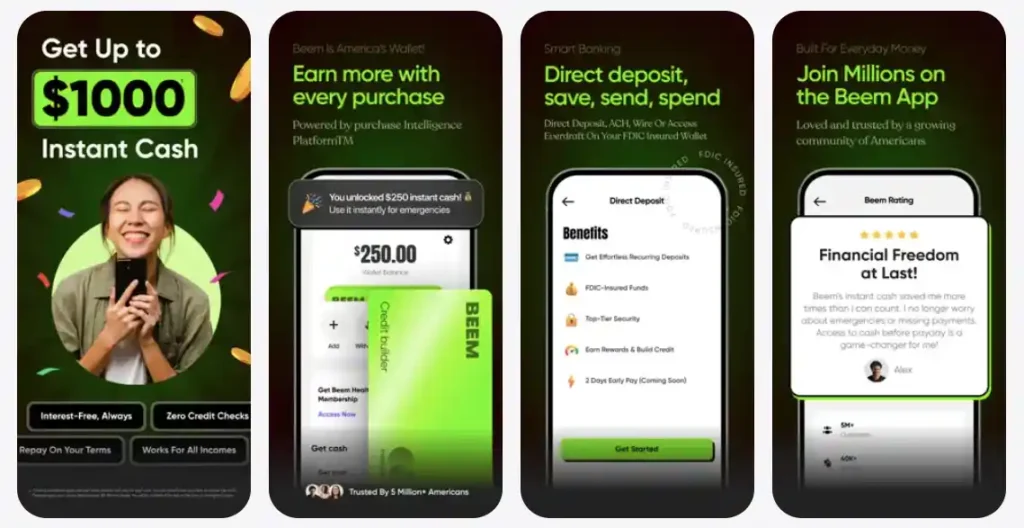
For smaller, short-term financial needs, eligible Beem users may also have access to Everdraft™, which can provide up to $1,000 in instant cash advances, subject to eligibility requirements.
Before taking on any new debt, determine how much you actually need, compare alternatives, and make sure the repayment fits comfortably within your budget.
Frequently Asked Questions
1. What are the best personal loans in Florida?
There isn’t one personal loan that’s best for everyone. The right option depends on your credit profile, income, loan amount, APR, fees, repayment term, and financial needs. Comparing multiple offers can help you find an option that fits your budget.
2. Can I get a personal loan in Florida with bad credit?
Yes, potentially. Some lenders consider borrowers with poor or fair credit. However, bad credit can result in higher APRs, smaller loan amounts, or less favorable repayment terms.
3. What credit score do I need for a personal loan in Florida?
There is no universal minimum credit score. Each lender has its own requirements. Credit score is generally considered alongside income, debt, employment, and other financial factors.
4. Can I get a personal loan with no credit history in Florida?
Possibly. Credit unions, secured loans, co-signed loans, credit-builder products, and certain online lenders may consider borrowers without established credit. Options may be more limited.
5. How much can I borrow with a personal loan in Florida?
Loan amounts vary by lender. Your income, credit history, debt-to-income ratio, existing obligations, and ability to repay can affect the amount you’re offered.
6. How can I improve my chances of getting a personal loan in Florida?
Improve your credit where possible, reduce existing debt, maintain stable income, check your credit reports for errors, organize your financial documents, and compare lenders before submitting formal applications.
7. How do I compare personal loans in Florida?
Compare APR, loan amount, monthly payment, repayment term, origination fees, late fees, funding speed, and total repayment. Don’t choose a loan solely because it has the lowest monthly payment.
8. Can Beem help me find a personal loan in Florida?
Beem’s personal loan marketplace can help eligible borrowers explore available personal loan options from lending partners. Individual lenders determine eligibility, rates, loan amounts, and terms, so review each offer carefully.
9. Does Beem offer personal loans directly?
No. Beem operates a personal loan marketplace that connects eligible users with lending partners. The individual lender determines whether you qualify and sets the terms of any loan offered.
10. Can Beem provide an alternative to a personal loan?
For eligible users with smaller short-term cash-flow needs, Beem Everdraft™ may provide up to $1,000 in instant cash advances, subject to eligibility requirements. A cash advance and personal loan serve different purposes, so choose based on the size and nature of your financial need.