


Table of Contents
Small delivery businesses can add fuel surcharges without losing customers by implementing them transparently, communicating the reasoning clearly before the change takes effect, and structuring the surcharge as a visible, variable line item tied to a real, externally driven cost. Businesses that do this correctly retain the vast majority of their customers. Many report that the conversation actually strengthens the relationship.
Fuel costs are the one variable no small delivery business can fully control. When the price at the pump climbs by $0.60 per gallon and your daily fuel spend jumps by $25 to $40 per shift, the cost has to go somewhere. The question is not whether to implement a surcharge. For most small delivery businesses operating on thin margins, it is how to implement one in a way customers understand, accept, and do not use as a reason to go elsewhere.
Why Fuel Surcharges Are Standard Practice, Not an Apology
Many independent delivery operators hesitate to add a surcharge because it feels like asking customers to pay more for the same service. The reframe is this: a fuel surcharge is not a price increase. It is a transparent mechanism for sharing a real, documented, externally driven cost with the customer rather than absorbing it entirely in reduced owner income or, worse, in service cuts that affect the customer anyway.
FedEx, UPS, DHL, freight companies, food distributors, and HVAC businesses have used fuel surcharges as a standard pricing component for decades. Customers understand the practice when it is implemented honestly. The execution determines customer response far more than the concept itself.
Read: Road Trip Cost Planner: Fuel, Food, and Lodging Math
Step One: Calculate the Surcharge Correctly
A surcharge that is too high relative to actual fuel cost increases feels like a price grab. One that is too low does not solve the margin problem. Getting the number right requires a specific calculation.
The Per-Delivery Method
Start with your average miles per delivery including pickup and drop-off. If that averages 8 miles and your vehicle gets 22 MPG, each delivery consumes approximately 0.36 gallons. If fuel has risen from $3.40 to $4.10 per gallon, the incremental cost per delivery is $0.70 multiplied by 0.36 gallons, which equals approximately $0.25. A surcharge of $0.25 to $0.50 per delivery is a defensible, data-grounded number you can explain to any customer who asks.
The Percentage Method
A 1.5 to 3 percent fuel surcharge on order value is common in food service and product delivery. It is easier to communicate as a simple invoice line item and feels familiar to customers accustomed to small percentage-based fees. The per-delivery method is more defensible if customers ask how the amount was determined. The percentage method is simpler to administer.
Step Two: Choose the Right Structure
Fixed temporary surcharge: A specific amount applying for a defined period with a stated quarterly review commitment. The most transparent and customer-friendly option for most businesses.
Variable index-linked surcharge: Ties the amount to a publicly available fuel price index such as the EIA weekly retail gasoline price for your region. When the index rises above a threshold, the surcharge activates automatically. When it falls, it reduces or disappears. Customers can verify the connection themselves without taking your word for it.
Flat delivery fee adjustment: Rolls the increase into a revised delivery fee rather than a separate line item. Simpler to administer but less transparent and harder to reduce cleanly when fuel prices fall.
Step Three: Communicate Before It Takes Effect
Businesses that lose customers over fuel surcharges almost always do so because of how the change was communicated, not because of the surcharge itself.
Give at least two weeks of advance notice. Thirty days is better for customers with regular scheduled deliveries. Use plain language that explains the reasoning directly. Something like this works well:
“Fuel prices in our area have increased significantly over the past few months. Our average fuel cost per delivery has risen by approximately $X, and after absorbing this increase for as long as we could, we are adding a small fuel surcharge of $X per delivery beginning on [date]. We will review this quarterly and reduce or remove it if prices come back down. We wanted to give you as much notice as possible and we value your continued business.”
That message does four things: it acknowledges a shared external reality the customer can verify, demonstrates you absorbed the cost before passing it on, makes a specific review commitment, and treats the customer as a partner. For customers you speak with regularly, mention it directly rather than relying solely on written communication.
Read: Simple Budgeting Hacks for Gig Economy Workers
Step Four: Make It Visible on Every Invoice
Once the surcharge is in effect, it should appear as a distinct labeled line item rather than disappearing into a revised total. A line reading “Fuel Surcharge: $0.40” is transparent and reinforces the communication you have already done. A delivery fee that silently increased from $4.50 to $4.90 creates confusion and erodes trust.
Visible line items also make the removal clean and credible when fuel prices fall. Customers who see the surcharge appear and then see it disappear when you follow through on your review commitment build significantly more trust than customers who experience opaque pricing with no explanation.
How to Handle Customer Pushback
Even with excellent communication, some customers will push back. A prepared response that is honest, empathetic, and firm without being defensive makes these conversations productive.
Acknowledge the frustration genuinely. Explain the calculation briefly. Customers who understand the surcharge represents a specific documented cost increase are significantly more accepting than those who feel the number was arbitrary. Restate the review commitment. For your most valuable customers, a personal call rather than a form response preserves the relationship without permanently discounting the surcharge.
The customers who push back most vocally are often the ones most invested in the relationship. A pushback conversation handled well frequently produces a stronger customer relationship than existed before the surcharge created friction.
How Beem Helps Small Delivery Businesses Manage the Transition
Fuel surcharges recover costs going forward. They do not recover what was already absorbed in the weeks before implementation. For owner-operators navigating that gap, cash flow pressure is real.
Faster Collections With Smart Money Transfers
Beem’s wallet-to-bank transfer features help small delivery businesses collect receivables efficiently, reducing the lag between invoice issuance and funds available. For sole proprietors who function as both the business and the household financial unit, faster collection directly reduces the pressure of rising operating costs.
Put money back in your pocket with every fill-up with Beem. Whether you’re budgeting with gift cards or cash, earning cashback makes every dollar work harder. Start saving on gas today.
Everdraft™: Bridge Funding During the Transition Period
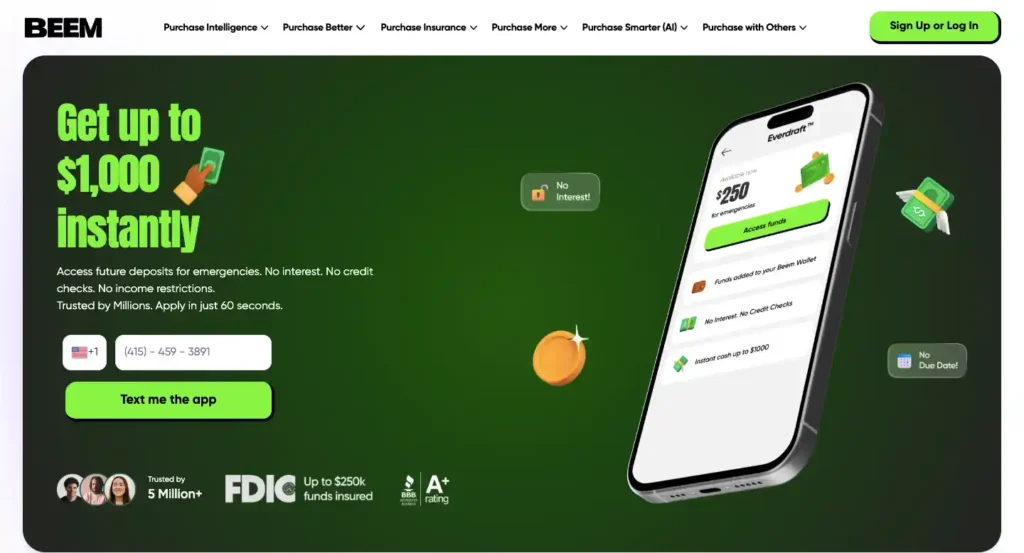
For owner-operators who need short-term bridge funding between when fuel costs increase and when a surcharge is fully in place and recovering margin, Beem’s Everdraft™ provides access to up to $1,000 with no interest charged and no credit check required. It is not a substitute for a well-structured surcharge policy. It is the practical tool that keeps operations stable while the policy takes effect.
BudgetGPT: Verify Your Surcharge Is Recovering Actual Costs
BudgetGPT’s variable income and expense modeling helps delivery business owners track whether their surcharge calculation is recovering real fuel cost increases or whether the amount needs adjustment based on actual consumption data from recent shifts.
Conclusion
Small delivery businesses that handle fuel surcharges well succeed because they treat the surcharge as a shared problem rather than a unilateral decision. They communicate with enough honesty and specificity that customers can verify the reasoning themselves, and they follow through on commitments to review and adjust when conditions change.
A fuel surcharge implemented transparently does not cost you customers. It demonstrates the kind of business integrity that builds long-term loyalty. Price what your service actually costs to deliver. Explain why. Follow through when prices fall. The customers worth keeping respond to that approach with understanding, and the relationship that results is stronger than the one that existed before the conversation.
Download Beem today from the App Store or Google Play. Staying informed and structured today can make finance management calmer and more predictable.
People Also Ask
1: How much should a small delivery business charge for a fuel surcharge?
Base the amount on actual incremental fuel cost per delivery. Calculate average miles per delivery divided by your vehicle’s MPG to find gallons consumed, then multiply by the price increase per gallon. A surcharge of $0.25 to $0.75 per delivery covers most real-world increases without feeling disproportionate.
2: Will adding a fuel surcharge cause customers to cancel?
Most customers accept a well-communicated, transparently structured surcharge without canceling. Customer response depends primarily on how the increase is communicated rather than the amount itself. Advance notice, a plain-language explanation tied to a verifiable cost driver, a visible invoice line item, and a stated quarterly review commitment are the four factors that most reliably retain customers through a surcharge implementation.
3: Should the fuel surcharge be a separate line item or rolled into the delivery fee?
A separate labeled line item is more transparent and generally more effective at building trust. It makes the charge visible, understandable, and cleanly removable when fuel prices fall. Rolling it into a revised delivery fee without explanation creates confusion and makes it harder to reduce the charge credibly when you follow through on your review commitment.
4: How often should a small business review and adjust its fuel surcharge?
Quarterly is the most common and most defensible frequency for small delivery businesses. It is frequent enough to reflect meaningful fuel price changes without requiring monthly pricing adjustments that create administrative friction. State the review date explicitly in your initial communication so customers know when to expect a potential adjustment.
5: Can Beem help small delivery businesses manage cash flow during high fuel cost periods?
Yes. Beem’s smart money transfer features help delivery business owners collect receivables faster, reducing the lag between invoicing and funds in hand. Everdraft™ provides owner-operators with up to $1,000 with no interest and no credit check to bridge the gap between when fuel costs increase and when a surcharge fully recovers the margin.