
Table of Contents
Every cash advance app says no interest. Every one of them is telling the truth. What they charge instead is a combination of tips, express delivery fees, subscription costs, and optional contributions that add up to more than most users realize.
This is the business model of variable fee cash advance apps: make the cost feel voluntary, spread it across multiple small charges, and rely on the fact that nobody adds them up. A $4 tip. A $3.99 express fee. A $9.99/month subscription.
Across 12 to 24 cash-outs per year, the real cost of cash advance apps ranges from $60 to $500 depending on usage. This article breaks down every fee layer so you can calculate what you actually pay.
Read: How To Increase Your Beem Cash Advance Limit Over Time
The Four Fee Layers Most Cash Advance Apps Use
No single cash advance app uses all four of these simultaneously. But most use two or three, and the combination is where cash advance app hidden fees accumulate.
Layer 1: The Subscription
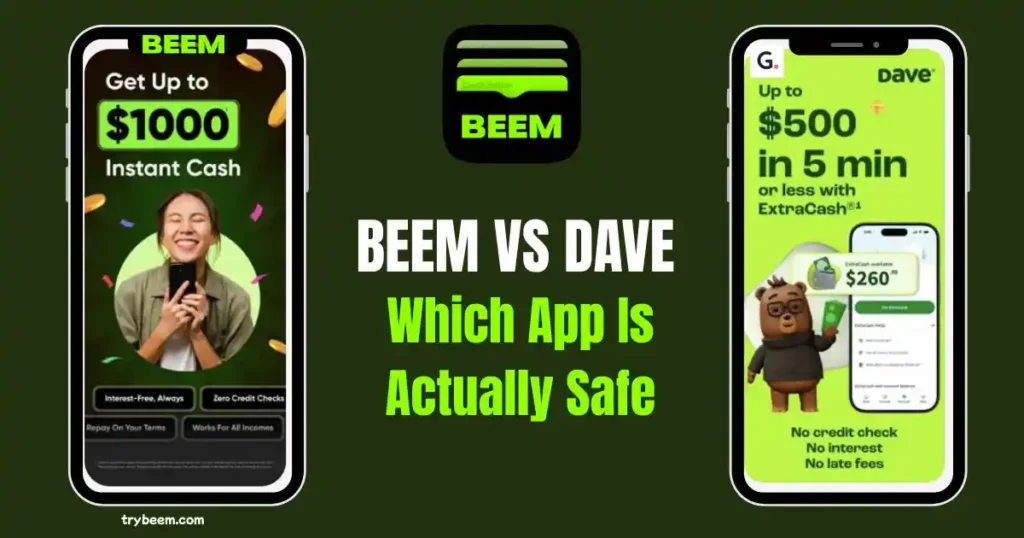
Some apps charge a monthly fee to access the advance. Dave charges $1/month. Brigit charges $9.99/month. Cleo charges $5.99/month. Albert charges $12.49 to $14.99/month. At the low end, Dave’s $12/year is the cheapest entry. At the high end, Albert costs $179.88/year before you borrow a single dollar.
The subscription is disclosed at sign-up. But most users evaluate it in isolation (“$9.99 is less than Netflix”) without adding the express fees and tips that stack on top for every advance.
Layer 2: The Express Delivery Fee
Every app offers standard (free, 1-3 business days) and express (paid, same-day). EarnIn charges $1.99 to $3.99 per Lightning Speed cash-out. Dave charges $1.99 to $5.99 per express delivery. Brigit charges for instant transfers.
Across 12 express deliveries per year at $3.99, that is $48. Across 24, that is $96. Combined with a $9.99/month subscription, a moderate user pays $168 to $216 annually.
The express fee exploits urgency. Nobody requesting a cash advance says “I can wait three days.” Offering a free option that takes three days and a paid option that arrives in hours is not a choice. It is a pricing strategy that makes the paid option feel inevitable.
Layer 3: The Tip
EarnIn asks you to tip after every cash-out. The tip is “optional.” The app suggests amounts ($1, $3, $5). You can set it to $0. But the interface makes tipping the default and declining the exception. The screen appears after you have received the money, when gratitude and guilt are highest.
EarnIn states tips do not affect access. Many users do not believe this. The ambiguity is the business model. A $3 tip on a $100 cash-out is 3%. Across 20 cash-outs per year, that is $60 in “optional” tips on a product marketed as free. The real cost of cash advance apps with tipping models is whatever you pay when you are uncertain whether refusing will cost you more.
Layer 4: The Optional Contribution
Some apps frame monetization as “contributing to keep the app running.” Functionally identical to a tip, wrapped in community language. The variance between users is massive: $0/year to $200/year for identical service. This is what makes variable fee cash advance apps variable. Two people using the same app for the same amount get charged different totals based on susceptibility to social pressure.
The Annual Cost Nobody Calculates
Here is what a typical year costs across three usage patterns on variable fee cash advance apps.
A light user (one cash-out per month, half express) pays $143/year on a subscription app like Brigit or $54 to $78/year on a tip app like EarnIn depending on tip amount.
A moderate user (two cash-outs per month) pays $168/year on subscription or $108 to $156/year on tip-based.
A heavy user (weekly cash-outs) pays $224/year on subscription or $234/year on tip-based at $3 per tip.
The inversion point matters: at weekly usage, the “free” tip-based app actually costs more than the subscription app. The heavier your usage, the more the variable fee model charges relative to fixed pricing.
The real cost of cash advance apps with tipping models scales with your financial stress, not with the service provided.
Why Variable Pricing Works (For the App, Not for You)
Small Amounts Feel Insignificant
$3.99 per express delivery does not trigger an alarm. Neither does a $3 tip or a $9.99 subscription. Each stays below your decision-making threshold. It is only when you multiply $3.99 by 24 transactions that $96 appears, and nobody multiplies in real time.
Variable Pricing Extracts Maximum Revenue Per User
A fixed price charges every customer the same. Variable pricing charges each customer what they are willing to pay. A user who tips $1 pays $12/year. A user who tips $5 pays $60/year. The app earns 5x more from the second user for identical service. Variable fee cash advance apps are optimized to charge more to users who feel more financial pressure.
The “Free Standard Delivery” Anchor
Offering a free 3-day option makes the express fee feel like a reasonable upgrade. In practice, the free option is unusable for most emergencies. Rent is due tomorrow. The repair shop closes today. The free option exists to make the paid option look like a choice. The cash advance app fees explained as “optional” are priced around urgency you cannot opt out of.
How Beem’s Fee Structure Compares
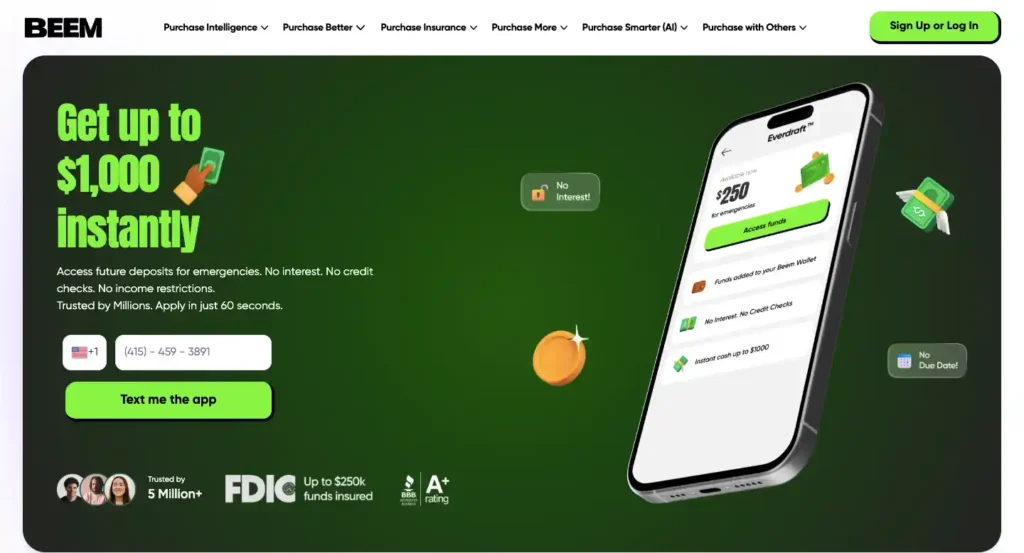
Beem charges a membership fee. That is the cost. The membership provides Everdraft™ Cash Advance up to $1,000 at zero interest, plus BudgetGPT, DealsGPT, PriceGPT, JobsGPT, and credit building.
No Tipping, No Variable Pricing
There is no tip prompt after a cash-out. No suggested amounts. No ambiguity about whether declining affects your access. Two Beem users with identical usage pay identical amounts. The app does not charge one user more because they feel more social pressure.
Express and Standard Delivery
Beem offers express (same-day, small fee) and standard (free) delivery. The express fee is the only per-transaction cost. There is no tip layered on top. No subscription plus express plus tip stack that triples the per-advance cost.
How to Calculate Your Actual Annual Cost on Any Cash Advance App
Run this math on your current app before switching or staying. Count your total cash-outs in the last 12 months (check bank statements). Count how many were expressed (look for fee charges).
Add up all tips, contributions, or optional payments. Add your subscription cost (monthly fee times 12). Total everything. If your number exceeds $150/year, you are paying more than you think.
If it exceeds $250/year, evaluate whether a fixed-membership model like Beem delivers the same access at a lower total.
FAQ: Variable Fee Cash Advance Apps
1. Are cash advance apps really free?
No cash advance app is truly free. Apps that charge no subscription still generate revenue through express delivery fees, tips, and optional contributions. The real cost of cash advance apps depends on your usage frequency and which fees you accept. A moderate user pays $100 to $250/year across all fee layers combined.
2. Which cash advance app fee model is cheapest?
It depends on usage frequency. For light users (1-2 cash-outs per month), a tip-based app with low tips can be cheaper. For heavy users (weekly cash-outs), a fixed subscription model is typically cheaper because the per-transaction tips accumulate faster than the flat monthly fee. Calculate your actual annual cost using the five-step method above.
3. Does Beem charge tips or variable fees?
No. Beem charges a fixed membership fee with no per-advance tipping. Everdraft™ Cash Advance provides up to $1,000 at zero interest. Express delivery has a small fee. There is no tip prompt, no optional contribution, and no variable pricing based on user behavior.
4. Why do cash advance apps charge express fees?
Express fees fund the instant delivery infrastructure (Visa Direct, Mastercard Send) and generate revenue beyond subscriptions. The fee exploits urgency: most users need the money today, making the paid express option feel mandatory even though a free 3-day option technically exists.
Final Thoughts
Variable fee cash advance apps are not scams. They solve a real problem. But the way they charge, through stacked layers of small fees designed to feel insignificant individually, means most users pay $150 to $250 annually without realizing it.
A $3 tip feels like nothing. A $3.99 express fee feels reasonable. A $9.99 subscription feels cheap. Added together across a year of moderate usage, the total is real money extracted through a pricing model that avoids the single large number that would make you reconsider.
The cash advance app fees explained in this article are not secrets. They are disclosed in terms of service. But they are structured so that calculating the annual total requires effort most users never invest. Now you have the math. Run it on your current app. And decide whether you want to keep paying variable prices set by tip prompts and urgency, or a flat cost you can predict before you sign up.