

Table of Contents
You have been using the same cash advance app for months without any issues. Then one day you go to request funds and the limit is lower than it was last time. No email, no in-app message, no explanation. Just a smaller number where a larger one used to be.
This happens to users across every major cash advance platform, and it is one of the most misunderstood mechanics in the category. Most people assume the limit dropped because they did something wrong.
Sometimes that is true. But often the cause is more structural than behavioral, and knowing the difference determines how quickly you can fix it.
This guide explains the real reasons cash advance apps reduce borrow limits, which user behaviors trigger drops most often, and what you can do right now to protect the access you have built.
Why Cash Advance Apps Set Dynamic Limits in the First Place
Unlike a traditional credit card with a fixed limit set at approval, cash advance apps use dynamic limits. Your ceiling moves up and down based on a continuously updated set of signals rather than a one-time credit decision.
The reason is risk management. Cash advance apps extend funds without a hard credit check, which means they cannot rely on a credit score to evaluate how likely you are to repay. Instead they build their own risk picture using the data they can observe directly: your bank balance, your deposit patterns, your spending behavior, and your repayment history within the app.
Because that data changes every week, your assessed risk level changes too. A limit that was appropriate last month may look too generous this month if your financial signals have weakened. The app adjusts accordingly, automatically and usually without telling you.
This model creates a paradox that frustrates a lot of users. The people who most need a higher limit are often those whose financial signals are weakest, which means the limit drops exactly when the need is highest.
Read: How Much Money Can I Get From Beem For Emergencies?
The Core Signals Cash Advance Apps Monitor
While every platform has its own proprietary algorithm, most cash advance apps evaluate some version of the same five signals.
Direct Deposit Consistency
This is the most weighted signal across virtually every platform. Apps want to see regular, predictable income arriving in your linked account on a consistent schedule. Gaps between deposits, changes in deposit frequency, or income arriving from multiple smaller sources rather than one primary employer all create uncertainty that the algorithm interprets as risk.
Gig workers are disproportionately affected by this signal. A week of strong earnings followed by a slow week can read as income instability even if your monthly total is perfectly healthy.
Bank Account Balance
Most apps monitor your running balance between deposits, not just at the moment of deposit. If your account consistently sits near zero in the days before your next deposit, that pattern signals financial stress. Apps respond by lowering limits to reduce their exposure to accounts that may not have enough funds to support a repayment debit.
The floor matters too. If your balance has ever gone negative, or if you have overdrafted your linked account, that event is typically logged and weighed negatively for a period after it occurs.
Repayment History
Every advance you take out and repay on time builds a positive repayment record within the app. Every failed repayment attempt, delayed repayment, or instance of the app retrying a debit multiple times works against that record. A single repayment failure can be enough to trigger a limit reduction, and the effect can persist for two to three pay cycles even after you have caught up.
Usage Patterns
How you use the app matters as much as how you repay. Users who consistently borrow at or near their maximum limit signal financial stress to the system. Users who never borrow at all provide no repayment data for the app to evaluate. The pattern that tends to support limit growth is moderate, consistent usage followed by clean, on-time repayment.
Account Activity and Engagement
Several platforms also factor in general account engagement beyond just borrowing and repaying. Logging in regularly, completing verification steps, keeping your profile information current, and maintaining an active connection between the app and your bank account all contribute to a stronger account profile. Dormant accounts are often quietly penalized with lower limits over time.
The Most Common Reasons Limits Drop
With those signals in mind, here are the specific situations that trigger limit reductions most often.
A Pay Cycle Was Missed or Delayed
A single missed deposit cycle is often enough to trigger a limit drop. The app sees a gap in income and recalibrates. This is particularly common around holidays, when payroll processing is delayed, or when switching jobs and experiencing a gap between final paycheck and first paycheck from a new employer.
Income Decreased
If your deposits have been smaller than usual over the past two to three cycles, the app’s estimate of your income has declined. Since most platforms size their limits relative to your perceived earnings, a drop in income creates a proportional drop in available advance.
A Repayment Did Not Clear Cleanly
If your bank account did not have sufficient funds when the app attempted to collect repayment, that attempt is logged even if it ultimately cleared on a retry. Multiple retry attempts in a single repayment cycle are treated as a significant risk signal across most platforms.
You Changed Banks or Linked a New Account
Switching your linked bank account resets the deposit history visible to the app. Even if your income is identical, the new account starts with no track record. Most platforms treat a new account connection as a reduced-trust situation until enough deposit history has accumulated.
The Platform Updated Its Risk Model
Cash advance apps periodically revise their underwriting algorithms. A system-wide update can reduce limits across large segments of users simultaneously, even for accounts with clean histories. These changes are almost never communicated to users in advance and can produce a limit drop that has nothing to do with your individual behavior.
Read: What Documents Do You Need to Apply for Beem?
How to Prevent Your Cash Advance Limit From Dropping
Prevention is more effective than recovery. These habits keep your limit stable and give it the best conditions to grow.
Route Your Primary Income as Direct Deposit
The single most effective protective action is ensuring your main income source deposits directly into your linked account on a predictable schedule.
For employees, this means setting up payroll direct deposit rather than receiving a paper check and depositing it manually. For gig workers, it means consolidating platform payouts into one linked account wherever the platform allows direct deposit routing.
Consistency in timing matters as much as consistency in amount. Weekly deposits that arrive on the same day every week build a stronger signal than biweekly deposits that vary by a day or two each cycle.
Keep a Balance Buffer
Aim to maintain a small positive balance in your linked account in the days before and after your deposit cycle. Even $50 to $100 above your typical daily minimum shifts how your account profile reads to the risk system. An account that never touches zero looks fundamentally different from one that regularly bottoms out before the next deposit arrives.
Repay Early When You Can
While most apps debit repayment automatically on your next payday, some allow early repayment. If you receive income earlier than expected or have funds available before the scheduled debit date, repaying early creates a positive signal and eliminates any risk of a failed debit due to insufficient funds.
Borrow Moderately Rather Than at Your Maximum
Using 50 to 70 percent of your available limit rather than the full amount sends a lower-stress signal to the algorithm. It demonstrates that you have a buffer and are not in maximum financial need. Over time, moderate usage paired with clean repayment tends to produce limit increases rather than drops.
Keep Your App Profile and Verification Current
Check that your employer information, income verification, and bank connection are up to date. An expired verification or a stale employer record can quietly suppress your limit without any visible error. Log into your app periodically, even in cycles where you do not need an advance, to keep the account warm and your profile active.
What to Do When Your Limit Has Already Dropped
If the drop has already happened, recovery follows a predictable path regardless of which platform you are using.
First, identify which signal weakened. Review your deposit activity for the past two to three cycles, check whether any repayments had issues, and confirm that your bank connection and employer verification are both active and current. The cause is almost always visible in one of those areas.
Second, address the root cause before requesting another advance. Requesting a large advance immediately after a limit drop, especially if your balance is still low, compounds the risk signal rather than repairing it.
Third, give the system time. Most platforms need two to three clean pay cycles to register improvement and begin adjusting limits upward. There is no shortcut around this window, but every cycle of consistent behavior counts toward it.
When Waiting Is Not an Option
The two-to-three-cycle recovery window is a real problem for users who need funds right now. If your limit dropped from $500 to $100 and you have a bill due this week, the recovery timeline is irrelevant to your immediate situation.
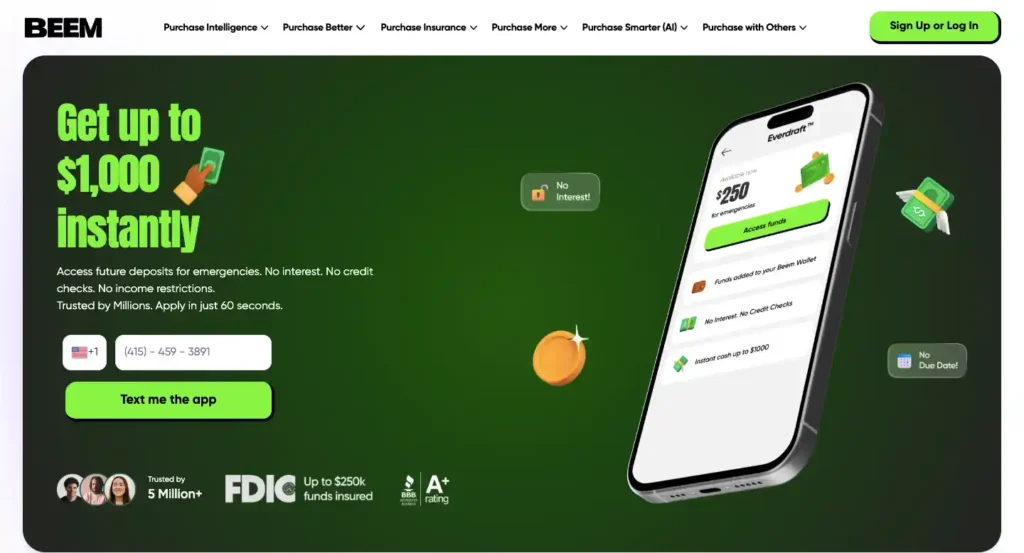
This is where having a backup option matters. Beem’s Everdraft™ operates independently of the employer payroll chain and deposit pattern requirements that govern most cash advance apps. It evaluates eligibility based on your account activity and provides access to up to $1,000 with no credit check required, available any day of the week including weekends and holidays.
For budget-conscious users and gig workers whose primary cash advance app has reduced their limit at the wrong moment, Everdraft™ provides a path to funds that does not require waiting for another app’s algorithm to recover confidence in your account.
Get up to $1,000 with Beem Everdraft™. No Credit Check. No Payroll Dependency
Why Some Apps Are More Transparent Than Others
Not all cash advance apps handle limit changes the same way. Some notify users when limits change. Most do not. Some publish clear eligibility criteria. Most treat their algorithms as proprietary and opaque.
This lack of transparency is one of the most consistent complaints across the category. Users are expected to maintain account behavior that satisfies an algorithm they cannot see, based on criteria they were never told, with no notification when the outcome changes.
The more transparent a platform is about how limits are calculated, the more control users have over their own ceiling. When evaluating which cash advance app to use as your primary tool, the quality of limit transparency is worth weighing alongside fees and advance amounts.
Beem publishes its eligibility framework and does not bury limit criteria behind a black-box algorithm. For users who want to understand what they are working with rather than guessing at it, that transparency is a meaningful distinction.
People Also Ask
1. Why did my cash advance limit go down without warning?
Most cash advance apps adjust limits automatically based on behavioral signals including deposit consistency, bank balance, and repayment history. They do not notify users when limits change.
2. Can a cash advance app lower your limit even if you always repay on time?
Yes. On-time repayment is one signal among several. If your bank balance has dropped, your deposits have become inconsistent, or the platform updated its risk model, your limit can decrease even with a clean repayment record. Repayment history protects your limit but does not override all other signals.
3. Do cash advance apps share your data with each other?
Generally, no. Each platform evaluates your account independently using its own data connections. Behavior on one app does not directly affect your limit on another. However, if you link the same bank account across multiple apps, activity visible through that account, such as repayment debits from other platforms, may be observed by all connected apps.
4. Is there a cash advance app that does not reduce limits unpredictably?
No platform offers a guaranteed fixed limit. All cash advance apps use dynamic limits to some degree. The best approach is to understand which signals your platform weighs most heavily and protect those signals consistently. For users who need a more stable and higher ceiling, Beem Everdraft™ offers up to $1,000 with eligibility criteria that are clearly communicated. You can explore it at https://trybeem.com/get-instant-cash-advance.
Bottom Line
Cash advance apps reduce borrow limits because they operate on a dynamic risk model rather than a fixed credit decision. The signals they monitor, deposit consistency, bank balance, repayment history, usage patterns, and account engagement, shift constantly, and your limit shifts with them.
The best protection is a set of consistent habits: primary income routed as direct deposit, a modest balance buffer maintained between pay cycles, moderate borrowing well below your maximum, and clean repayments every cycle. These habits do not guarantee a specific limit, but they create the account profile that gives limits the best conditions to grow and the least reason to drop.
When a drop has already happened and you need funds before the recovery window closes, Beem Everdraft™ provides up to $1,000 on demand without the payroll dependency or deposit pattern requirements that govern most other platforms.
Try Beem Everdraft™. Up to $1,000, No Credit Check, Any Day of the Week.