
Table of Contents
Food is the expense that most people feel inflation on most personally. You cannot defer a grocery run the way you can defer a discretionary purchase. When grocery prices rise faster than household income, the gap between what a family needs and what the budget allows becomes one of the most immediate financial problems a household can face.
Grocery budget shortfalls in high-inflation periods are not a sign of financial mismanagement. They are the predictable outcome of prices rising faster than wages. The problem is structural, not behavioral, and it deserves a structural response. This guide covers exactly how Beem’s tools help households cover immediate grocery shortfalls, stretch their food budget further, and build the stability that makes future shortfalls less likely.
Why Grocery Inflation Hits Harder Than Other Price Increases
Food Is Non-Negotiable and Frequent
Unlike annual expenses, which can be planned for, or one-time costs, which can be absorbed over time, groceries are a recurring, non-negotiable expense that lands every single week. There is no option to skip a month, delay the purchase, or find an equivalent alternative at zero cost.
The frequency and non-negotiable nature of grocery spending mean that even a modest per-trip increase accumulates into a significant monthly budget impact faster than most other inflation categories.
Grocery Inflation Is Cumulative and Visible
Grocery price increases are uniquely visible because most households shop regularly and have an intuitive sense of what things should cost. A utility bill that increases by $15 is noticed once a month.
A grocery run that costs $20 more than expected is noticed every week, creating a sustained, repeated experience of financial pressure that affects household morale and financial decision-making in ways that less frequent expenses do not.
Staple Categories Have Been Hit Hardest
Inflation has not been distributed evenly across grocery categories. Staple items, including proteins, dairy, eggs, cooking oils, and fresh produce,e, have experienced above-average price increases in recent years, meaning the foods that form the core of most household diets have become more expensive faster than the overall food inflation figure suggests. Households cannot simply substitute away from staples the way they might switch brands of a discretionary item.
The Pre-Payday Grocery Shortfall Is a Real Pattern
For households on a biweekly or monthly pay cycle, grocery spending that runs ahead of schedule creates a pre-payday shortfall that is one of the most common and most uncomfortable financial situations that inflation produces. The family needs groceries. Payday is four days away. The account balance is not sufficient to cover a full grocery run. The options available without a financial tool like Everdraft range from uncomfortable to genuinely harmful.
People Also Read: Instant Transfers vs Standard Transfers
The Real Cost of Handling a Grocery Shortfall the Wrong Way
High-Interest Credit Cards
Using a credit card to cover a grocery shortfall is a common response that incurs disproportionate long-term costs. A $150 grocery charge on a credit card carried for one month at a 27 percent APR costs approximately $3.38 in interest. That sounds minor, but households that routinely carry grocery charges across multiple months at high APRs accumulate interest costs that meaningfully exceed the original shortfall amount over a year of consistent behavior.
Payday Loans
A payday loan taken to cover a $200 grocery shortfall at a typical fee of $15 to $30 per $100 borrowed costs $30 to $60 in fees for a two-week loan. That is a fifteen to thirty percent cost on a two-week advance, which represents an effective APR of 390 to 780 percent on a necessity that was always going to be paid from the next paycheck. Payday lending turns a temporary cash flow problem into a permanent fee extraction that recurs whenever the same shortfall arises.
Bank Overdraft Fees
A grocery purchase that triggers a bank overdraft generates a $25 to $35 fee on a transaction that may be a fraction of that amount. A $40 grocery run on a $20 balance costs $55 to $75, more than double the original grocery spend. For households experiencing recurring pre-payday grocery shortfalls, recurring overdraft fees are among the most expensive and least value-generating financial costs in the household budget.
How Beem Everdraft Addresses Grocery Budget Shortfalls
Zero Cost for the Core Function
Everdraft™ provides eligible users with instant cash advances of up to $1,000, with zero interest and no mandatory fees. For a grocery shortfall specifically, this means the cost of bridging the gap between a needed grocery run and an incoming paycheck is exactly zero in mandatory charges. The advance is repaid when the next deposit arrives, and the household’s financial position at the start of the new pay cycle is essentially unchanged from what it would have been if the timing gap had not existed.
Sized for Real Grocery Needs
Many cash advance apps cap advances at $100 to $200, which is insufficient for a full family grocery run in a high-inflation environment. Beem’s Everdraft limit of up to $1,000 for eligible users covers the realistic cost of a weekly or biweekly grocery run for most households, making it a genuinely useful tool rather than a partial solution that covers a fraction of the actual need.
Repayment Aligned With Payday
Everdraft repayment aligns with incoming deposits rather than a fixed calendar deadline. For grocery shortfalls specifically, this means the advance that covered Thursday’s grocery run is repaid when Friday’s paycheck arrives, with no arbitrary intermediate deadline that could create a secondary cash flow problem. The bridge connects exactly the two points it needs to connect and no further.
No Credit Check Means Accessible Approval
Grocery budget shortfalls do not discriminate by credit score. They affect households across the full credit spectrum, including those whose credit profiles reflect past financial difficulty rather than current financial behavior. Beem’s no-credit-check approval process evaluates real financial behavior, income consistency, and account activity, giving households fair access to the tool they need based on what they are doing now rather than what happened years ago.
How BudgetGPT Helps Manage the Grocery Budget
Real-Time Grocery Spending Visibility
BudgetGPT tracks grocery spending in real time, giving households a live view of how much food budget remains before the next deposit. Small, frequent purchases across multiple shopping trips and delivery orders accumulate quickly, and real-time visibility catches them before they become a shortfall.
Identifying Grocery Spending Patterns
BudgetGPT analyzes spending patterns to surface grocery habits quietly inflating the food bill. Frequent convenience store stops, unplanned delivery fees, and category-level trends all become visible, giving households the specific information needed to make targeted adjustments rather than vague attempts to spend less.
Forward-Looking Gap Identification
BudgetGPT identifies potential grocery shortfalls before they arrive. If your current spending trajectory will exhaust the food budget before payday, BudgetGPT flags it. At the same time, there is still time to adjust, whether that means a smaller mid-week shop, a proactive Everdraft request, or shifting a discretionary expense to free up grocery funds.
People Also Read: Beem Subscription Planning
How PriceGPT and DealsGPT Fight Grocery Inflation Directly
PriceGPT: Pay Less for the Same Groceries
PriceGPT helps users compare prices on everyday purchases, including grocery items, to identify where better prices are available before spending occurs. In a high-inflation environment, the difference between buying a staple item at one store versus another can be significant and consistent.
PriceGPT systematizes the price comparison habit that inflation makes financially meaningful, turning occasional smart shopping into a consistent, budget-protecting practice.
DealsGPT: Savings Based on What You Actually Buy
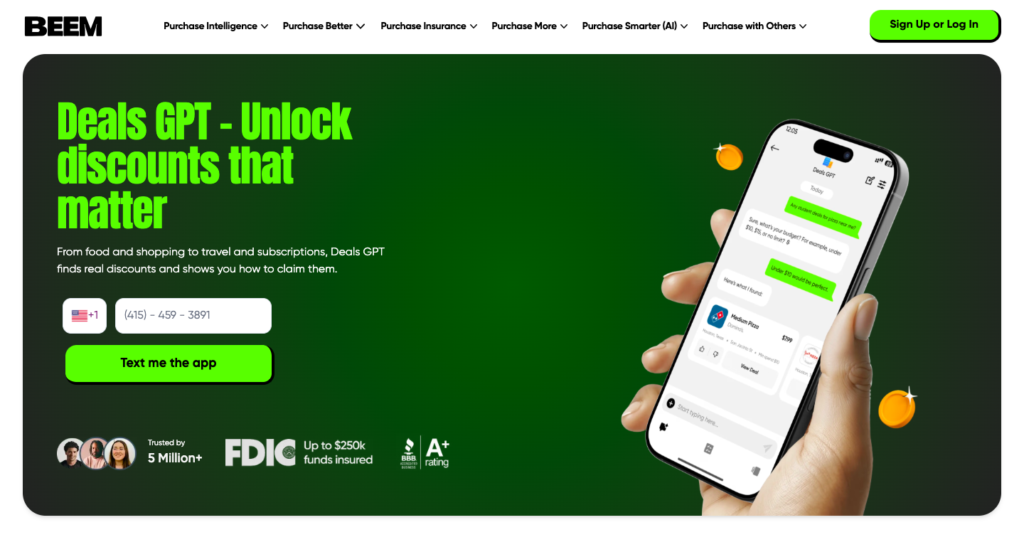
DealsGPT surfaces savings opportunities based on actual spending behavior rather than generic deal aggregation. For grocery budgets specifically, this means relevant deals on the specific items and categories a household regularly purchases, not a broad catalog of discounts that may not apply to the family’s actual shopping list. Every relevant deal identified and applied reduces the grocery bill without requiring any reduction in the family’s food intake.
The Cumulative Effect of Smarter Grocery Spending
The combined impact of PriceGPT and DealsGPT on a household grocery budget is not about finding one big saving. It is about building a consistent pattern of marginally smarter spending that compounds over weeks and months into a meaningful reduction in the total grocery bill.
A household that consistently pays five to ten percent less on groceries through smarter price awareness effectively creates a partial offset to grocery inflation without reducing consumption or nutrition.
Practical Strategies for Managing Grocery Budget Shortfalls
Set a Weekly Grocery Budget, Not a Monthly One
Monthly grocery budgets are too coarse to catch pre-payday shortfalls before they compound. Divide your monthly food budget into weekly allocations and track each week separately using BudgetGPT. Shorter feedback loops mean overspending is caught and corrected before it becomes a month-end crisis.
Plan Meals Before Shopping, Not After
Meal planning before each grocery trip eliminates the two most expensive shopping behaviors: impulse purchases and repeated small trips for forgotten items. A household that shops from a planned list consistently spends less per meal than one that shops reactively, and the savings compound significantly over a full month.
Use Everdraft Proactively, Not Reactively
Request an Everdraft advance before your shopping trip when you know your balance is running low, not after a card has been declined or an overdraft fee has already been charged. Proactive use eliminates the fee and removes the stress of a declined transaction at the checkout line.
Distinguish Between a Timing Shortfall and a Structural Problem
A timing shortfall means income arrives after the shopping need arises. A structural problem means the monthly food budget is genuinely insufficient at current prices. Everdraft is the right tool for timing gaps. Structural problems require expense reduction elsewhere, income growth, or food assistance programs. BudgetGPT helps identify which situation you are actually facing.
People Also Read: The Complete Cash Advance App Checklist
Grocery Shortfall Solutions: A Real Cost Comparison
| Solution | Cost of a $150 Grocery Shortfall | Repayment Timing | Long-Term Risk |
| Beem Everdraft | $0 mandatory fees, 0% interest | Aligned with the next deposit | None if used as a bridge |
| Credit Card (carried 1 month) | Approximately $3 to $4 interest | Minimum monthly payment | High if the balance grows over time |
| Payday Loan | $22 to $45 in fees | Fixed next payday | High: effective APR 390% to 780% |
| Bank Overdraft | $25 to $35 fee per transaction | Immediate balance restoration | None but costly per event |
| Family or Friend Loan | Typically zero | Variable | Relationship risk |
| SNAP Benefits (if eligible) | Zero | Not applicable | Eligibility and benefit limits apply |
Final Thoughts
Grocery budget shortfalls during periods of high inflation are not a personal failing. They are the predictable outcome of food prices rising faster than household income, a structural problem that requires structural tools to manage. Judgment and willpower cannot change the price of eggs. A practical, zero-cost financial bridge combined with smarter spending tools can.
Beem’s combination of Everdraft for immediate shortfall coverage, BudgetGPT for real-time food spending visibility, and PriceGPT and DealsGPT for smarter everyday purchasing gives households a complete toolkit for managing grocery inflation from multiple angles simultaneously.
The goal is not just to survive the next grocery run. It is to build a food budgeting system that is resilient enough to handle whatever inflation brings next.
People Also Ask
1. Can I use Beem Everdraft specifically for groceries?
Yes. Everdraft deposits funds directly into your connected bank account and can be used for any essential expense, including groceries. There are no spending restrictions. For pre-payday grocery shortfalls, Everdraft provides zero-interest, zero-mandatory-fee access that repays automatically when income arrives.
2. How much can I access through Everdraft for a grocery shortfall?
Eligible users can access up to $1,000, with individual limits based on income patterns and account activity. For most households, the available limit covers a full weekly or biweekly grocery run. Limits can increase over time through Beem Boost as you demonstrate responsible platform use.
3. How does BudgetGPT help prevent grocery budget shortfalls?
BudgetGPT tracks grocery spending in real time, identifies patterns inflating your food bill, and flags whether your current trajectory will create a shortfall before payday. That early warning gives you time to adjust before a problem forms rather than reacting after it already has.
4. Is using Everdraft for groceries better than using a credit card?
For short-term grocery shortfalls, yes. Everdraft charges zero interest and zero mandatory fees. Credit cards carry APRs of 20 to 29 percent that begin accruing immediately. For households managing tight inflation-pressured budgets, adding interest at the moment of maximum financial pressure is a significant disadvantage.
5. What if my grocery budget shortfall is a recurring monthly problem?
Recurring shortfalls every month suggest a structural food budget problem rather than a timing issue. Use BudgetGPT to determine whether your total food budget is genuinely insufficient at current prices, and explore expense adjustments elsewhere, income growth through JobsGPT, or supplementary food assistance programs alongside Everdraft use.