

Table of Contents
Beem helps parents manage back-to-school expenses by providing instant access to up to $1,000 through Everdraft, with no interest, no credit check, and no subscription fee. Whether you are covering school supplies, clothing, activity fees, or technology costs, Beem gives families a fast, transparent way to bridge the gap between what is needed now and when the next paycheck arrives.
Back-to-school season arrives the same time every year, and somehow it still catches most families off guard. The combination of supply lists, new clothing, registration fees, sports equipment, and technology costs lands all at once, typically in the final weeks of summer when budgets are already stretched from vacation spending and higher utility bills. For parents trying to do right by their kids without taking on high-interest debt or draining their emergency fund, that timing is genuinely stressful. Beem was built for exactly this kind of moment: a predictable but financially demanding season where having fast, honest access to short-term funds makes a real difference for real families.
How Much Do Back-to-School Expenses Actually Cost?
Back-to-school spending for the average American family with school-age children runs between $800 and $1,600 per year when you factor in supplies, clothing, shoes, backpacks, technology, and extracurricular fees. For families with multiple children, that number compounds quickly. A household with three kids in different grade levels can face $2,000 to $4,000 in back-to-school costs concentrated into a window of just four to six weeks.
These numbers are not hypothetical. The National Retail Federation consistently reports back-to-school as one of the largest annual consumer spending events in the United States, trailing only the winter holiday season. What makes it particularly challenging for family budgets is not the total amount but the concentration. Unlike holiday spending, which many families plan and save toward for months, back-to-school costs hit quickly, often before the school year supply lists have even been distributed.
Understanding where the money goes is the first step toward managing it more effectively.
Where Back-to-School Money Actually Goes
School Supplies
The classic back-to-school expense, notebooks, pens, folders, binders, calculators, and art supplies, has become significantly more expensive in recent years. Supply lists have grown longer and more specific, with many teachers requesting branded items or specific formats. A single child’s supply list can run $75 to $150 before you factor in any specialty items for advanced courses or electives.
Clothing and Shoes
New clothing and footwear represent the largest single back-to-school expense category for most families. Growing children often need entirely new wardrobes for the new school year, and the social pressure around back-to-school fashion is real for older kids and teenagers. A moderate clothing budget per child runs $150 to $300, and footwear alone can add another $60 to $120.
Technology and Electronics
Laptops, tablets, calculators, and headphones have become standard requirements at many schools, particularly at the middle and high school levels. A basic laptop suitable for schoolwork starts at $300 and can run significantly higher for students in design, music, or engineering programs. For families replacing aging devices, this single line item can represent half the entire back-to-school budget.
Activity and Registration Fees
Sports registration, band fees, club dues, field trip deposits, and yearbook costs are frequently overlooked in back-to-school budgeting because they often arrive after the school year begins rather than before. However, many schools require these payments within the first few weeks of the semester, creating a second wave of expenses that follows the initial supply and clothing rush.
Read: Financial Planning for Parents With School-Age Children
Why Back-to-School Is a Budget Pressure Point for Most Families
The timing of back-to-school spending creates a cash flow problem that has nothing to do with how well a family manages money overall. Most families are financially responsible. They pay their bills, maintain savings, and make thoughtful spending decisions throughout the year. Back-to-school is difficult not because families are unprepared in a general sense, but because the expenses are front-loaded, non-negotiable, and time-sensitive in a way that most monthly budgets are not designed to absorb.
Children need their supplies before the first day of school, not two weeks after. Registration fees have deadlines. Sports equipment cannot wait for the next pay cycle. When these costs arrive faster than income does, even financially stable families face a genuine short-term gap. That is the problem Beem is positioned to solve, and it is worth being clear that needing short-term financial support during the back-to-school season is not a sign of financial failure. It is a predictable consequence of how this spending season is structured.
How Beem Everdraft Helps Parents During Back-to-School Season
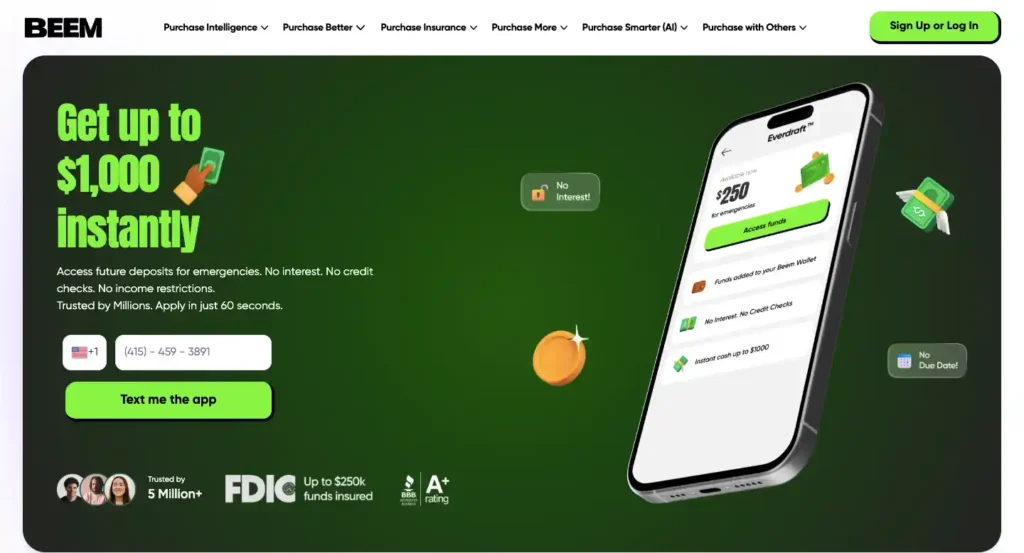
Beem Everdraft gives parents immediate access to funds they need now, repaid when their next deposit arrives, with no interest and no credit check. For back-to-school expenses specifically, Everdraft addresses the timing gap between when costs are due and when income is available without creating new debt or financial stress.
Instant Access Up to $1,000
With Everdraft, eligible parents can access up to $1,000 instantly. For a family facing a $400 supply run, a $250 clothing haul, and a $150 registration fee in the same week, having $800 available immediately means none of those deadlines get missed and no child starts the school year without what they need.
No Interest, No Hidden Fees
Unlike using a credit card to bridge the back-to-school gap, Everdraft carries no interest. A parent who puts $600 on a credit card and carries that balance for three months at a typical APR of 20 percent pays roughly $30 in interest on top of the original expense. With Everdraft, that $30 stays in the family budget where it belongs.
No Credit Check Required
Back-to-school season hits every family regardless of credit history. Beem Everdraft does not perform a credit check, which means parents who are building credit, recovering from past financial difficulties, or simply prefer not to have a hard inquiry on their credit file can access the same fast, fair funding as anyone else.
Beem Pass: Covering Back-to-School Costs Across the Whole Family
One of Beem’s most useful features for families is Beem Pass, which allows shared access to Beem’s financial tools across family members and close friends. For parents managing back-to-school expenses across a household, Beem Pass means that both partners or co-parents can access Everdraft and other Beem features under the same account structure, coordinating spending without creating duplicate accounts or duplicating fees.
For blended families, co-parenting arrangements, or extended family households where back-to-school costs are shared across multiple adults, Beem Pass provides a practical solution that most financial apps simply do not offer. Managing a family’s finances together is easier when the platform is designed to accommodate how families actually work rather than assuming every financial decision is made by a single individual.
Using BudgetGPT to Plan Back-to-School Spending
Beem’s AI-powered BudgetGPT is particularly valuable in the weeks leading up to back-to-school season. Rather than relying on a static budget template that does not account for your family’s specific income timing, expense patterns, and upcoming obligations, BudgetGPT builds a dynamic financial picture based on your actual account activity.
For back-to-school planning specifically, BudgetGPT can help parents identify how much of the coming month’s income is already committed to regular expenses, flag the weeks where cash flow will be tightest, suggest which back-to-school purchases to prioritize if funds are limited, and model out the impact of an Everdraft advance on your overall monthly budget. This kind of AI-assisted financial planning does not replace good judgment. It gives parents better information to make good decisions with.
Back-to-School Budgeting Tips for Parents
Getting ahead of back-to-school season financially does not require a large surplus or months of advance planning. These practical steps can reduce the financial pressure meaningfully, even if you are starting just a few weeks before the school year begins.
Request supply lists as early as possible: Many schools publish or distribute supply lists in late spring or early summer. Getting the list early lets you spread purchases across more pay periods rather than buying everything in a single week.
Separate needs from wants with your children: Involving kids in back-to-school budgeting teaches financial literacy and reduces the pressure of impulse purchases. Distinguishing between required items and desired items helps prioritize spending without conflict.
Shop sales strategically: Tax-free weekends, retailer back-to-school promotions, and bulk supply deals can reduce total spending by 15 to 30 percent compared to buying items individually at full price. Planning purchases around these windows requires a little lead time but produces real savings.
Use Beem Everdraft for time-sensitive costs first: If you need to prioritize, use an Everdraft advance to cover the expenses with the hardest deadlines, registration fees, required technology, and first-day supplies, and handle more flexible purchases like additional clothing over subsequent pay periods.
Build a back-to-school savings line into next year’s budget now: The best way to reduce back-to-school financial pressure next year is to start saving for it this year. Even $30 to $50 per month set aside from September through July creates a $300 to $500 buffer that takes the edge off the following season’s expenses.

Back-to-School Funding Options for Parents
| Option | Cost | Speed | Credit Check | Debt Risk | Best For |
| Beem Everdraft | No interest, no fees | Instant | No | Low | Bridging short-term gaps |
| Credit Card | 18 to 29% APR if carried | Immediate | Yes (existing) | High if balance carried | Rewards earners who pay in full |
| Personal Loan | Interest plus origination fee | 1 to 5 days | Yes | Medium | Large planned purchases |
| Buy Now Pay Later | 0% to 30% APR | Immediate | Soft check | Medium | Single item purchases |
| Payday Loan | 300%+ APR equivalent | Same day | No | Very high | Not recommended |
| Savings Withdrawal | No cost | Immediate | No | None | Those with sufficient reserves |
The Bottom Line
Back-to-school season is one of the most predictable financial pressure points in a parent’s year, and it is one that deserves better solutions than high-interest credit cards or payday loans. Children should start the school year with what they need. Parents should not have to choose between meeting those needs and maintaining their financial stability.
Beem gives families a third option: fast, transparent, interest-free access to funds that bridges the gap between when back-to-school costs land and when the next paycheck arrives. No interest. No credit check. No hidden fees. Up to $1,000 available when your family needs it most, repaid on a schedule that works around your income rather than against it. Back-to-school season comes every year. With Beem, you can be ready for it.
People Also Ask
1. Can parents use Beem Everdraft for back-to-school shopping?
Yes. Beem Everdraft is available for any legitimate expense, including back-to-school shopping. Parents can access up to $1,000 instantly with no interest and no credit check to cover supplies, clothing, technology, registration fees, and other school-related costs. Repayment is scheduled around your next income deposit, making it a flexible, low-stress option for families managing seasonal expenses.
2. How quickly can a parent access funds through Beem Everdraft?
Eligible Beem users can access Everdraft funds instantly after approval. There is no waiting period for standard delivery and no express fee for faster access. For parents facing back-to-school deadlines, same-day access to funds means supply runs, registration payments, and clothing purchases can happen on the schedule the school requires, not the schedule a slow transfer allows.
3. Does Beem charge interest on back-to-school cash advances?
No. Beem Everdraft charges zero interest on all cash advances, including those used for back-to-school expenses. Unlike credit cards that charge 18 to 29 percent APR on carried balances, an Everdraft advance costs nothing beyond the amount you borrow. For a parent covering $600 in back-to-school costs, that means zero additional expense compared to potentially $30 or more in credit card interest.
4. What is Beem Pass and how does it help families during back-to-school season?
Beem Pass allows shared access to Beem’s financial tools across family members and trusted individuals. For families where back-to-school costs are managed by two parents or co-parents, Beem Pass enables coordinated access to Everdraft and other Beem features without requiring separate accounts.
5. How can BudgetGPT help parents plan back-to-school spending?
BudgetGPT analyzes your actual income and spending patterns to build a dynamic financial picture rather than a static budget template. For back-to-school planning, it helps parents identify cash flow tight spots, prioritize purchases based on available funds, and model the impact of an Everdraft advance on the overall monthly budget. It turns financial planning from a guessing exercise into a data-informed decision.