
Table of Contents
SNAP can keep food on the table. It cannot do everything else. That is the tension many households live with every month. The groceries may be covered, at least partly, but the rest of life still shows up in full: rent, utility bills, diapers, soap, medicine, bus fare, phone service, and the delivery or convenience fees that come with online grocery shopping.
USDA is clear that SNAP benefits are for eligible food, plus plants and seeds to grow food, and cannot be used for nonfood items, hot foods, vitamins, medicines, alcohol, tobacco, or online delivery and service fees. That is exactly where the cash gap begins for many recipients.
That is where Beem for SNAP benefits recipients can make sense. Not as a replacement for public assistance. Not as a workaround. And definitely not as a way to turn benefits into cash.
The value is much more practical than that: when SNAP covers food but not the rest of the month, Everdraft™ can help bridge the non-SNAP part of the budget so one shortfall does not turn into three. Beem’s Everdraft™ is framed during benefit delays and other income disruptions as a short-term bridge for essentials rather than a long-term debt product.
What SNAP Does And Does Not Pay For
SNAP is a food assistance program, not a general household cash benefit. USDA says benefits can be used for food and for plants and seeds to grow food at home. They cannot be used for household supplies, hygiene products, pet food, alcohol, tobacco, vitamins, medicine, or hot foods sold ready to eat.
For online grocery purchases, the USDA also says SNAP cannot pay delivery, service, or convenience fees, which means many households need a second payment method even when the food itself is eligible.
This matters because the hardest part of using SNAP is often not the grocery basket. It is the split budget around the grocery basket. You might have enough EBT funds for food but still come up short on the delivery charge, toilet paper, dish soap, over-the-counter medicine, or the utility bill that makes it possible to cook what you bought.
If your month keeps collapsing around those non-SNAP essentials, the issue is not that SNAP is failing. It is that SNAP was never designed to cover the whole household budget in the first place.
People Also Read: How BEEM Helps During A Government Shutdown
Why Beem For SNAP Benefits Makes Sense In Real Life
Beem for SNAP benefits recipients works best when you look at it honestly. It is not about spending SNAP in a new way. It is about protecting the rest of your monthly survival plan.
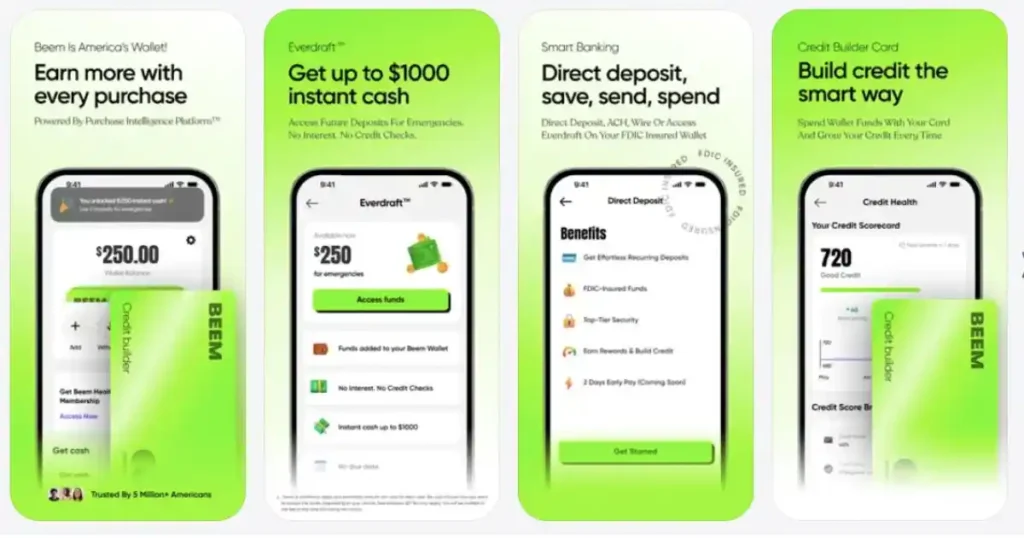
With Everdraft™, Beem gives eligible users access to up to $1,000 with no hard credit check and no interest, using real-time banking activity and income patterns rather than a traditional credit approval model.
Beem positions it as a short-term financial bridge tied to verified incoming deposits, especially useful when essential expenses hit before money lands.
That makes Beem practical for SNAP households in a very specific way. If your food budget is partly protected by SNAP, you can use Everdraft™ more strategically for the things SNAP will not touch: utilities, rent shortfalls, transportation, childcare, hygiene items, pharmacy costs, or online grocery fees.
That is a smarter use case than using an advance casually, because it respects the basic structure of how low-income households actually survive month to month.
The Legal Line You Should Not Cross
The legal line here is simple and important. SNAP benefits cannot be exchanged for cash. USDA treats the sale or purchase of SNAP benefits for cash as trafficking, which is illegal and can lead to serious consequences. That means Beem should never be framed as a way to “cash out” EBT or convert SNAP benefits into spending money. That is not what the product is for, and it is not what the law allows.
The right way to think about Beem is completely separate from that. SNAP stays SNAP. It pays for eligible food. Everdraft™ is a separate financial bridge for the other parts of life that still need to be paid for with ordinary dollars. Keeping that separation clear is not just good compliance. It is the only responsible way to use both systems.
Could Beem Affect SNAP Eligibility Or Recertification?
This is where the topic gets more nuanced, and it is where shallow blog posts usually go wrong.
Federal SNAP rules exclude loans from household income. At the same time, USDA’s eligibility guidance says many households are still subject to resource limits, and countable resources can include cash or money in a bank account, unless your state uses broader categorical eligibility rules that change how those tests apply.
For the 2025–2026 federal guidance period, the general federal resource limit is $3,000 for many households or $4,500 if at least one household member is age 60 or older or disabled, though state options can affect how this works in practice.
That means there are really two separate questions. The first is income treatment. The second is whether a temporary balance sitting in your account could matter if your household is in an application, recertification, or verification window and your state still applies a meaningful resource test.
Because Everdraft™ is structured as an advance tied to future deposits rather than a standard paycheck, the safest advice is not to guess. If you are actively applying for SNAP, recertifying, or very close to your state’s resource limits, ask your state SNAP agency how short-term fintech advances should be reported in your case. Federal rules give the framework, but states administer the program.
The Smartest Ways To Use Everdraft™ If You Receive SNAP
1. Cover Non-SNAP Essentials First
If you receive SNAP, the most disciplined use of Everdraft™ is to pay for what SNAP cannot pay for. Utilities are a strong example. Housing, power, and water are the infrastructure that make food useful.
Beem consistently frames advances around essential spending first, not discretionary spending. That mindset matters even more for SNAP households, because your financial flexibility is usually smallest right before benefits reload.
2. Use Split Tender For Online Grocery Orders
If you order groceries online, expect to split the payment. USDA says online SNAP purchases cannot cover delivery, service, or convenience fees, and retailer systems must support split tender for non-SNAP items and fees.
This is one of the most practical places Beem fits. The food can go on EBT. The fee and non-eligible items can come from your regular payment method or, if you are short that week, from Everdraft™.
3. Borrow The Gap, Not The Maximum
A household receiving SNAP is often already living close to the edge of the month. That makes it even more important not to treat the advance limit like a spending target.
Beem makes this point well: the right amount is the amount that solves the immediate problem, not the biggest number on the screen. If you need $38 for a utility co-pay, $26 for a delivery fee and hygiene items, or $84 for a prescription and bus fare, solve that gap. Do not casually expand it.
People Also Read: How to Choose The Right Cash Advance Limit
What To Do If Your SNAP Is Delayed Or Your Balance Is Not Enough
If your SNAP deposit is delayed, reduced, or disrupted, treat it like an administrative problem and a budgeting problem at the same time.
Start with the state agency. USDA says SNAP participants must contact their state agency directly for case information, and states process benefits, interviews, and ongoing eligibility decisions.
If the issue is an application problem, USDA says some households may qualify for expedited benefits within seven days if they meet certain emergency standards. That will not solve every case, but it does matter when the household has almost no liquid resources.
At the household level, re-sort the month immediately. Move food spending to EBT-eligible essentials first. Push nonessential purchases out. Then use Everdraft™ only if it helps preserve the rest of the budget structure while the benefit issue is being resolved.
Beem’s guides on benefit delays and tight-budget planning lean into this exact sequence: keep the essentials stable first, then use a short-term bridge to stop the disruption from spreading to rent, utilities, or transportation.
People Also Ask: BEEM For Short-Term Housing Delays
A Security Note SNAP Households Should Not Ignore
SNAP recipients also need to think about fraud protection. USDA has repeatedly warned about EBT card skimming and scam activity affecting SNAP households.
Federal authority to replace stolen SNAP benefits covered thefts through December 20, 2024, but that federal replacement window has sunset, which makes prevention even more important now. In plain terms, protecting your EBT PIN and watching for suspicious card-reader behavior matters more than it used to.
This is another reason to keep roles clear in your financial life. Use SNAP for eligible food. Use Beem for separate short-term cash gaps when needed. And keep your EBT access protected like you would protect any other critical payment method.
Key Differences Between SNAP Coverage and Beem’s Role
| Household Need | Can SNAP Cover It? | Where Beem Fits | Why This Matters |
| Groceries like bread, milk, eggs, produce, meat, and pantry staples | Yes, if the items are SNAP-eligible. | Beem is usually not the first tool needed here if EBT already covers the food portion. | This helps households preserve cash for expenses SNAP cannot handle. |
| Online grocery delivery fees, service fees, and convenience charges | No. SNAP cannot be used for these charges even when the food itself is eligible. | Everdraft™ can help cover the delivery-related cash portion of an online grocery order. | This is one of the most common real-life gaps for SNAP users ordering food online. |
| Nonfood household basics like soap, toilet paper, detergent, and cleaning supplies | No. These are not eligible SNAP purchases. | Beem can help bridge the cash gap for these everyday essentials. | Many households have food covered on EBT but still run short on the basics needed to live safely and cleanly. |
| Over-the-counter medicine, vitamins, and pharmacy purchases | No. SNAP does not cover vitamins or medicines. | Everdraft™ can help when a health-related purchase cannot wait until the next deposit. | These are urgent expenses that often compete directly with rent, utilities, or transport. |
| Utilities like electricity, gas, and water | No. SNAP is a food benefit, not a utility benefit. | Beem can help keep core household services running when cash is temporarily short. | Food access becomes harder fast when power, refrigeration, or cooking access is disrupted. |
| Bus fare, gas, rideshare, or other transportation costs | No. Transportation is outside SNAP’s scope. | Beem can help cover transportation needed for work, school, medical care, or grocery access. | For many low-income households, transportation is what makes income and food access possible. |
| Rent or emergency housing-related costs | No. SNAP cannot be used for rent. | Everdraft™ can help with a short-term gap when the issue is timing, not a long-term housing mismatch. | Keeping housing stable protects the whole monthly budget, including food security. |
| Turning EBT into cash | No. Selling or exchanging SNAP benefits for cash is illegal trafficking. | Beem should never be used or described as a way to cash out SNAP benefits. | This is the legal line readers need to understand clearly. |
Conclusion
Beem for SNAP benefits is not about stretching the rules. It is about surviving the gaps the rules were never meant to cover.
SNAP helps with food. That is a major lifeline. But it does not pay for soap, power, delivery fees, medicine, transportation, or the dozens of ordinary costs that still decide whether a month feels manageable or impossible. In that space, the Beem app’s Everdraft™ can be useful when it is used carefully, legally, and only for the gap that actually needs closing.
The smartest takeaway is simple. Keep SNAP for eligible food. Keep Beem for the rest-of-life expenses SNAP cannot cover. And if you are in a certification or recertification window, do not guess about how your state will view a short-term advance. Ask. That one step can save you from a much bigger headache later.
FAQs On Beem For SNAP Benefits
1. Can I Use Beem If I Receive SNAP Benefits?
Yes. Receiving SNAP does not prevent you from using Beem. The important point is that SNAP and Beem serve different purposes. SNAP is for eligible food purchases. Everdraft™ is a separate cash bridge for non-SNAP expenses like utilities, hygiene products, transportation, or online grocery fees that SNAP cannot cover.
2. Can I Use Everdraft™ To Buy Groceries?
You can use Everdraft™ anywhere you would normally use cash or your linked payment method, but SNAP rules still apply to SNAP itself. That means if you are buying groceries online, SNAP can cover eligible food items, while Everdraft™ can help cover delivery fees, service fees, or nonfood items that EBT will not pay for.
3. Will Everdraft™ Count Against My SNAP Case?
Do not assume the answer is automatically yes or no. Federal SNAP rules exclude loans from household income, but cash and money in bank accounts can still matter under some resource tests, and states vary because of broad-based categorical eligibility rules. If you are applying, recertifying, or close to resource limits, the safest move is to ask your state SNAP agency directly how it wants a short-term advance treated in your case.
4. Is It Legal To Use Beem While Receiving SNAP?
Yes, as long as you use it legally and separately from SNAP. What is illegal is trafficking SNAP benefits, meaning exchanging SNAP for cash or other non-eligible value. Beem is not a tool for converting EBT into cash. It is a separate financial product for ordinary non-SNAP expenses.
5. What Is The Best Way To Use Beem For SNAP Benefits Households?
Use it narrowly and on purpose. Let SNAP do what it is designed to do: cover eligible food. Then use Everdraft™ only for the part of your monthly survival budget SNAP cannot touch, such as rent-adjacent costs, power, hygiene, pharmacy needs, or grocery delivery fees. That keeps the advance small, useful, and easier to manage.