

If you’ve ever worked a job where taxes were taken out of your paycheck, chances are you’ve received a W-2 form. It’s one of the most important tax documents in the U.S., yet many people don’t fully understand what it includes, why it matters, or how to use it correctly when filing taxes.
This guide breaks down everything you need to know about the W-2 form. Whether you’re a first-time employee, someone juggling multiple jobs, or just trying to file your taxes correctly, this article will walk you through the details step by step.
What Is a W-2 Form?
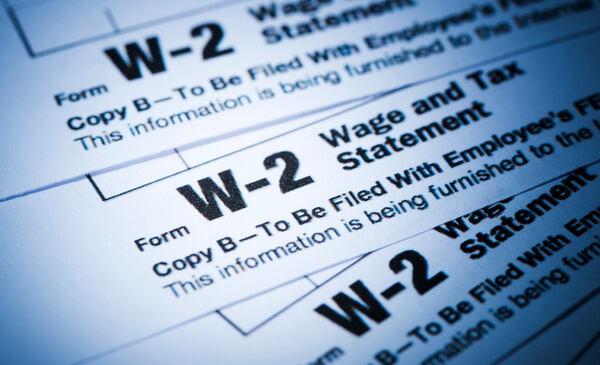
A W-2 form, officially called the Wage and Tax Statement, is a tax document that employers are required to give to employees every year. It reports how much money you earned and how much tax was withheld from your paycheck during the year.
If you are classified as an employee (not an independent contractor), your employer must issue you a W-2. This form is sent both to you and to the Internal Revenue Service (IRS), which means the IRS already has a copy of your income information before you file your tax return.
In simple terms, the W-2 tells the IRS:
- How much you were paid
- How much federal, state, and local tax was withheld
- Whether you contributed to Social Security, Medicare, or retirement plans
- If you received certain benefits, such as health insurance or dependent care assistance
You use the information on your W-2 to complete your federal and state income tax returns.
Who Receives a W-2 Form?
You receive a W-2 if:
- You are an employee of a company
- Taxes are withheld from your paycheck
- Your employer controls how and when you do your work
Common examples include:
- Full-time employees
- Part-time employees
- Seasonal workers
- Employees with hourly or salaried pay
You may receive multiple W-2 forms if you worked for more than one employer during the year. Each employer must issue a separate W-2 for the wages they paid you.
Who Does Not Receive a W-2?
You will not receive a W-2 if you are:
- An independent contractor or freelancer
- Self-employed
- Running your own business without payroll
In those cases, you usually receive a 1099 form instead, or you may not receive a form at all and must track your income yourself.
Why the W-2 Form Is So Important
The W-2 is the backbone of your tax filing if you’re an employee. It affects:
- Your total reported income
- How much tax you owe or get refunded
- Your eligibility for tax credits
- Your Social Security earnings record
Because the IRS receives a copy of your W-2, any mismatch between what you report and what your employer reported can trigger delays, audits, or notices from the IRS. That’s why accuracy matters.
When Do Employers Send Out W-2 Forms?
By law, employers must send W-2 forms to employees by January 31 following the end of the tax year.
For example:
- Wages earned in 2025 → W-2 must be sent by January 31, 2026
You may receive your W-2:
- By mail
- Electronically through an employee portal
- Through payroll software
If January 31 falls on a weekend or holiday, employers typically send them by the next business day.
What to Do If You Haven’t Received Your W-2
If your W-2 hasn’t arrived by early February, it’s important to act quickly so your tax filing isn’t delayed. Employers are required to send W-2 forms by January 31, but delivery issues can happen. Follow the steps below in order to resolve the issue efficiently.
Check Your Email and Employee Portal
Many employers provide W-2 forms electronically through payroll or HR platforms. Log in to your employee portal and look under tax documents or year-end forms. Also check your email, including spam or promotions folders, for any notifications about electronic W-2 access. In some cases, you may need to accept electronic delivery before the form becomes available.
Contact Your Employer or HR Department
If you don’t see your W-2 online, reach out to your employer or HR team directly. Ask whether the form has already been issued and how it was sent. Employers can usually confirm the delivery method, resend a copy, or provide temporary access to a digital version. This step is especially important if you changed jobs or left the company during the year.
Confirm Your Mailing Address Is Correct
An outdated or incorrect mailing address is a common reason for missing W-2 forms. Verify that your employer has your current address on file. If the form was sent to the wrong address, request that it be reissued or mailed again. Employers are allowed to provide replacement copies when needed.
Allow Time for Mail Delays
If your employer confirms that the W-2 was mailed on time, consider allowing a few extra days for postal delays. This is common during peak tax season, and the form may still arrive shortly after the deadline.
Contact the IRS for Guidance
If your employer does not provide your W-2 after multiple follow-ups and it’s well into February, you can contact the IRS for assistance. The IRS can guide you on next steps and may contact your employer to request the missing form.
Use Your Final Pay Stub if Necessary
As a last resort, if you still don’t receive your W-2 and need to file your taxes to meet the deadline, you can use your final pay stub from the year to estimate your wages and tax withholdings.
This should only be done when absolutely necessary, and you may need to correct your return later if the official W-2 shows different amounts.
Handling a missing W-2 promptly helps you avoid filing delays, incorrect income reporting, and potential IRS notices.
Understanding the W-2 Form: Box-by-Box Breakdown
The W-2 form contains multiple boxes, each with specific information. Here’s what each major section means.
Employee and Employer Information
At the top of the form, you’ll see:
- Your name, address, and Social Security number
- Your employer’s name, address, and Employer Identification Number (EIN)
This information must be accurate. Even a small error, such as a misspelled name or incorrect Social Security number, can cause issues when filing your return.
Box 1: Wages, Tips, and Other Compensation
This box shows your taxable income for federal income tax purposes. It is not always the same as your total earnings.
Box 1 excludes:
- Pre-tax retirement contributions (like 401(k))
- Pre-tax health insurance premiums
- Certain other pre-tax benefits
This is the main number you report as income on your federal tax return.
Box 2: Federal Income Tax Withheld
This shows how much federal income tax your employer withheld from your paychecks throughout the year.
This amount goes toward paying your annual tax bill. If too much was withheld, you may receive a refund. If too little was withheld, you may owe additional tax.
Box 3: Social Security Wages
This box shows the portion of your income subject to Social Security tax.
It may be higher than Box 1 because some pre-tax deductions reduce federal taxable income but not Social Security wages.
Box 4: Social Security Tax Withheld
This is the amount withheld for Social Security tax, generally calculated at a fixed percentage of your Social Security wages, up to the annual wage limit.
Box 5: Medicare Wages and Tips
This shows wages subject to Medicare tax. Unlike Social Security, Medicare does not have an income cap, so high earners may see additional Medicare taxes applied.
Box 6: Medicare Tax Withheld
This is the total Medicare tax withheld from your paychecks, including any additional Medicare tax for higher incomes.
Box 7: Social Security Tips
If you work in a job where you receive tips (such as food service), reported tips subject to Social Security tax appear here.
Box 8: Allocated Tips
These are tips your employer assigns to you if reported tips fall below a certain percentage. Allocated tips are not included in Box 1 and may need to be reported separately.
Box 9
This box is no longer used and is typically left blank.
Box 10: Dependent Care Benefits
This box shows amounts paid by your employer for dependent care benefits, such as daycare assistance.
Box 11: Nonqualified Plans
This box includes distributions from certain deferred compensation plans.
Box 12: Codes and Special Compensation
Box 12 contains letter codes and dollar amounts related to specific benefits or compensation types, such as:
- Retirement plan contributions
- Health savings account contributions
- Moving expense reimbursements (for certain groups)
Each code represents a different type of benefit or adjustment.
Box 13: Checkboxes
This section includes checkboxes indicating whether:
- You participated in a retirement plan
- You received sick pay
- You are a statutory employee
These boxes can affect your tax deductions and credits.
Box 14: Other Information
Employers use this box to report additional information, such as:
- State disability insurance
- Union dues
- After-tax contributions
Not all entries in Box 14 affect your taxes, but they can be useful for record-keeping.
How to Use a W-2 When Filing Your Taxes
When you file your tax return, you’ll enter information directly from your W-2, including:
- Wages from Box 1
- Federal tax withheld from Box 2
- State wages and taxes (if applicable)
Most tax software allows you to enter this information manually or upload a digital W-2.
If you file by mail, you usually need to attach a copy of your W-2 to your return.
What Happens If You Make a Mistake With Your W-2?
Mistakes can happen, but they should be addressed quickly.
Common W-2 Errors
- Incorrect name or Social Security number
- Wrong wage amounts
- Missing benefits or deductions
- Incorrect state information
How to Fix a W-2 Error
If you spot an error:
- Contact your employer immediately
- Request a corrected W-2, called a W-2c
- Wait for the corrected form before filing your taxes
Filing with incorrect information can lead to delays, penalties, or amended returns.
W-2 vs. 1099: What’s the Difference?
Many people confuse W-2 and 1099 forms, but they apply to very different work situations.
W-2 Employees
- Employer withholds taxes
- Employer pays part of Social Security and Medicare taxes
- Eligible for employee benefits
- Receives a W-2
1099 Workers
- No taxes withheld
- Responsible for paying their own taxes
- Usually no benefits
- Receives a 1099 form or tracks income independently
Understanding the difference is critical because it affects how much tax you owe and how you file.
Can You Get a Refund With a W-2?
Yes. A tax refund happens when the total taxes withheld from your paychecks are more than what you owe for the year.
Common reasons for refunds include:
- Over-withholding
- Tax credits
- Changes in income during the year
- Filing status adjustments
Your W-2 provides the numbers needed to calculate whether you owe or get money back.
What If You Lose Your W-2?
If you lose your W-2:
- Ask your employer for a replacement copy
- Check your payroll or HR portal
- Use tax transcripts if needed
Employers are required to keep copies of W-2s, so replacements are usually easy to obtain.
How Long Should You Keep Your W-2 Forms?
It’s a good idea to keep your W-2 forms for at least three years, which matches the IRS audit window for most returns.
Many people keep them for up to seven years, especially if:
- You claimed significant deductions
- You had complex tax situations
- You may need proof of income later
W-2 Forms and Multiple Jobs
If you worked multiple jobs in the same year:
- You will receive a W-2 from each employer
- You must report all W-2 income on your tax return
- Federal tax withholding from each job is combined
Failing to include even one W-2 can cause IRS notices and penalties.
W-2 Forms for Married Couples
Each spouse receives their own W-2 under their Social Security number. When filing jointly:
- Both W-2 incomes are reported
- Withholdings are combined
- Credits and deductions are calculated together
This is common and expected by the IRS.
Electronic W-2 Forms
Many employers now offer electronic W-2s. These are valid and accepted by the IRS as long as:
- You consented to electronic delivery
- The form contains all required information
- You can access and print it if needed
Electronic W-2s often arrive faster than paper copies.
Why the W-2 Matters Beyond Taxes
Your W-2 isn’t just for filing taxes. It’s often used as proof of income for:
- Renting an apartment
- Applying for a mortgage
- Verifying employment
- Applying for loans or financial assistance
Keeping copies organized can save time later.
Final Thoughts: Understanding Your W-2 Makes Taxes Easier
The W-2 form may look complicated at first glance, but it serves a simple purpose: showing what you earned and what taxes were paid on your behalf. Once you understand how each section works, filing your taxes becomes far less stressful.
Whether you’re checking for accuracy, filing your return, or keeping records for the future, knowing how to read and use your W-2 puts you in control of your finances. Take a few minutes each year to review it carefully, it’s one of the easiest ways to avoid tax problems and stay financially organized.
People Also Asked About W-2 Form
What is a W-2 form used for?
A W-2 form is used to report how much money you earned from an employer and how much tax was withheld from your pay during the year. You need this information to file your federal and state income tax returns accurately.
Who is required to receive a W-2 form?
Anyone classified as an employee and paid wages by an employer should receive a W-2 form. This includes full-time, part-time, seasonal, and temporary employees.
When should I receive my W-2 form?
Employers are required to send W-2 forms by January 31 following the end of the tax year. If you have not received it by early February, you should contact your employer.
What should I do if my W-2 form is incorrect?
If you notice incorrect information, such as wrong wages or a misspelled name, contact your employer immediately and request a corrected W-2, also known as Form W-2c. Do not file your taxes until you receive the corrected form.
Can I file my taxes without a W-2 form?
Filing without a W-2 is possible but not recommended. If your W-2 is missing, you may need to use your final pay stub to estimate your income. However, accurate W-2 information helps avoid delays or IRS notices.
What happens if I lose my W-2 form?
You can request a replacement copy from your employer or download it from your employer’s payroll portal if available. Employers are required to keep copies of W-2 forms on file.
Why does my W-2 income look lower than my total salary?
Your W-2 income may be lower because pre-tax deductions, such as retirement contributions or health insurance premiums, are excluded from taxable wages shown in Box 1.
Do I get a W-2 if I worked multiple jobs?
Yes. Each employer you worked for during the year must issue a separate W-2 form. All W-2 income must be reported when you file your tax return.
What is the difference between a W-2 and a 1099 form?
A W-2 is issued to employees whose taxes are withheld by their employer. A 1099 is issued to independent contractors or freelancers who are responsible for paying their own taxes.
Are electronic W-2 forms valid?
Yes. Electronic W-2 forms are valid as long as they contain all required information and you consented to receive them electronically. They are accepted by the IRS just like paper forms.
How long should I keep my W-2 forms?
It’s best to keep W-2 forms for at least three years. Many people keep them for up to seven years in case of audits, income verification, or future financial needs.
Do part-time or temporary workers receive W-2 forms?
Yes. If you are classified as an employee, you should receive a W-2 regardless of how many hours you worked or how long the job lasted.
Does everyone who earns money get a W-2?
No. Only employees receive W-2 forms. Freelancers, gig workers, and self-employed individuals typically receive a 1099 form or track income on their own.
Can a W-2 affect my tax refund?
Yes. The amount of tax withheld on your W-2 directly impacts whether you receive a refund or owe additional tax when filing your return.
What is a W-2c form?
A W-2c is a corrected version of a W-2 form. Employers issue it when they need to fix errors on an original W-2, such as incorrect wages or tax withholdings.
Do I need to attach my W-2 when filing taxes?
If you file electronically, you usually do not need to attach your W-2. If you file a paper return, you generally must include a copy of your W-2 with your tax return.