
Table of Contents
You submitted the file. You triple-checked every timestamp, cleaned up every crosstalk, hit send. The work is done, and done well. But the invoice is sitting at Net-30. Or the platform queues your weekly payout for Thursday. Or the client just needs to review before approving payment. Meanwhile, your internet bill renews automatically tonight, and your bank balance is doing that thing where you check it more than you check your messages.
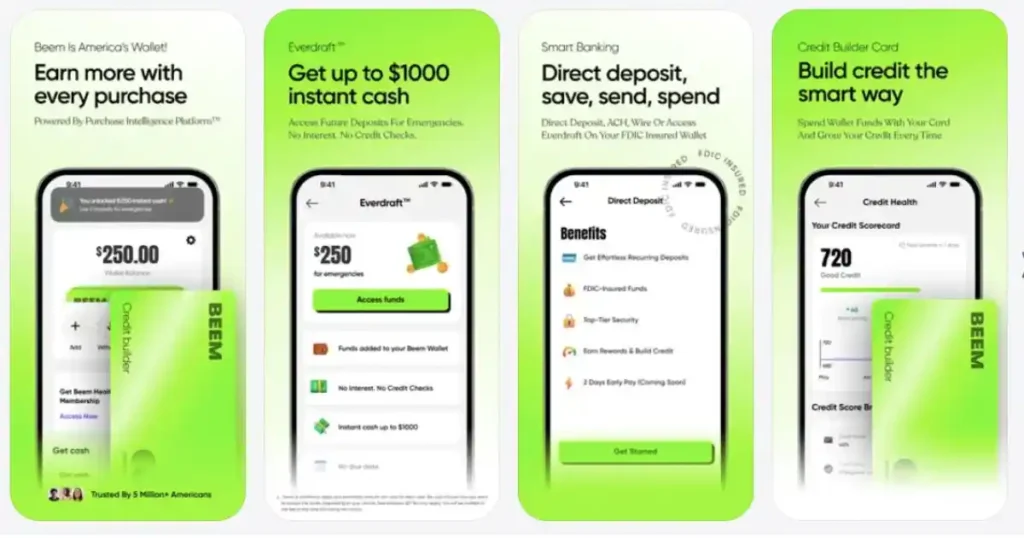
This is the specific, frustrating financial reality of remote transcription and data entry work. It is not about being bad with money. It is not about spending too much. It is about the gap between when the work ends and when the payment lands, and how much real life fits inside that gap. Beem was built for exactly that gap. Its Everdraft feature gives eligible users instant cash advances up to $1,000 with no interest, no credit check, and no late fees, inside a full financial platform that actually understands how remote independent work operates.
The Payment Problem Nobody Talks About Enough
Why the Timing Gap Is Structural, Not Personal
Ask any freelance transcriptionist or data entry worker about the hardest part of their job and they will rarely say the typing. They will say the waiting. The structure of remote independent work creates a predictable mismatch between effort and payment timing. You put in the hours. The hours end. Then a separate process, entirely outside your control, determines when the money from those hours reaches you.
On crowdsourced transcription platforms, weekly payouts are common but work volume is not guaranteed. A great week of audio assignments might follow three thin weeks with barely enough files to fill a morning. On freelance marketplaces, Net-30 payment terms are standard for larger clients, and research shows invoices marked Net-30 are frequently paid at Net-45 or beyond, stretching the gap between work completed and payment received to six weeks or more in practice.
The Numbers Behind the Work
Freelance data entry workers in the US earn an average of roughly $19.47 per hour according to ZipRecruiter, with the range stretching from around $11 to $28 depending on specialization. Work-from-home transcriptionists average approximately $20.19 per hour, with annual earnings typically falling between $34,000 and $48,500 for mid-range earners. These are livable wages for remote workers who keep their costs managed.
At those income levels, a two-week payment delay on a major project does not just feel inconvenient. It creates a real structural problem for anyone without a significant cash cushion. That cash cushion is exactly what most independent remote workers are still building, and it is exactly what Beem is designed to support in the meantime.
Three Scenarios Where Beem Changes the Math
The Payment Is Coming, Just Not Yet
You completed a large medical transcription project: 14 hours of dense audio over six days. The client confirmed delivery. Payment terms are Net-30. Your money arrives in a month, assuming the client pays on time, which research indicates happens for only 46 percent of invoices on or before the due date. This is not a crisis. The payment is real and it is coming. But your phone bill is due in four days, and your work-from-home setup depends on a functioning internet connection and a charged laptop.
The Platform Payout Schedule That Does Not Match Your Bills
Many transcription platforms pay weekly on a fixed day. Some pay biweekly. Some batch approvals before releasing funds. This is manageable when your bills follow the same schedule. They do not. Rent falls on the first. Subscriptions renew on their own arbitrary dates. Insurance premiums have their own calendar. The rigid payout schedule of a transcription platform creates a constant low-grade timing puzzle: enough money is coming, but is enough arriving at the right moment?
Work Dries Up Without Warning
Remote transcription and data entry work is not seasonally predictable the way landscaping is. It is unpredictably variable. A project drought can appear in any month. A platform’s queue runs thin. A client pauses a recurring contract without much notice. A large data entry job you were counting on gets delayed on the client’s side. Two weeks of thin work in an income structure built around consistent project volume is not a catastrophe by itself, but it can become one quickly if the financial tools available to you are expensive, slow, or require you to ask someone for help.

What Beem’s Tools Actually Do for Remote Workers
Every tool in Beem’s platform was built around a core insight: financial products designed for salaried employees with predictable paychecks do not serve people whose income arrives project by project, platform by platform, and week by unpredictable week. Here is what that looks like in practice for transcriptionists and data entry workers specifically.
Everdraft: instant access without the punishment
Beem’s Everdraft feature gives eligible users up to $1,000 in instant cash advances. No interest charges. No credit check. No late fees. The design philosophy is clear: this is a bridge, not a trap. It exists to close a short-term timing gap, not to profit from financial stress. For someone whose work income is real and incoming but not yet available, Everdraft is the rational, cost-free alternative to options that would cost them dearly.
BudgetGPT: a financial plan that actually fits your work model
Standard budgeting apps are built on a salary assumption. Enter your monthly income, divide by your expense categories, track your spending. The problem is that a transcriptionist working across three platforms with different payout schedules and variable project volume does not have a monthly income. They have a collection of weekly payment events of different sizes arriving from different directions.
BudgetGPT is Beem’s AI-powered budgeting assistant. It adapts to the real shape of your income rather than forcing your income into a template that was not designed for it. It can map your earnings across multiple sources, identify the weeks or months where your income is likely to dip below your fixed expenses, and help you plan accordingly. For remote workers who have tried conventional budgeting apps and found them frustrating, BudgetGPT offers something genuinely different: a financial picture that looks like your actual financial life.
DealsGPT and PriceGPT: spending less without thinking about it more
Work-from-home costs are real. The fast internet connection that makes transcription work possible. The quality headphones that let you catch every mumbled word in a poor audio file. The software subscriptions, the ergonomic setup, the home office expenses that accumulate quietly. Beem’s DealsGPT surfaces cashback offers and relevant deals based on your spending patterns. PriceGPT helps you compare costs before purchases. Neither tool requires you to hunt for savings manually. They surface them. For a remote worker watching every dollar during a slow platform week, that is a meaningful difference.
JobsGPT: the income finder that works while you work
When your transcription queue is light or a data entry contract ends, the standard advice is “find more clients.” This is accurate and unhelpful in equal measure. Beem’s JobsGPT is an AI-powered tool that actively surfaces income opportunities matched to your specific skills and availability. For transcriptionists and data entry workers, this can mean additional platforms to sign up for, short-term data processing contracts, captioning work, virtual assistant gigs, or other remote opportunities that fit the same laptop-and-internet setup you already have running. It does not replace your professional judgment. It does the first layer of research so you are not starting from a blank search bar when the work gets thin.
Beem Boost: your reliability earns you more access over time
Beem Boost is a feature that rewards consistent, responsible use of the platform with expanded advance limits and increased access to Beem’s financial tools. The longer you use Beem responsibly, the more your financial safety net grows. For remote workers who depend on Beem across multiple slow periods over months and years, this means the bridge gets stronger as your track record builds. It is a system that works with you rather than evaluating you like a stranger every time you need access to your own financial tools.
The Work-From-Home Tax Situation Nobody Warned You About
Tax season is a particular challenge for transcriptionists and data entry workers who earn income from multiple platforms and clients throughout the year. Unlike a standard employee who receives a single W-2, a remote independent contractor may receive multiple 1099 forms, platform income statements in different formats, and PayPal or direct deposit records that need to be reconciled manually.
The IRS requires self-employed workers to report all income above $400 from any source, and to make quarterly estimated tax payments if they expect to owe more than $1,000 for the year. Missing a quarterly payment does not just mean a bill in April. It can mean underpayment penalties on top of the original tax owed.
Beem’s built-in tax tools help remote workers stay organized throughout the year, not just during the frantic weeks before filing. For a transcriptionist managing income from four platforms simultaneously, having a single app that also handles financial record organization is not a minor convenience. It is a meaningful reduction in year-end stress and potential penalty risk.
Is Beem Right for Your Remote Work Situation?
Beem is a fully FDIC-backed digital money platform. That federal insurance backing means your deposits within the platform carry the same protection as a traditional bank account, up to the applicable federal limit. The platform does not run credit checks for Everdraft access. It does not require you to have a specific employment type, a minimum salary, or a traditional pay stub to use its features.
What Beem requires is that you are a real person dealing with a real financial situation. That is the baseline. And for transcriptionists and data entry workers who have spent years delivering high-quality work on time, only to then spend weeks waiting for payment to arrive, that is a perfectly reasonable baseline to meet.
FAQs
1: Can transcriptionists and data entry workers get a cash advance through Beem?
Yes. Beem’s Everdraft feature gives eligible users instant cash advances up to $1,000 with no interest, no credit check, and no late fees. It is designed specifically for workers whose income arrives on a delay, including transcriptionists waiting on Net-30 invoices, platform payout schedules, or client approval cycles. Eligible users can access Everdraft regardless of their credit score or employment type.
2: Why is irregular income a specific challenge for remote transcriptionists?
Transcription and data entry income is paid per project, per audio minute, or on weekly platform schedules that do not align with fixed monthly expenses. When platform queues run thin, client approvals delay, or invoice payment terms stretch to 30-60 days, a gap opens between work completed and money received. Fixed bills, including rent, internet, and software subscriptions, arrive regardless of that gap. Beem’s tools are built to bridge exactly this kind of timing mismatch.
3: What is Beem’s BudgetGPT and how does it help remote workers?
BudgetGPT is Beem’s AI-powered budgeting tool designed for variable and irregular income earners. Unlike standard budgeting apps built around predictable salaries, BudgetGPT maps real income patterns across multiple platforms and clients, identifies low-income periods in advance, and helps remote workers plan spending around their actual cash flow. For transcriptionists and data entry workers managing income from several sources simultaneously, it replaces guesswork with a clear financial picture.
4: How is Beem’s Everdraft different from using a credit card during a slow week?
Credit cards charge interest on balances carried month to month, and high-interest credit card debt compounds quickly when income is irregular. Beem’s Everdraft carries no interest and no late fees. It is a bridge product, not a revolving debt tool. For a remote worker navigating a payment delay or a thin work week, Everdraft provides the same short-term access to funds without the cost structure that makes credit card debt difficult to exit once entered.