
Table of Contents
Why Having Little or No Credit Makes Financial Planning Harder
Having little or no credit can make you feel like you’re locked out of rooms everyone else seems to walk into easily. You might have a steady income, pay your bills on time, and still get denied for an apartment, a credit card, or a decent loan rate; that disconnect is frustrating.
Income stability should be enough. The system doesn’t just look at what you earn; it also considers what you’ve borrowed and repaid. When you don’t have that history, you’re almost invisible, and that invisibility limits options.
You may need larger utility deposits, and you may struggle to finance a car. Even some jobs check credit, it’s tough and emotionally, it can feel unfair, especially if you’ve worked hard to stay out of debt, but here’s the important shift: credit access and financial stability are not the same thing – one is a record, and the other is a foundation.
While thin credit can make planning trickier, it doesn’t make it impossible; it just means you need to build from the ground up, thoughtfully.
Understanding What Thin or No Credit Really Means
People tend to lump everything together, but there’s a difference between no credit, thin credit, and poor credit. No credit means you haven’t used credit products before. Thin credit means you’ve used them, but not enough to generate a strong history. Poor credit usually reflects missed payments or high balances.
Lenders rely on history because it shows behavior over time. They’re not just asking, “Can you earn money?” They’re asking, “Have you handled borrowed money responsibly before?” Thin credit happens for lots of normal reasons, maybe you’re young, maybe you avoided credit cards intentionally, or maybe you just moved to the country. Understanding where you stand removes shame from the equation; it’s about being early in the process.
Read: How to Build Credit With No Credit History? Complete Guide
Why Financial Planning Still Matters Before You Build Credit
Here’s something people often should know: don’t chase credit before you build stability. Planning matters even more when you don’t have credit access, because you can’t lean on borrowing to fix mistakes.
If you manage your spending, build a small savings account, and understand your cash flow, you can reduce your dependence on credit later. That’s powerful; it means when you do open a credit account, you’re strategic. Stability first, credit second.
Building good habits, such as tracking expenses, paying bills on time, and saving consistently, creates behaviors that eventually support strong credit. You’re laying the groundwork long before a credit score reflects it.
Managing Day-to-Day Finances Without Credit Access
When credit cards aren’t an option, planning becomes more intentional. You can’t float expenses to next month; what you have is what you have – it’s clarity. You learn quickly how important timing is. When bills hit, when income arrives, or where spending leaks happen.
Cash flow awareness becomes your safety net. The danger comes when people turn to high-cost alternatives like payday loans and expensive installment apps because they feel stuck. Those solutions can create more stress than relief.
Without credit access, your biggest asset is awareness. If you know your monthly numbers cold, you stay in control.
Emergency Readiness Without Traditional Credit
Emergencies feel riskier when you don’t have a credit history. There’s no fallback card, no easy loan approval, and that’s why preparation matters so much. The biggest danger is predatory options. Payday lenders and high-fee services often target people with thin credit. They promise fast help but create long-term traps.
What you really need is fair, fast access without punishment. That’s where something like Beem’s Instant Cash Advance can make sense. It offers short-term emergency support without credit checks, which matters when you’re still building history. The key, though, is responsible use; it’s for genuine emergencies like medical bills, urgent repairs, not lifestyle upgrades.
Using Savings as Your First Line of Financial Strength
Credit is borrowed power; savings are yours. When you have even a small cushion sitting there, something shifts internally. You stop making decisions out of panic, you don’t feel cornered, and that alone changes your financial behavior.
It is important to mentally separate your savings. Emergency savings are for protection against things like flat tires, medical bills, and unexpected expenses. Futavings are for progress, like moving out, traveling, or investing; mixing them creates stress. Credit doesn’t create stability; it magnifies what’s already there.
If your habits are solid, credit helps; if they’re shaky, it exposes that. Be patient with this, build slowly, use emergency access, save steadily, and add safe credit tools carefully. Over time, confidence grows, and this is what really transforms your financial life.
Tools like Beem-supported savings can help create structure while you build stability. The point isn’t restriction, it’s freedom. When you rely on your own reserves instead of borrowed money, confidence grows naturally.
How to Start Building Credit the Right Way
A lot of people trip up. When they hear, “You need credit,” and immediately think, “I’ll open something, anything, and just to get a score.” That rush into debt just to generate activity? It can backfire fast. If you’re borrowing money you don’t actually need, you’re starting from pressure instead of strategy.
Start small, keep it boring, use credit for things you were already going to buy, gas, groceries, maybe a streaming bill. Don’t manufacture spending just to look active. Credit history should reflect real-life transactions, not forced ones.
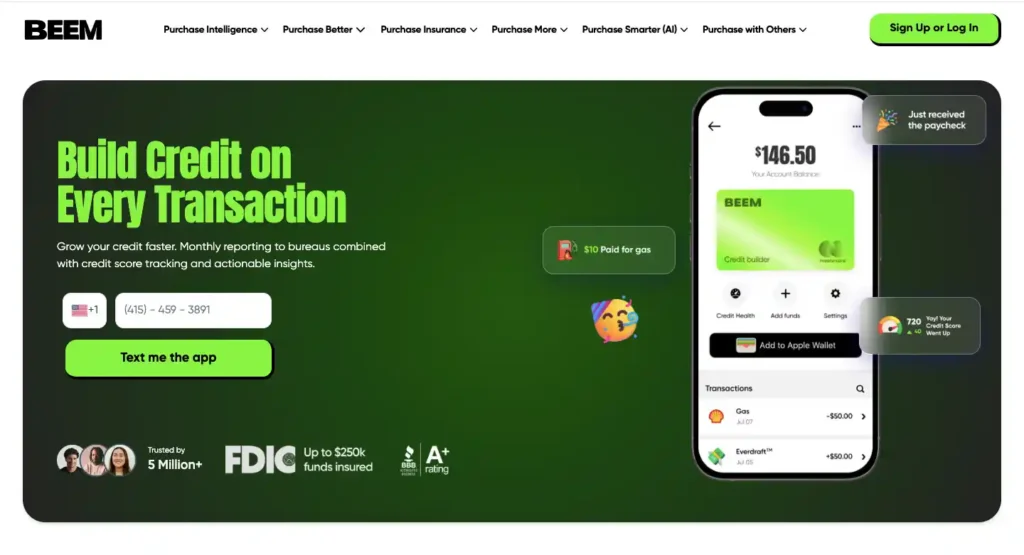
A tool like the Beem Card can create a safer entry point for thin or no-credit users. No interest, no fees, responsible reporting, and that structure matters. It gives you a controlled environment to build history without spiraling out of control. Download the app now!
Credit building shouldn’t feel chaotic; it should feel steady, and that’s how you know you’re doing it right.
Balancing Credit Building With Financial Stability
As your credit improves and those limits start climbing, it feels like progress, and in some ways, it is. But bigger limits can trick your brain into thinking you have more money than you actually do. That’s where lifestyle inflation sneaks in; you start justifying upgrades because, technically, you qualify.
Stability still has to come first. A high limit doesn’t impress lenders nearly as much as boring, consistent, on-time payments; that steady pattern following month after month is what matters far more than how much you’re approved for.
Keep your financial planning grounded in your real income, not your available credit. Just because you can borrow doesn’t mean it fits your bigger picture. Let credit reinforce what’s already stable, don’t let it stretch you thin trying to prove something.
Common Mistakes People Make When They Have No Credit
When you think you need to build credit, so you open a loan or card you don’t actually need, you carry a balance to show activity, that’s backwards. Debt should serve a purpose, not exist for optics, and not create obligations to generate a score. That can box you in fast. Another mistake? Obsessing over the number while ignoring emergency planning. A 720 score won’t help if your car breaks down and you don’t have a cushion. Credit scores measure borrowing behavior, not resilience.
The idea that credit fixes everything, it really doesn’t. If spending habits are shaky or income is unstable, borrowing stretches the problem out over time. Without planning, debt becomes a delay tactic, not a solution. Stability comes from structure first, and credit should support that, not substitute for it.
Read: How to Get a Credit Card With No Credit History: Experts’ Guide
A Practical Financial Planning Framework for Thin or No Credit
Let’s break this down in real-life terms, because it’s tempting to skip steps when you’re eager to catch up on credit. Step one is stability – really, nothing else matters if you don’t have a handle on the basics. Track every dollar coming in, every dollar going out.
Build a small emergency buffer, even $500 helps, and stay away from high-cost debt that can spiral before you even notice. That foundation is your anchor. Once you’re comfortable there, you can layer in fair emergency access tools. Think of them as a safety net, not a crutch; they’re for real, unexpected situations, not routine spending.
Then, when you’re steady, gradually introduce low-risk credit-building products. Credit only works as an asset when your spending and saving habits are already solid. Emergency cash, steady savings, and responsible credit usage all reinforce each other. When each piece supports the other, credit becomes a tool rather than a lifeline. Only move forward when you feel genuinely stable, not just optimistic.
Frequently Asked Questions
Can I have a financial plan without any credit history?
Absolutely, you can totally have a financial plan without any credit history, like credit is just one tiny piece of this huge puzzle called money life. A plan really boils down to knowing what comes in, what goes out, and where you want to go financially. You can set goals, track spending, save, invest, and even do all without a credit score.
What tools help people with thin or no credit?
Starter credit cards that report to all bureaus, secured cards, budgeting apps that track spending, savings platforms that make saving automatic, and low-risk emergency access accounts. They all help you gradually build financial habits and credit without diving headfirst into debt. Combine patience with consistent use, and over time, you’ll see your credit history grow alongside your savings.
How long does it take to build a credit history?
Building a credit history is tricky because it’s not instant, unfortunately. Usually, a few months of activity can give you a score, but if you want it solid, you’re talking a year or more. It’s about showing patterns: paying bills, keeping balances low, and being consistent.
Should I build savings or credit first?
As for whether to build savings or credit first, savings all the way. Even a small emergency stash beats being at the mercy of interest-hungry lenders. Then you can work on credit little by little, a starter card or a small loan, paying on time, keeping balances low. That way, if life throws a curveball, you’re covered.
How do I handle emergencies with no credit?
When it comes to emergencies with no credit, it’s all about having a little cushion, even if it’s tiny, like a couple of hundred bucks tucked away. You can also look into fair, low-cost emergency access tools, but seriously avoid anything that smells predatory; those payday traps are the worst. Just knowing where to turn and keeping your savings growing a bit keeps you sane.
Final Thoughts: Credit Is a Tool, Not the Foundation
Credit feels tempting, right? Like a fast track, a badge, a shortcut to financial freedom, but here’s the reality: it’s not the foundation; the real strength starts with planning. Knowing what’s coming in, what’s going out, and where your gaps are, that’s the base. Build a cushion, understand your cash flow, and manage risks. Credit isn’t magic; it just amplifies what’s already solid.
Take it slow, be patient, build consistently, use emergency access tools wisely, save steadily, and treat credit like a controlled experiment rather than a lifeline. Over time, those habits compound.
Confidence, not borrowing, is the real game-changer. When you know your money, you can handle surprises and make informed decisions, even when life feels different. You’re not just reacting to bills, you’re steering your financial life.