
Table of Contents
Most financial products evaluate income the same way. They ask who your employer is, request documentation confirming what they pay you, and base their eligibility decision on the reliability of that employer relationship.
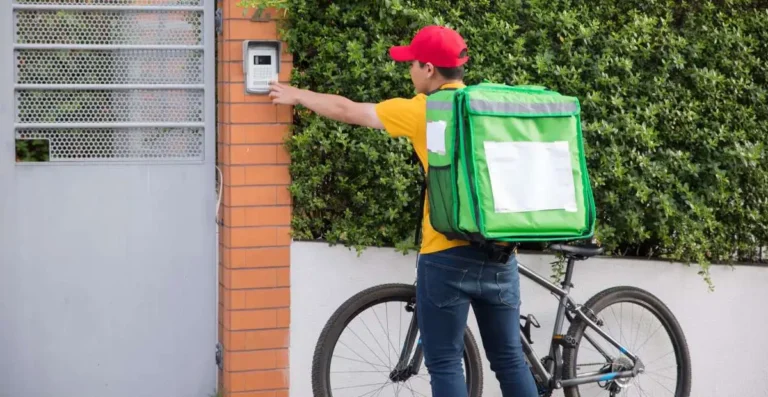
Food delivery workers do not have an employer relationship. They have platforms, and platforms do not issue W-2s, answer verification calls, or provide the kind of income documentation that traditional lenders were built to process.
The question that matters for every DoorDash driver, Uber Eats courier, GrubHub delivery worker, and Instacart shopper is not whether their income is real. It clearly is. The question is whether the financial tool they are trying to access can actually see it.
Beem Everdraft™ can. Here is exactly how.
The Core Principle: Deposits Over Documentation
Traditional lenders evaluate income through documentation. Pay stubs, tax returns, employer letters, and W-2 forms are the inputs around which their models were built.
Beem evaluates income through behavior. Specifically, the behavior of money moving into your bank account over time.
This is not a workaround or a lesser standard. For workers with variable income sources landing at irregular intervals throughout the month, deposit behavior is a more accurate representation of financial reality than any single document can capture.
A pay stub shows what one employer paid you in one pay period. A deposit history shows the full pattern of how money has been flowing into your life across every income source, every week, over an extended period. For food delivery workers whose income comes from gig platforms rather than payroll departments, the deposit history tells the truer story.
Read: Beem Everdraft for Multi-App Delivery Workers Earning From Several Platforms
What Beem Actually Reads When You Connect Your Account
When you link your bank account to Beem, the platform gains read access to your account’s deposit history through a secure financial data connection. It is not reading your account balance in real time or monitoring individual transactions as they happen. It is building a picture of your income pattern from the historical deposit activity that already exists.
Deposit Frequency
How often money lands in your account matters more than any single deposit amount. A food delivery worker receiving a DoorDash weekly transfer every Wednesday demonstrates a consistent earning pattern across however many weeks that history covers. Beem reads that frequency as evidence of active, sustained income activity.
A courier who has received weekly deposits for 6 months provides Beem with 26 data points confirming income. That is a richer signal of earning reliability than a single pay stub from any employer.
Deposit Volume Patterns
Beem looks at the cumulative deposit volume across recent periods rather than evaluating individual weekly amounts in isolation. This approach addresses the inherent variability in food-delivery income without penalizing couriers in weeks with lighter order volume.
A courier whose weekly deposits range from $400 to $900, depending on hours worked, is not presenting an inconsistent income profile to Beem. They are presenting an active gig worker whose earnings reflect normal fluctuations within a consistent work pattern. The volume pattern over several months is what matters, not whether any individual week hit a specific threshold.
Deposit Consistency Over Time
Consistency of deposit timing contributes meaningfully to how Beem evaluates a food delivery worker’s profile. A courier who receives a deposit in roughly the same weekly window, week after week, demonstrates that their earning activity is ongoing rather than sporadic.
This evaluation dimension is particularly relevant for couriers who work regular schedules despite having no formal employment arrangement. A full-time DoorDash driver who dashes five days a week and receives a consistent weekly payout has a deposit consistency profile that rivals many traditionally employed workers, even though no employer exists behind it.
Multi-Platform Deposit Activity
Many food delivery workers operate across multiple platforms simultaneously. A courier dashing for DoorDash on weekday evenings and delivering for Uber Eats on weekends may receive two separate weekly deposits into the same bank account from different platforms on different days.
Beem reads the total deposit activity in the linked account without filtering by source. Both deposits contribute to the frequency, volume, and consistency picture that drives eligibility.
A multi-platform delivery worker often has a denser deposit history than a single-platform courier, which can support stronger Everdraft™ eligibility even if the per-platform deposit amounts are individually modest.
Read: What New York’s Bills Mean for the City’s Delivery Workers
What Beem Does Not Use to Evaluate You
Understanding what Beem excludes from its evaluation is as important as understanding what it includes.
Your Credit Score
Everdraft™ does not factor in your credit score at any point in the approval process. There is no soft pull, no hard inquiry, and no involvement of credit bureaus in the eligibility calculation. A food delivery worker with a thin credit file, limited credit history, or a score affected by past financial difficulties is evaluated solely on deposit behavior.
For couriers who have been denied access to financial products because their credit scores do not reflect their current earnings, this exclusion is the single most significant feature of Everdraft™’s design.
Employment Classification
Whether you are classified as an independent contractor, a part-time worker, or anything else does not enter the evaluation. Beem does not ask how DoorDash or Uber Eats classifies you. It checks whether consistent income is being deposited into your account.
Income Source Verification
Beem does not verify that your deposits come from a specific approved list of gig platforms. If consistent deposits are landing in your account from any legitimate source, that activity counts.
A courier who also earns from Instacart, TaskRabbit, or a part-time hourly job has all of those deposits contributing to their profile without needing to declare and verify each source separately.
Read: Tax Season 2026 For Retirees And Early Retirees With Mixed Income Sources
How Your Everdraft™ Limit Is Set and Why It Changes
The initial limit Beem assigns when you first connect your account reflects the deposit history available at that moment. A delivery worker with 12 months of consistent weekly deposits will typically receive a higher initial limit than one who has been delivering for 6 weeks. This is not a judgment on the newer courier’s reliability. It reflects how much data Beem has to evaluate.
From that starting point, two behaviors raise the limit.
Continued deposit activity adds to the historical record Beem evaluates. Every additional week of consistent deposits extends the pattern that supports higher eligibility. A delivery worker who connects to Beem early in their delivery career and maintains consistent activity gives themselves the longest runway for limited growth.
A clean repayment history creates a second track of positive signal. Each advance that is requested and repaid on schedule tells Beem that this user accesses the product responsibly and returns the advance without friction. Over time, a strong deposit history and a clean repayment record are what move a courier toward the $1,000 ceiling.
Read: Beem Everdraft Explained: How Instant Cash Advances Work
Why This Model Is More Accurate Than Traditional Evaluation
The traditional income evaluation model was built for a workforce with a single income source, arriving on a fixed schedule, and verified by a third-party employer. That model was accurate for the workforce it was designed around.
Food delivery workers represent a fundamentally different income structure. Income comes from consumer demand patterns, not a payroll department.
Earnings vary by hour, day, and season in ways no employer dictates. The reliability of income is demonstrated through sustained activity over time, not through an employment relationship that can be terminated with two weeks’ notice.
Deposit-based evaluation captures the actual reliability of a delivery worker’s income more accurately than documentation-based evaluation does. A courier who has consistently deposited for eight months has demonstrated income reliability across hundreds of individual earnings events. That track record is more meaningful than a pay stub that reflects income from a single source over two weeks.
FAQs: How Beem Counts Food Delivery Income to Approve Everdraft™ Advances
Does connecting my bank account to Beem give it access to withdraw funds beyond repayment?
Beem’s read access to your account is used to evaluate your deposit history. The only withdrawal authorization you grant is for the automatic repayment of an advance you have specifically requested. No other withdrawals are initiated outside of that repayment agreement.
If I take a month off from delivering, does my deposit history reset?
Your historical deposit data does not disappear. A pause in delivery activity creates a gap in your recent deposit pattern, which may affect your current eligibility calculation. The historical record of deposits before the pause remains part of your profile and contributes to your evaluation when you return to active delivering.
Can Beem see deposits from sources other than food delivery platforms?
Yes. Beem evaluates total deposit activity in your linked account. Deposits from any legitimate income source contribute to your profile. A courier who also earns from a part-time job, freelance work, or another gig platform has all of those deposits factored into their eligibility calculation.
Does having a low balance in my account hurt my Everdraft™ evaluation?
Beem’s evaluation is primarily deposit-focused rather than balance-focused. A courier whose account frequently runs low between deposits but receives consistent weekly income is not penalized for balance fluctuations the way a traditional lender might. The deposit pattern is the primary signal.
Bottom Line
Food delivery income is real income. The couriers earn it by working real hours, completing real deliveries, and generating real economic value. The only reason that income has historically been invisible to financial products is that those products were built to read documentation that gig workers were never going to produce.
Beem reads something different. It reads what actually happened in your bank account, over time, across every income source that contributed to it. For food delivery workers whose earnings are reliably documented in their deposit history rather than in an employer’s payroll system, this is the evaluation model that finally sees them accurately. Download the Beem app now!