


Table of Contents
The calendar flips to January, and suddenly everyone is talking about maximizing 401(k) contributions, investing in crypto, or saving for a second home. But for millions of Americans, those goals feel like they belong on a different planet. When you are living paycheck to paycheck, your financial horizon is not ten years down the road. It is ten days from now.
The reality of living paycheck to paycheck is a specific kind of stress. It is the math problem that runs in the back of your head while you are trying to sleep. It is the sinking feeling when the check engine light comes on. It is checking your bank balance in the parking lot before walking into the grocery store, just to be sure.
If you are tired of that feeling, this New Year reset is for you. This is not a guide on how to get rich quick, and it is definitely not a lecture on how you should stop buying coffee. This is a practical, judgement free plan to stop the cycle of running out of money before your next payday. It is about creating just enough breathing room so you can stop holding your breath.
The Mindset Shift: From Surviving to Controlling
The first step in breaking the paycheck to paycheck cycle has nothing to do with math. It has to do with how you see your situation. There is a deep shame that often comes with money struggles in the US. We are told that if we work hard, we should be fine. But the truth is, the cost of living has skyrocketed while wages for many have barely budged. Housing, healthcare, and childcare costs are eating up paychecks faster than they can be printed.
Living paycheck to paycheck is not a moral failing. It is a math problem. And math problems can be solved.
For this New Year, your goal is not to become a millionaire. Your goal is simply control. When you are in survival mode, life happens to you. A bill arrives, and you panic. A fee hits, and you scramble. The shift we are making today is moving you from the passenger seat to the driver’s seat. You might not be driving a Ferrari yet, but you are going to be the one holding the steering wheel.
This reset is about visibility. It is about turning the lights on in a dark room. It might be scary to see the mess at first, but once the lights are on, you can start cleaning it up.
Step 1: Find Your “True” Paycheck Number
Most people think they know how much they make, but they are usually wrong. They think in terms of their annual salary or their hourly rate. “I make $50,000 a year” or “I make $22 an hour.” But those numbers are fantasies. They do not account for taxes, insurance, social security, or 401(k) deductions.
Your “True” Paycheck Number is the actual dollar amount that hits your bank account. This is your net pay. It is the only number that matters because it is the only money you can actually spend.
To start your reset, log into your bank account or look at your last three pay stubs. Write down the exact amount deposited. If your income fluctuates, take the average of the last three months, or better yet, use the lowest month as your baseline. This gives you a safety margin.
Seeing this number in black and white can be a reality check. It strips away the illusion of your gross salary and shows you exactly what you have to work with. This is your toolkit for the month. No more, no less.
Read: 50 ways to save money on entertainment
Step 2: Map Your “Four Walls” First
When resources are tight, you have to be ruthless about priorities. In the US, we often treat every bill as an emergency. The credit card bill feels just as urgent as the rent, and the streaming service feels just as necessary as the electric bill. But they are not equal.
To stabilize your life, you must prioritize your “Four Walls.” These are the non negotiable expenses that keep you safe, healthy, and able to work.
1. Housing: This is your rent or mortgage. Keeping a roof over your head is priority number one. If this doesn’t get paid, nothing else matters.
2. Utilities: Electricity, water, heat. You need lights on and a warm place to sleep.
3. Food: This means groceries for basic, nutritious meals at home. It does not mean UberEats, Starbucks, or Friday night pizza. It means the fuel you need to survive.
4. Transportation: You need to get to work to earn the money. This covers gas, car insurance, or a bus/train pass.
Everything else—credit cards, medical bills, student loans, Netflix, gym memberships—is secondary. That sounds harsh, but when you are drowning, you don’t worry about keeping your gym shoes dry. You worry about breathing.
List these four categories and write down exactly what they cost you each month. Total them up. Subtract this number from your True Paycheck Number. The amount left over is your true disposable income. For many people, this moment is eye opening. It shows that the “extra” money they thought they had doesn’t really exist.
Step 3: Go on a “Leak Hunt” to Find Vanishing Money
If you have ever gotten to the end of the month and wondered, “Where did it all go?”, you have leaks. Leaks are the small, mindless expenses that drain your account without you noticing. They are the silent killers of financial stability.
It is easy to blame the big bills, but often it is the accumulation of small choices that pushes people over the edge. A $15 subscription you forgot about. A $4 fee for using an out of network ATM. A $12 lunch because you didn’t pack one.
For this step, you need to play detective. You are not judging yourself; you are just gathering evidence. Look at your bank statements for the last 60 days. Don’t just glance at them—read every single line. Categorize them into buckets:
- Subscriptions: Streaming, apps, boxes, memberships.
- Convenience: Fast food, coffee, delivery fees, ride shares.
- Impulse: Target runs, Amazon purchases, gas station snacks.
- Fees: Overdraft fees, late fees, ATM fees, monthly maintenance fees.
You will likely find a pattern. Maybe you are spending $150 a month on convenience food because you are too tired to cook. Maybe you are paying for three different music streaming services. These are your leaks. Finding them is good news because every leak you find is potential money you can put back in your pocket.
Instead of doing this manually, which can be tedious, you can use a tool to help. We will talk about Beem later, but using technology to categorize your spending automatically can save you hours and show you the brutal truth in a colorful chart.
Step 4: The “One Thing” Method to Free Up Cash
Now that you have found your leaks, the temptation is to try to plug them all at once. You might say, “I am never eating out again, I am cancelling all subscriptions, and I am walking to work.” This is a mistake. Radical changes rarely stick. It is like a crash diet; you will starve for a week and then binge.
Instead, use the “One Thing” method. Look at your list of leaks and pick just one category to attack for the next 30 days. Just one.
If you realized you are spending $80 a month on streaming services, your “One Thing” is to cut that in half. Keep Netflix, cancel the rest. If you are spending $200 on lunches, your “One Thing” is to pack a sandwich three days a week and cut that bill to $100.
By focusing on a single manageable change, you increase your chances of success. You are not overhauling your life; you are just making one smart adjustment. When you succeed, you prove to yourself that you have control.
Let’s say your One Thing saves you $50 a month. That doesn’t sound like much, but to someone living on the edge, $50 is a lifeline. That is a tank of gas. That is a week of groceries. That is the difference between an overdraft fee and a positive balance.
Read: How To Get Cheap Groceries
Step 5: Build Your First “Buffer,” Not an “Emergency Fund”
Financial experts love to talk about “emergency funds” of three to six months of expenses. When you have $14 in your checking account, saving $15,000 sounds as impossible as flying to Mars. The language itself is discouraging.
So let’s change the language. You are not building an emergency fund right now. You are building a Buffer.
A Buffer is a small layer of cash that sits between you and zero. It is the padding that prevents life’s little bumps from becoming disasters. Your first goal is tiny: $100. Then $250. Then $500.
Take the money you saved from your “One Thing” method and move it immediately into a separate savings account. Do not leave it in checking. If it stays in checking, it will get eaten. Move it away.
This Buffer has a specific job. It is there to stop the domino effect.
- The tire blows out ($150).
- Without a buffer, you put it on a credit card.
- You can’t pay the full balance, so you pay interest.
- The payment makes you short for rent.
- You pay rent late and get hit with a late fee.
With a $250 buffer:
- The tire blows out ($150).
- You pay for it from the buffer.
- The buffer is down to $100.
- Life goes on. No interest, no late fees, no stress spiral.
The Buffer buys you peace. It stops the bleeding so you can heal.
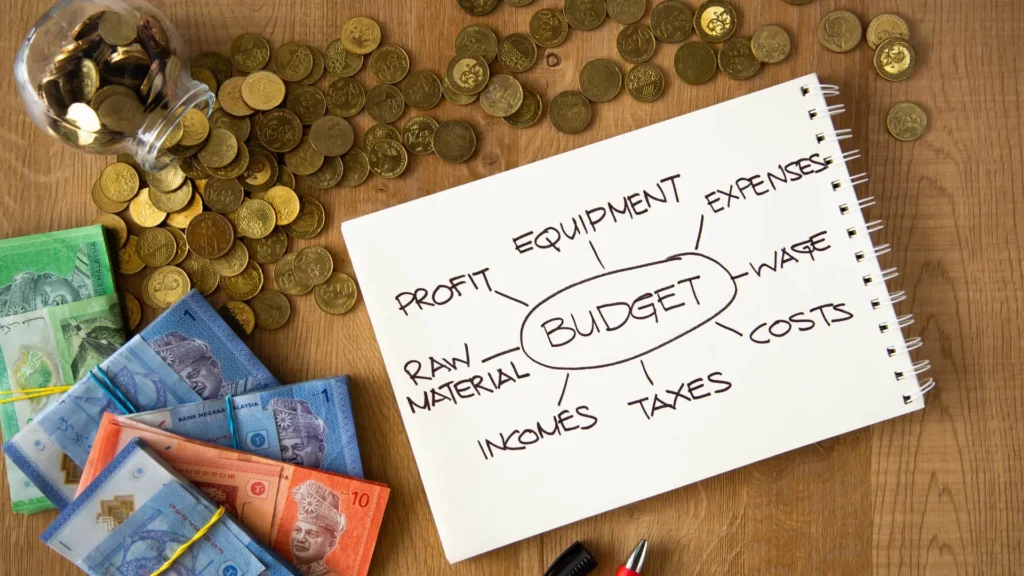
Step 6: The Payday Ritual That Breaks the Cycle
The most dangerous time for your budget is the 48 hours after you get paid. The relief of seeing money in the account can lead to a false sense of security. You might think, “I have money, I can finally buy that thing I need,” or “I can treat myself to dinner.” Before you know it, half the check is gone, and you haven’t paid the rent yet.
To break the cycle, you need a Payday Ritual. This is a non negotiable routine you perform every single time money hits your account.
Minute 1: The Four Walls Transfer.
As soon as the deposit clears, log in and schedule the payments for your housing, utilities, transportation, and groceries. If you can’t pay them in full, pay what you can or set the money aside in a separate “Bills” account. Do not let this money sit in your spending account. It is already spent.
Minute 5: Feed the Buffer.
Take your “One Thing” savings amount—whether it is $10 or $50—and transfer it to your savings account. Do this before you buy a single cup of coffee. You are paying your future self first.
Minute 10: Attack the Debt.
Look at your credit card minimums or other loan payments. Schedule those payments now.
The Rest is Yours.
Whatever is left in your account after these three steps is your “Safe to Spend” number. This is for gas, lunch, clothes, or whatever else comes up until the next payday.
This ritual flips the script. Instead of spending first and saving what is left (which is usually nothing), you handle your business first and live on what is left. It forces you to be honest with your money. If you only have $40 left for two weeks of discretionary spending, it is better to know that on Day 1 than to find out on Day 10 when your card gets declined.
Download Beem today from the App Store or Google Play and take the first real step towards lasting financial stability.
Step 7: What If Your Income Isn’t Fixed?
The gig economy has exploded in the US. Millions of people drive for Uber, deliver for DoorDash, or do freelance work where income varies wildly from week to week. If this is you, the “True Paycheck Number” is harder to pin down.
For variable income earners, the reset looks slightly different. Instead of fixed dollar amounts, use percentages.
When a payment comes in—whether it is $50 or $500—split it immediately.
- 70% to Essentials: Move this to a dedicated Bills account. This covers your Four Walls.
- 10% to Buffer: Move this to savings.
- 20% to Spending: Keep this in checking for daily life.
(Adjust these percentages based on your specific needs, but keep the logic the same.)
This system scales with you. On a good week, you save more and cover more bills. On a bad week, you still save a little bit and cover the basics. It prevents lifestyle creep during the good times and provides a framework for survival during the lean times. Beem is particularly helpful here because it tracks all your inflows in real time, helping you make sense of the chaos of multiple income streams.
How Beem Becomes Your Paycheck-to-Paycheck Ally
Managing all of this—tracking income, finding leaks, moving money—takes mental energy. And when you are stressed about money, mental energy is in short supply. This is where Beem comes in.
Beem (https://trybeem.com) is a financial app specifically designed for this kind of reality. It is not built for the person with a perfectly balanced portfolio; it is built for the person trying to make the math work every month.
Beem acts as the operating system for your New Year reset. Here is how it fits into the steps we just covered:
1. Finding Leaks: You don’t have to scroll through six months of PDF bank statements with a highlighter. You connect your banks to Beem, and it automatically categorizes your transactions. It will show you exactly how much you spent on “Food & Drink” or “Subscriptions” in seconds. The detective work is done for you.
2. Protecting the Four Walls: Beem helps you track your bills and subscriptions. It can alert you when things are due so you don’t miss a rent payment or get hit with a surprise renewal fee for an app you forgot about.
3. Building the Buffer: Beem allows you to monitor your balances across all your accounts in one place. You can watch your savings grow and see the direct impact of your “One Thing” changes.
4. Avoiding the “Zero” Danger Zone: One of the worst parts of living paycheck to paycheck is the overdraft fee. It is expensive to be poor. Beem sends you alerts when your balance is getting low, giving you a heads up before you swipe your card and trigger a $35 fee.
By using Beem, you outsource the heavy lifting of tracking and monitoring. It gives you the visibility you need to stay in the driver’s seat without having to be a spreadsheet wizard.
Budget Reset: Your First Step Toward Breathing Room
Living paycheck to paycheck is exhausting. It feels like running on a treadmill that keeps speeding up. But you can slow it down. You can find the emergency stop button.
This New Year’s reset is that button. It is not about magic. It is about clarity. It is about knowing your True Paycheck Number, protecting your Four Walls, plugging one leak, and building a tiny Buffer.
These steps might seem small, but they compound. A $250 buffer becomes $500. A plugged leak becomes a permanent habit. A payday ritual becomes second nature. And slowly, the panic starts to fade. The math in your head quiets down. You sleep a little better.
You don’t need to win the lottery to change your life this year. You just need to take the first step. Download Beem, find your One Thing, and start building your buffer. This is the year you stop just surviving and start taking control. You’ve got this.