

Table of Contents
An instant cash advance can provide quick relief when you’re facing a short-term financial gap, whether it’s covering gas, groceries, or an unexpected expense.
But the real value of a cash advance is not just in accessing the funds, it’s in how effectively you use them.
Without a plan, even a small amount can disappear quickly. With the right approach, however, the same amount can cover essential needs, reduce stress, and help you stay financially stable until your next paycheck.
Why Using a Cash Advance Strategically Matters
A cash advance is designed to address a short-term financial gap, not to increase overall spending capacity. Its effectiveness depends on how intentionally the funds are used. When allocated carefully, it can stabilize your situation. When used without structure, it can lead to faster depletion and additional financial pressure.
A Short-Term Bridge, Not Additional Income
A cash advance should be treated as temporary support rather than extra money to spend. It is meant to bridge the gap between immediate expenses and incoming income.
Using it as regular income can lead to:
- Unplanned or non-essential purchases
- Faster exhaustion of available funds
- Increased difficulty in managing repayment
Maintaining this distinction helps ensure the advance serves its intended purpose.
Prioritizing Stability Over Convenience
The primary objective of a cash advance is to maintain continuity in essential areas such as:
- Transportation for work or daily needs
- Basic groceries and household essentials
- Time-sensitive bills
Focusing on these priorities ensures that the funds are used to stabilize your financial situation, rather than creating additional strain in the next pay cycle.
1. Prioritize Essential Expenses First
The most effective way to use a cash advance is to allocate it toward expenses that are immediate and non-negotiable. These are costs that directly impact your ability to maintain daily routines and income stability.
Identify Immediate Financial Priorities
Start by focusing on essential categories such as:
- Fuel for commuting to work or managing daily responsibilities
- Groceries and basic household necessities
- Utility payments or other time-sensitive bills
Covering these expenses first ensures that the advance fulfills its primary purpose, maintaining continuity in essential areas.
Limit Non-Essential Spending
Discretionary expenses, such as dining out, entertainment, or impulse purchases, can quickly reduce the available balance. Avoiding these costs helps preserve funds for critical needs and improves the overall effectiveness of the advance.

2. Divide the Amount Into Controlled Allocations
Breaking the total cash advance into smaller, planned portions can help improve spending discipline and reduce the risk of overspending early.
Create a Structured Spending Plan
Assign specific portions of the advance to key categories, such as:
- Daily living expenses
- Transportation costs
- A small reserve for unexpected needs
This structured approach provides clarity on how much can be spent in each area.
Monitor Spending in Real Time
Tracking daily usage allows you to adjust spending as needed. It also helps identify patterns and prevents the advance from being exhausted too quickly.
3. Extend the Duration of the Advance
The goal is to ensure that the funds last until your next paycheck or income cycle. This requires mindful spending and short-term adjustments.
Optimize Daily Expenses
Small changes, such as reducing non-essential trips, choosing lower-cost options, or limiting additional purchases, can significantly extend how long the funds last.
Postpone Non-Urgent Costs
Delaying expenses that are not immediately necessary helps preserve funds for essential needs. This approach ensures that critical expenses are covered without interruption.
4. Combine With Cost-Saving Strategies
Maximizing the value of a cash advance is not only about controlling spending, it also involves actively reducing expenses wherever possible. Even small savings can extend how far your funds go.
Use Cashback and Available Discounts
Applying cashback and discounts to essential purchases can lower overall spending. For instance, using tools like Beem cashback on gas (3%) helps reduce fuel costs, freeing up more of your advance for other necessities.
Over time, these incremental savings can make a meaningful difference in managing short-term cash flow.
Make Cost-Conscious Purchase Decisions
Comparing prices across stores, choosing lower-cost alternatives, or buying only what is necessary can create immediate savings. Being intentional with each purchase ensures that funds are used efficiently and last longer.
5. Avoid Overborrowing “Just in Case”
While it may seem safer to borrow extra funds, taking more than required can increase repayment pressure and reduce financial flexibility in the next cycle.
Base Borrowing on Actual Needs
Estimate the amount required to cover essential expenses only. This helps keep the advance aligned with its purpose, bridging a short-term gap rather than expanding spending capacity.
Keep Repayment Within Reach
A smaller, well-calculated advance is easier to repay and less likely to disrupt your next budget. Keeping the amount manageable helps maintain financial stability after the immediate need is resolved.
6. Plan Your Repayment Early
Using a cash advance effectively includes having a clear plan for repayment. Preparing in advance helps prevent additional financial pressure once your next paycheck arrives.
Align Repayment With Your Income Cycle
Identify when your next income will be received and determine how repayment fits within your upcoming expenses. This ensures that repayment does not interfere with other essential obligations.
Set Aside Funds Proactively
Treat repayment as a priority expense by setting aside the required amount as soon as income is received. This approach reduces the risk of overspending and helps close the financial gap efficiently.
7. Choose Structured Tools That Minimize Overall Cost
Not all cash advance options are designed the same way. The structure of the tool, particularly how it handles fees, interest, and repayment, can significantly affect your financial outcome.
Be Cautious With High-Cost Borrowing Options
Some short-term borrowing methods, such as payday loans or high-interest credit advances, can increase the total repayment amount through fixed fees or compounding interest. For relatively small expenses, these added costs can quickly outweigh the benefit of immediate access to funds.
Understanding the cost structure before borrowing helps prevent a short-term solution from becoming a longer-term financial burden.
Opt for Cost-Controlled, Transparent Solutions
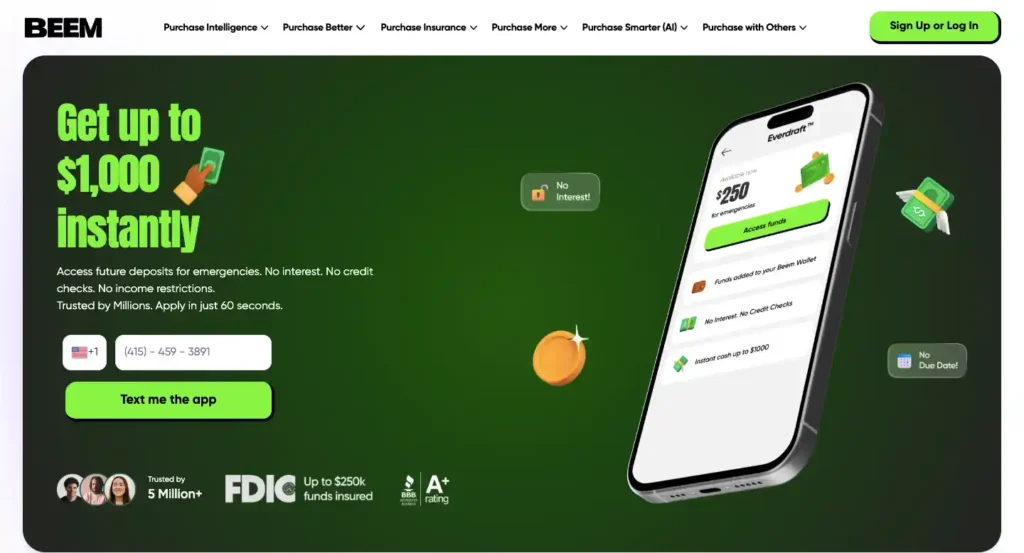
Structured tools that avoid interest and complex fee systems are better suited for short-term needs. For example, options like Beem’s Everdraft™ provide access to funds without interest or credit checks, helping ensure that the amount repaid remains closely aligned with what was used.
This type of structure supports short-term stability without extending financial pressure.
8. Build a Small Financial Buffer for the Future
Once the immediate financial gap is resolved, the next step is to reduce the likelihood of needing another cash advance. Building even a small reserve can improve long-term stability.
Start With a Manageable Reserve
Setting aside a modest amount, such as $50 to $100, can help cover common short-term expenses like gas, groceries, or minor bills. Even a small buffer can prevent the need for urgent borrowing.
Focus on Consistency Over Size
Rather than making large, infrequent contributions, building a buffer through small, regular deposits is more sustainable. Over time, this approach creates a reliable financial cushion that can absorb temporary gaps without disrupting your overall budget.
Read: Employer Cash Advance Programs vs Cash Advance Apps
Common Mistakes to Avoid
Even when used with good intent, certain habits can reduce the effectiveness of a cash advance and limit how far the funds can stretch. Being aware of these common pitfalls helps maintain better control over short-term finances.
Spending Too Quickly
Using a large portion of the advance early can leave limited funds for the remainder of the pay cycle. Without pacing expenses, it becomes harder to cover essential needs later, increasing the risk of additional financial pressure.
Blurring the Line Between Needs and Wants
Combining essential expenses with discretionary spending can reduce clarity and control. Prioritizing non-essential purchases alongside necessities may lead to faster depletion of funds and make it more difficult to manage critical expenses.
Overlooking the Repayment Timeline
Failing to plan for repayment in advance can create strain in the next income cycle. Without a clear timeline, repayment may compete with other essential expenses, making it harder to restore financial balance.
Conclusion: Make Every Dollar Work Longer
An instant cash advance is most effective when it is used with a clear plan and defined purpose. Its value lies not just in providing immediate access to funds, but in how efficiently those funds are managed.
- Prioritizing essential expenses
- Monitoring and controlling spending
- Applying cost-saving strategies where possible
- Planning repayment in advance
You can extend the impact of your funds while maintaining financial stability.
The objective is not only to address the immediate need, but to do so in a way that avoids creating additional financial pressure in the future.
Download the Beem app to access emergency cash quickly when you need it most.
Get fast support with a simple, secure, and stress-free experience.
Frequently Asked Questions
1. What is the best way to use a cash advance?
Focus on essential expenses and avoid discretionary spending.
2. How can I make a cash advance last longer?
Break it into smaller amounts, track spending, and reduce unnecessary expenses.
3. Should I borrow extra “just in case”?
No. Borrow only what you need to keep repayment manageable.
4. How do I avoid financial stress after using a cash advance?
Plan repayment early and align it with your next paycheck.
5. Can cashback help stretch my advance?
Yes. Small savings, like cashback on gas, can extend how far your money goes.